I got 3 H-1B visa rejections: Indian man struggled to stay in US, spent Rs 12 lakh for O-1 visa
An Indian data analytics professional faced three H-1B lottery rejections before turning to the O-1 visa, spending nearly Rs 12 lakh to keep his US career alive. His struggle comes as layoffs, tighter immigration rules and changing tech hiring trends push more Indian H-1B workers to reconsider their future in America.
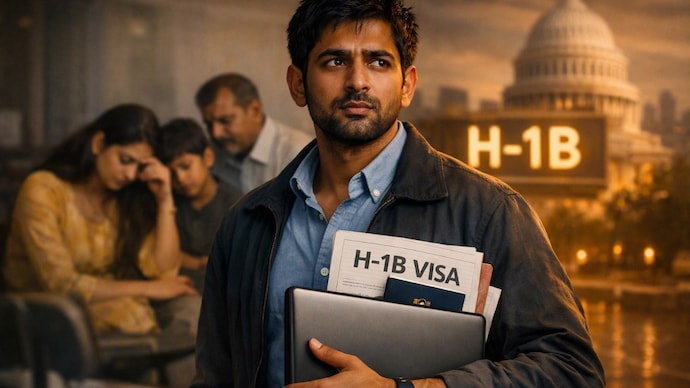
For Sohan Sethi, the biggest threat to his US career was not losing his job. It was losing the visa that allowed him to keep it. The 29-year-old Indian data analytics and AI professional faced the H-1B lottery three times and was rejected every time. With his STEM OPT set to expire in July, he had only months to find another way to remain in the US. His eventual solution was the O-1 visa, but getting there meant building a 700-page application and spending about $13,000, or nearly Rs 12 lakh, in legal fees.
Sethi had spent years building his career in America. After completing his computer engineering degree at the University of Mumbai, he worked as a business analyst before moving to Chicago in January 2022 for a master's degree at the University of Illinois Chicago.
He graduated in May 2023 and joined a healthcare company as a senior business analyst. Around 18 months later, he was promoted to manager of analytics and reporting. But his growing career could not protect him from the uncertainty surrounding the H-1B system.
"After my second rejection in April 2025, I realised I couldn't rely on the lottery alone if I wanted to continue my career in the United States. I started preparing for the O-1 visa in June 2025, almost a year before my OPT was due to expire," he wrote in an as-told-to essay published by Business Insider.
What is O-1 visa?
Unlike the H-1B, the O-1 visa does not depend on a lottery. Applicants instead have to prove that they have achieved significant recognition in their field. Sethi spent months collecting awards, media coverage, published research, recommendation letters and evidence of his professional work. By February 2026, he had assembled more than 700 pages of evidence. Then came his third H-1B rejection in March.
His STEM OPT was due to expire on July 5, leaving him roughly 100 days to secure another option. He filed his O-1 petition in April, but was later asked for additional evidence, prolonging the uncertainty. Sethi even considered returning to India or moving to Canada or the UK. But he ultimately decided that he wanted to continue building his career in the US.
"I considered those options too, but I couldn't find another country where I felt I could build the same career. I work in data analytics and AI, and I believe the opportunities, infrastructure, and exposure available here are difficult to find elsewhere," he wrote.
Many people with H-1B visa forced to return to India
Sethi's experience comes at a time when the H-1B route has become increasingly uncertain for Indian professionals. The pressure is not limited to people waiting for lottery results. For those already working in the US, layoffs can create an immediate immigration crisis.
Under H-1B rules, workers who lose their jobs generally have a 60-day grace period to find another employer willing to sponsor them. If they fail, they can be forced to leave the country. The problem has become more serious as major technology companies have announced layoffs while AI is changing hiring priorities. Amazon, Microsoft and Meta have all cut jobs, leaving some H-1B workers scrambling for new opportunities.
Some laid-off workers have explored switching to B-2 visitor status to buy additional time. However, immigration lawyers have reported more requests for evidence and denials in such cases.
At the same time, Indians returning home are finding that the Indian technology market is not as easy to enter as they might expect. According to data from Xpheno cited in an Economic Times report, around 7,300 professionals had returned from the US in 2026 so far. The figure was 15,000 in 2025 and 9,700 in 2024.
Hiring has become more selective, with AI also making some traditional technology roles less relevant. Bengaluru, Hyderabad and Gurugram remain important hiring centres, particularly as Global Capability Centres expand in India.
"India's technology hiring environment has become more selective, with organisations prioritising skills that directly support innovation, AI adoption and business transformation," said Roopank Chaudhary, Partner and Rewards Consulting Leader, Talent Solutions, India, at Aon.
For Sohan Sethi, the biggest threat to his US career was not losing his job. It was losing the visa that allowed him to keep it. The 29-year-old Indian data analytics and AI professional faced the H-1B lottery three times and was rejected every time. With his STEM OPT set to expire in July, he had only months to find another way to remain in the US. His eventual solution was the O-1 visa, but getting there meant building a 700-page application and spending about $13,000, or nearly Rs 12 lakh, in legal fees.
Sethi had spent years building his career in America. After completing his computer engineering degree at the University of Mumbai, he worked as a business analyst before moving to Chicago in January 2022 for a master's degree at the University of Illinois Chicago.
He graduated in May 2023 and joined a healthcare company as a senior business analyst. Around 18 months later, he was promoted to manager of analytics and reporting. But his growing career could not protect him from the uncertainty surrounding the H-1B system.
"After my second rejection in April 2025, I realised I couldn't rely on the lottery alone if I wanted to continue my career in the United States. I started preparing for the O-1 visa in June 2025, almost a year before my OPT was due to expire," he wrote in an as-told-to essay published by Business Insider.
What is O-1 visa?
Unlike the H-1B, the O-1 visa does not depend on a lottery. Applicants instead have to prove that they have achieved significant recognition in their field. Sethi spent months collecting awards, media coverage, published research, recommendation letters and evidence of his professional work. By February 2026, he had assembled more than 700 pages of evidence. Then came his third H-1B rejection in March.
His STEM OPT was due to expire on July 5, leaving him roughly 100 days to secure another option. He filed his O-1 petition in April, but was later asked for additional evidence, prolonging the uncertainty. Sethi even considered returning to India or moving to Canada or the UK. But he ultimately decided that he wanted to continue building his career in the US.
"I considered those options too, but I couldn't find another country where I felt I could build the same career. I work in data analytics and AI, and I believe the opportunities, infrastructure, and exposure available here are difficult to find elsewhere," he wrote.
Many people with H-1B visa forced to return to India
Sethi's experience comes at a time when the H-1B route has become increasingly uncertain for Indian professionals. The pressure is not limited to people waiting for lottery results. For those already working in the US, layoffs can create an immediate immigration crisis.
Under H-1B rules, workers who lose their jobs generally have a 60-day grace period to find another employer willing to sponsor them. If they fail, they can be forced to leave the country. The problem has become more serious as major technology companies have announced layoffs while AI is changing hiring priorities. Amazon, Microsoft and Meta have all cut jobs, leaving some H-1B workers scrambling for new opportunities.
Some laid-off workers have explored switching to B-2 visitor status to buy additional time. However, immigration lawyers have reported more requests for evidence and denials in such cases.
At the same time, Indians returning home are finding that the Indian technology market is not as easy to enter as they might expect. According to data from Xpheno cited in an Economic Times report, around 7,300 professionals had returned from the US in 2026 so far. The figure was 15,000 in 2025 and 9,700 in 2024.
Hiring has become more selective, with AI also making some traditional technology roles less relevant. Bengaluru, Hyderabad and Gurugram remain important hiring centres, particularly as Global Capability Centres expand in India.
"India's technology hiring environment has become more selective, with organisations prioritising skills that directly support innovation, AI adoption and business transformation," said Roopank Chaudhary, Partner and Rewards Consulting Leader, Talent Solutions, India, at Aon.
For Sohan Sethi, the biggest threat to his US career was not losing his job. It was losing the visa that allowed him to keep it. The 29-year-old Indian data analytics and AI professional faced the H-1B lottery three times and was rejected every time. With his STEM OPT set to expire in July, he had only months to find another way to remain in the US. His eventual solution was the O-1 visa, but getting there meant building a 700-page application and spending about $13,000, or nearly Rs 12 lakh, in legal fees.
Sethi had spent years building his career in America. After completing his computer engineering degree at the University of Mumbai, he worked as a business analyst before moving to Chicago in January 2022 for a master's degree at the University of Illinois Chicago.
He graduated in May 2023 and joined a healthcare company as a senior business analyst. Around 18 months later, he was promoted to manager of analytics and reporting. But his growing career could not protect him from the uncertainty surrounding the H-1B system.
"After my second rejection in April 2025, I realised I couldn't rely on the lottery alone if I wanted to continue my career in the United States. I started preparing for the O-1 visa in June 2025, almost a year before my OPT was due to expire," he wrote in an as-told-to essay published by Business Insider.
What is O-1 visa?
Unlike the H-1B, the O-1 visa does not depend on a lottery. Applicants instead have to prove that they have achieved significant recognition in their field. Sethi spent months collecting awards, media coverage, published research, recommendation letters and evidence of his professional work. By February 2026, he had assembled more than 700 pages of evidence. Then came his third H-1B rejection in March.
His STEM OPT was due to expire on July 5, leaving him roughly 100 days to secure another option. He filed his O-1 petition in April, but was later asked for additional evidence, prolonging the uncertainty. Sethi even considered returning to India or moving to Canada or the UK. But he ultimately decided that he wanted to continue building his career in the US.
"I considered those options too, but I couldn't find another country where I felt I could build the same career. I work in data analytics and AI, and I believe the opportunities, infrastructure, and exposure available here are difficult to find elsewhere," he wrote.
Many people with H-1B visa forced to return to India
Sethi's experience comes at a time when the H-1B route has become increasingly uncertain for Indian professionals. The pressure is not limited to people waiting for lottery results. For those already working in the US, layoffs can create an immediate immigration crisis.
Under H-1B rules, workers who lose their jobs generally have a 60-day grace period to find another employer willing to sponsor them. If they fail, they can be forced to leave the country. The problem has become more serious as major technology companies have announced layoffs while AI is changing hiring priorities. Amazon, Microsoft and Meta have all cut jobs, leaving some H-1B workers scrambling for new opportunities.
Some laid-off workers have explored switching to B-2 visitor status to buy additional time. However, immigration lawyers have reported more requests for evidence and denials in such cases.
At the same time, Indians returning home are finding that the Indian technology market is not as easy to enter as they might expect. According to data from Xpheno cited in an Economic Times report, around 7,300 professionals had returned from the US in 2026 so far. The figure was 15,000 in 2025 and 9,700 in 2024.
Hiring has become more selective, with AI also making some traditional technology roles less relevant. Bengaluru, Hyderabad and Gurugram remain important hiring centres, particularly as Global Capability Centres expand in India.
"India's technology hiring environment has become more selective, with organisations prioritising skills that directly support innovation, AI adoption and business transformation," said Roopank Chaudhary, Partner and Rewards Consulting Leader, Talent Solutions, India, at Aon.

