Jeff Bezos says people with low income should not pay any tax
Jeff Bezos says lower-income groups should pay no income tax. While speaking with CNBC he has also argued that billionaires create value through companies, and predicts AI-driven productivity could lower prices over time.
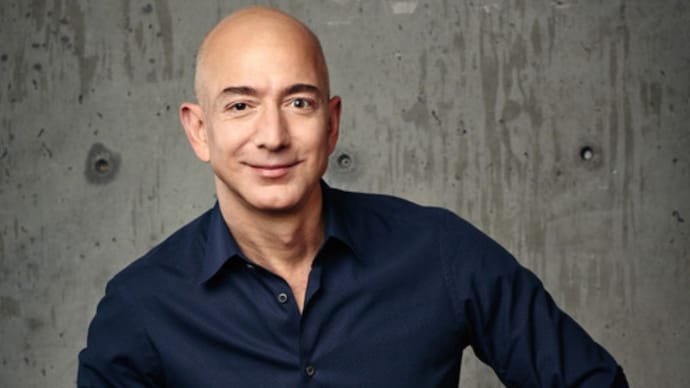
Jeff Bezos has argued that lower-income group should pay no income tax at all. Speaking to CNBC’s Squawk Box from Merritt Island, Florida, Bezos said the amount collected from lower earners is relatively small for the government, but can make a major difference in households already struggling with rising living costs.
“The top 1 per cent of taxpayers pay about 40 per cent of all tax revenue, and the bottom half pay 3 per cent,” Bezos said. “I don’t think it should be 3 per cent. I think it should be zero.”
To explain his point, Bezos used the example of a healthcare worker earning $75,000 a year.
“We shouldn't be asking this nurse in Queens to send money to Washington,” he said. “They should be sending her an apology.”
Bezos challenges the traditional charity model
Bezos also made a broader argument about wealth, philanthropy, and the role of corporations in society.
According to him, the biggest contribution billionaires can make is not necessarily through charity, but by building companies that create large-scale economic value.
“If I do my job right, the value to society and civilization from my for-profit companies will be much, much larger than the good that I do with my charitable giving,” Bezos said.
He pointed to companies like Amazon as examples of businesses that create jobs, infrastructure, lower prices, and convenience for millions of people.
Interestingly, the comment drew praise from Elon Musk, who responded online with: “Bravo Jeff Bezos!”
The exchange attracted attention because Musk has recently been involved in a high-profile legal battle involving OpenAI. In that dispute, Musk accused OpenAI executives of turning a non-profit organisation into a profit-driven company, describing it as “a textbook tale of altruism versus greed.”
Musk had argued in court that it was “not OK to loot a charity,” alleging that the organisation’s original mission had been compromised.
Against that backdrop, Musk publicly agreeing with Bezos on the idea that for-profit companies can generate enormous societal value became an unexpected moment of alignment between two of tech’s biggest rivals.
AI won’t replace engineers
Bezos also pushed back strongly against fears that AI will eliminate software engineering jobs.
Instead, he compared AI to a powerful productivity tool that amplifies human capability rather than replacing it.
“These people are wrong,” Bezos said, referring to predictions that software engineers could disappear because AI can write code.
He compared the shift to someone digging a basement with a shovel suddenly being handed a bulldozer.
The real impact of AI, Bezos argued, will be an explosion in productivity across the economy.
According to him, workers will be able to produce more output with less effort, allowing businesses to lower costs and create cheaper products and services.
Could AI actually make life cheaper?
Perhaps Bezos’ boldest prediction was about prices.
He suggested that if governments allow AI innovation to grow without excessive regulation, the technology could eventually make essential goods cheaper through massive efficiency gains.
“Because of the productivity gains, you're going to be able to afford things,” Bezos said.
He even predicted that some sectors could experience deflation — meaning prices could actually fall over time instead of continuously rising.
“Your food will get cheaper,” he said.
The idea may sound futuristic, but it reflects a growing belief among tech leaders that AI could dramatically reduce costs across industries such as logistics, healthcare, software, manufacturing, and retail.
Jeff Bezos has argued that lower-income group should pay no income tax at all. Speaking to CNBC’s Squawk Box from Merritt Island, Florida, Bezos said the amount collected from lower earners is relatively small for the government, but can make a major difference in households already struggling with rising living costs.
“The top 1 per cent of taxpayers pay about 40 per cent of all tax revenue, and the bottom half pay 3 per cent,” Bezos said. “I don’t think it should be 3 per cent. I think it should be zero.”
To explain his point, Bezos used the example of a healthcare worker earning $75,000 a year.
“We shouldn't be asking this nurse in Queens to send money to Washington,” he said. “They should be sending her an apology.”
Bezos challenges the traditional charity model
Bezos also made a broader argument about wealth, philanthropy, and the role of corporations in society.
According to him, the biggest contribution billionaires can make is not necessarily through charity, but by building companies that create large-scale economic value.
“If I do my job right, the value to society and civilization from my for-profit companies will be much, much larger than the good that I do with my charitable giving,” Bezos said.
He pointed to companies like Amazon as examples of businesses that create jobs, infrastructure, lower prices, and convenience for millions of people.
Interestingly, the comment drew praise from Elon Musk, who responded online with: “Bravo Jeff Bezos!”
The exchange attracted attention because Musk has recently been involved in a high-profile legal battle involving OpenAI. In that dispute, Musk accused OpenAI executives of turning a non-profit organisation into a profit-driven company, describing it as “a textbook tale of altruism versus greed.”
Musk had argued in court that it was “not OK to loot a charity,” alleging that the organisation’s original mission had been compromised.
Against that backdrop, Musk publicly agreeing with Bezos on the idea that for-profit companies can generate enormous societal value became an unexpected moment of alignment between two of tech’s biggest rivals.
AI won’t replace engineers
Bezos also pushed back strongly against fears that AI will eliminate software engineering jobs.
Instead, he compared AI to a powerful productivity tool that amplifies human capability rather than replacing it.
“These people are wrong,” Bezos said, referring to predictions that software engineers could disappear because AI can write code.
He compared the shift to someone digging a basement with a shovel suddenly being handed a bulldozer.
The real impact of AI, Bezos argued, will be an explosion in productivity across the economy.
According to him, workers will be able to produce more output with less effort, allowing businesses to lower costs and create cheaper products and services.
Could AI actually make life cheaper?
Perhaps Bezos’ boldest prediction was about prices.
He suggested that if governments allow AI innovation to grow without excessive regulation, the technology could eventually make essential goods cheaper through massive efficiency gains.
“Because of the productivity gains, you're going to be able to afford things,” Bezos said.
He even predicted that some sectors could experience deflation — meaning prices could actually fall over time instead of continuously rising.
“Your food will get cheaper,” he said.
The idea may sound futuristic, but it reflects a growing belief among tech leaders that AI could dramatically reduce costs across industries such as logistics, healthcare, software, manufacturing, and retail.

