Nvidia CEO says he will never hire college graduates if this one major skill is missing
Nvidia CEO Jensen Huang says AI skills could soon become essential for every profession, from coding to carpentry. Speaking on the Lex Fridman Podcast, he revealed that he would always choose an AI-skilled graduate over one who doesn't understand the technology.
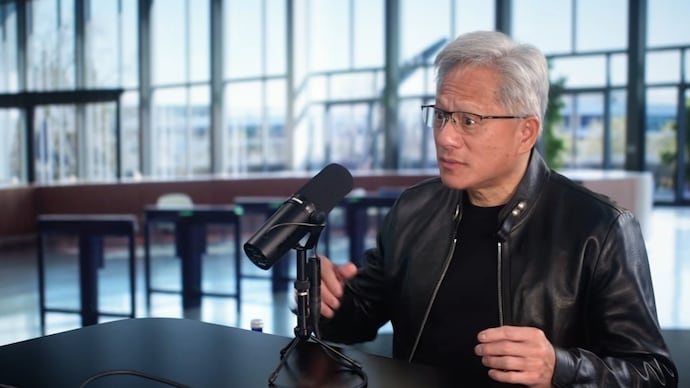
Nvidia CEO Jensen Huang has a very strong warning and advice for college graduates if they are serious about their careers. In a podcast with Lex Fridman, he revealed one major skill is required to be able to work with him or get hired by him. And this is future employees must know how to use AI. During the interview, he suggested that he would never hire a student who is not an expert in AI. The Nvidia chief said that if he had to choose between two college graduates with similar qualifications, he would always hire the one who is skilled in using AI tools.
“If we were to hire a new college graduate today, and I have a choice between two, one that has no clue what AI is and one that is expert in using AI, I would hire the one who’s expert in using AI,” Huang said during the podcast.
The conversation came during a wide-ranging discussion about the future of jobs, coding, automation, and artificial general intelligence (AGI). Huang argued that AI is not just another software tool, but a technology that could completely change how people work across industries.
He added that this would apply to nearly every profession, including marketing, accounting, law, customer service, supply chain management, and sales. According to him, every student graduating from college should become "an expert in AI."
AI skills may become as important as computer literacy
Huang believes that AI will soon become a basic workplace skill in the same way computers and spreadsheets once did. He suggested that people who refuse to learn AI may struggle in the future because automation will increasingly take over repetitive tasks.
At the same time, he also tried to calm fears around mass job losses. Huang explained that people often confuse the “purpose” of a job with the “tasks” involved in it. According to him, AI may automate certain parts of work, but it does not automatically remove the need for human workers.
To explain this, he used the example of radiologists. Years ago, many experts predicted that radiologists would become irrelevant once AI-powered computer vision became better than humans at reading scans. Huang said that prediction turned out to be wrong.
He noted that AI systems today are already extremely powerful in analysing medical scans, but instead of reducing the number of radiologists, the healthcare industry now faces a shortage of them. The reason, he explained, is that AI helped doctors process scans faster, diagnose patients more efficiently, and treat more people. As hospitals expanded services, demand for radiologists also increased.
Huang believes a similar thing could happen with software engineers. Rather than reducing the number of programmers, AI may actually increase the demand for them because more people will be able to create software.
Every carpenter in the future will be a coder: Nvidia CEO
One of Huang’s most striking comments during the interview was about the future of programming itself. He suggested that coding is no longer limited to writing traditional programming languages line by line. Instead, he described coding as the ability to clearly specify what you want a computer to build.
According to him, AI tools are now allowing far more people to create software simply by describing their ideas in natural language. “I think we just went from 30 million to probably 1 billion,” he said while talking about the number of people who could effectively become coders using AI.
Huang even suggested that professionals like carpenters, plumbers, accountants, and farmers could use AI to expand their capabilities and deliver better services to customers.
“Every carpenter in the future will be a coder,” he said, adding that AI could help workers become more creative and productive rather than replacing them entirely.
At the same time, Huang admitted that AI-driven automation will still create disruption. He warned that people whose jobs mainly revolve around repetitive tasks could face challenges if they do not adapt. His advice was simple: start learning AI now.
"If your job is the task, then you’re very highly going to be disrupted," Huang said.
Nvidia CEO Jensen Huang has a very strong warning and advice for college graduates if they are serious about their careers. In a podcast with Lex Fridman, he revealed one major skill is required to be able to work with him or get hired by him. And this is future employees must know how to use AI. During the interview, he suggested that he would never hire a student who is not an expert in AI. The Nvidia chief said that if he had to choose between two college graduates with similar qualifications, he would always hire the one who is skilled in using AI tools.
“If we were to hire a new college graduate today, and I have a choice between two, one that has no clue what AI is and one that is expert in using AI, I would hire the one who’s expert in using AI,” Huang said during the podcast.
The conversation came during a wide-ranging discussion about the future of jobs, coding, automation, and artificial general intelligence (AGI). Huang argued that AI is not just another software tool, but a technology that could completely change how people work across industries.
He added that this would apply to nearly every profession, including marketing, accounting, law, customer service, supply chain management, and sales. According to him, every student graduating from college should become "an expert in AI."
AI skills may become as important as computer literacy
Huang believes that AI will soon become a basic workplace skill in the same way computers and spreadsheets once did. He suggested that people who refuse to learn AI may struggle in the future because automation will increasingly take over repetitive tasks.
At the same time, he also tried to calm fears around mass job losses. Huang explained that people often confuse the “purpose” of a job with the “tasks” involved in it. According to him, AI may automate certain parts of work, but it does not automatically remove the need for human workers.
To explain this, he used the example of radiologists. Years ago, many experts predicted that radiologists would become irrelevant once AI-powered computer vision became better than humans at reading scans. Huang said that prediction turned out to be wrong.
He noted that AI systems today are already extremely powerful in analysing medical scans, but instead of reducing the number of radiologists, the healthcare industry now faces a shortage of them. The reason, he explained, is that AI helped doctors process scans faster, diagnose patients more efficiently, and treat more people. As hospitals expanded services, demand for radiologists also increased.
Huang believes a similar thing could happen with software engineers. Rather than reducing the number of programmers, AI may actually increase the demand for them because more people will be able to create software.
Every carpenter in the future will be a coder: Nvidia CEO
One of Huang’s most striking comments during the interview was about the future of programming itself. He suggested that coding is no longer limited to writing traditional programming languages line by line. Instead, he described coding as the ability to clearly specify what you want a computer to build.
According to him, AI tools are now allowing far more people to create software simply by describing their ideas in natural language. “I think we just went from 30 million to probably 1 billion,” he said while talking about the number of people who could effectively become coders using AI.
Huang even suggested that professionals like carpenters, plumbers, accountants, and farmers could use AI to expand their capabilities and deliver better services to customers.
“Every carpenter in the future will be a coder,” he said, adding that AI could help workers become more creative and productive rather than replacing them entirely.
At the same time, Huang admitted that AI-driven automation will still create disruption. He warned that people whose jobs mainly revolve around repetitive tasks could face challenges if they do not adapt. His advice was simple: start learning AI now.
"If your job is the task, then you’re very highly going to be disrupted," Huang said.

