Sridhar Vembu says globalism is dead, India should take lessons from China
Zoho founder Sridhar Vembu says the era of globalism is over and argues that India should embrace technology sharing instead of relying on intellectual property. He also points to China's open-source AI push as an example worth learning from.
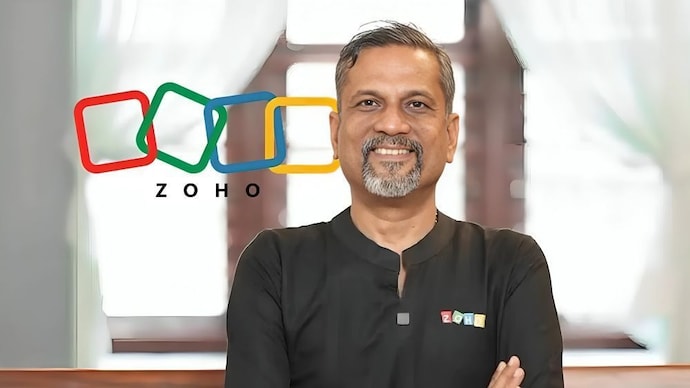
Zoho founder Sridhar Vembu has argued that the era of "globalism" is coming to an end and said India should learn from China's approach to sharing advanced technology with other countries. In a post on X, Vembu drew a distinction between what he called the "Internationalism" that emerged after World War II and the form of globalisation that took place after the collapse of the Soviet Union in the 1990s. According to him, the earlier model focused on cooperation and technology sharing, while the latter became driven by commercial interests and intellectual property.
To explain his point, Vembu pointed to the history of Chennai's Integral Coach Factory (ICF), which was established with technical assistance from Switzerland soon after India gained independence.
"I want to contrast the 'Internationalism' of the immediate post World War II years vs Wall Street driven 'Globalism' of the post Soviet collapse (1990s)," Vembu wrote.
He said Switzerland was not simply trying to export products to India but was helping the newly independent nation develop its own industrial capabilities. "Technology transfer was a term widely used then - knowledge was to be shared not hoarded," he added. Vembu argued that this approach has gradually disappeared. According to him, the focus has moved from sharing knowledge to protecting intellectual property and selling products to countries that lack similar technological capabilities.
"Today 'knowledge' has been replaced with 'intellectual property'. The goal is to sell stuff to people who don't have anything to sell back, and drive them into debt," he said. He further claimed that "the death of globalism is directly the result of intellectual property being used as a tool to dominate global affairs."
China's open-source AI push grabs global attention
The Zoho founder also linked his views to India's long-term global ambitions. He said the idea of Bharat becoming a "Vishwaguru" should be based on reviving the earlier culture of international cooperation, where advanced technology is shared voluntarily with developing nations instead of being tightly controlled.
His comments come at a time when China is increasingly promoting open-source artificial intelligence models on the global stage. Vembu cited China's decision to release state-of-the-art large language models (LLMs) openly, saying it has helped strengthen the country's standing internationally. "Giving away state of the art LLMs has enhanced the stature of China in global affairs. There is a lesson here for us," he wrote.
His remarks follow the recent launch of Kimi K3, an open-source AI model developed by Chinese startup Moonshot AI. The company claims the model can compete with some of the leading AI systems from companies such as OpenAI and Anthropic on several benchmarks. The release also coincided with Chinese President Xi Jinping calling for greater international cooperation in AI and supporting a more open approach to the technology.
The launch of Kimi K3 also triggered a sharp reaction in financial markets, with shares of several US semiconductor companies falling amid concerns that increasingly capable and cost-efficient Chinese AI models could challenge the current AI investment cycle.
Zoho founder Sridhar Vembu has argued that the era of "globalism" is coming to an end and said India should learn from China's approach to sharing advanced technology with other countries. In a post on X, Vembu drew a distinction between what he called the "Internationalism" that emerged after World War II and the form of globalisation that took place after the collapse of the Soviet Union in the 1990s. According to him, the earlier model focused on cooperation and technology sharing, while the latter became driven by commercial interests and intellectual property.
To explain his point, Vembu pointed to the history of Chennai's Integral Coach Factory (ICF), which was established with technical assistance from Switzerland soon after India gained independence.
"I want to contrast the 'Internationalism' of the immediate post World War II years vs Wall Street driven 'Globalism' of the post Soviet collapse (1990s)," Vembu wrote.
He said Switzerland was not simply trying to export products to India but was helping the newly independent nation develop its own industrial capabilities. "Technology transfer was a term widely used then - knowledge was to be shared not hoarded," he added. Vembu argued that this approach has gradually disappeared. According to him, the focus has moved from sharing knowledge to protecting intellectual property and selling products to countries that lack similar technological capabilities.
"Today 'knowledge' has been replaced with 'intellectual property'. The goal is to sell stuff to people who don't have anything to sell back, and drive them into debt," he said. He further claimed that "the death of globalism is directly the result of intellectual property being used as a tool to dominate global affairs."
China's open-source AI push grabs global attention
The Zoho founder also linked his views to India's long-term global ambitions. He said the idea of Bharat becoming a "Vishwaguru" should be based on reviving the earlier culture of international cooperation, where advanced technology is shared voluntarily with developing nations instead of being tightly controlled.
His comments come at a time when China is increasingly promoting open-source artificial intelligence models on the global stage. Vembu cited China's decision to release state-of-the-art large language models (LLMs) openly, saying it has helped strengthen the country's standing internationally. "Giving away state of the art LLMs has enhanced the stature of China in global affairs. There is a lesson here for us," he wrote.
His remarks follow the recent launch of Kimi K3, an open-source AI model developed by Chinese startup Moonshot AI. The company claims the model can compete with some of the leading AI systems from companies such as OpenAI and Anthropic on several benchmarks. The release also coincided with Chinese President Xi Jinping calling for greater international cooperation in AI and supporting a more open approach to the technology.
The launch of Kimi K3 also triggered a sharp reaction in financial markets, with shares of several US semiconductor companies falling amid concerns that increasingly capable and cost-efficient Chinese AI models could challenge the current AI investment cycle.
Zoho founder Sridhar Vembu has argued that the era of "globalism" is coming to an end and said India should learn from China's approach to sharing advanced technology with other countries. In a post on X, Vembu drew a distinction between what he called the "Internationalism" that emerged after World War II and the form of globalisation that took place after the collapse of the Soviet Union in the 1990s. According to him, the earlier model focused on cooperation and technology sharing, while the latter became driven by commercial interests and intellectual property.
To explain his point, Vembu pointed to the history of Chennai's Integral Coach Factory (ICF), which was established with technical assistance from Switzerland soon after India gained independence.
"I want to contrast the 'Internationalism' of the immediate post World War II years vs Wall Street driven 'Globalism' of the post Soviet collapse (1990s)," Vembu wrote.
He said Switzerland was not simply trying to export products to India but was helping the newly independent nation develop its own industrial capabilities. "Technology transfer was a term widely used then - knowledge was to be shared not hoarded," he added. Vembu argued that this approach has gradually disappeared. According to him, the focus has moved from sharing knowledge to protecting intellectual property and selling products to countries that lack similar technological capabilities.
"Today 'knowledge' has been replaced with 'intellectual property'. The goal is to sell stuff to people who don't have anything to sell back, and drive them into debt," he said. He further claimed that "the death of globalism is directly the result of intellectual property being used as a tool to dominate global affairs."
China's open-source AI push grabs global attention
The Zoho founder also linked his views to India's long-term global ambitions. He said the idea of Bharat becoming a "Vishwaguru" should be based on reviving the earlier culture of international cooperation, where advanced technology is shared voluntarily with developing nations instead of being tightly controlled.
His comments come at a time when China is increasingly promoting open-source artificial intelligence models on the global stage. Vembu cited China's decision to release state-of-the-art large language models (LLMs) openly, saying it has helped strengthen the country's standing internationally. "Giving away state of the art LLMs has enhanced the stature of China in global affairs. There is a lesson here for us," he wrote.
His remarks follow the recent launch of Kimi K3, an open-source AI model developed by Chinese startup Moonshot AI. The company claims the model can compete with some of the leading AI systems from companies such as OpenAI and Anthropic on several benchmarks. The release also coincided with Chinese President Xi Jinping calling for greater international cooperation in AI and supporting a more open approach to the technology.
The launch of Kimi K3 also triggered a sharp reaction in financial markets, with shares of several US semiconductor companies falling amid concerns that increasingly capable and cost-efficient Chinese AI models could challenge the current AI investment cycle.

