Sridhar Vembu rejects universal basic income, says deep tech can help teachers and farmers make more money
Zoho founder Sridhar Vembu wants India to avoid the "hell" of universal basic income. He says that this can only happen when we develop proper deep tech capabilities, which can also allow for farmers and teachers to make more money.
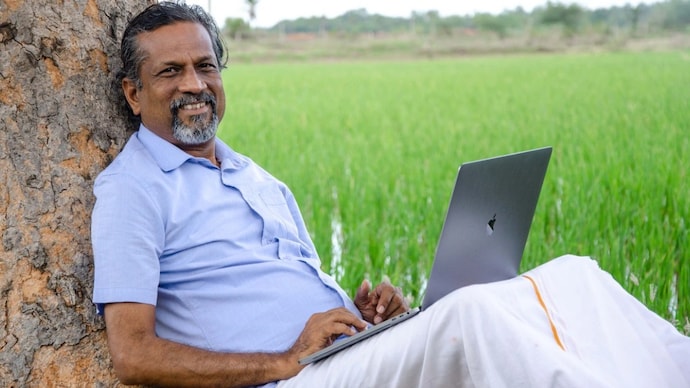
Zoho founder Sridhar Vembu wants India to avoid having a universal basic income in the era of AI and automation. And to do this, Vembu says, we must develop deep tech capabilities that can also increase income levels of teachers and farmers.
In a long post on X, Sridhar Vembu compared Switzerland’s income levels to India. He asked, “Why does a Swiss school teacher afford an iPhone in 2-4 days of income while an Indian school teacher needs to work 2-4 months for the same thing?"
The Zoho chief claimed that difference comes from a region’s ability to trade on favourable terms through deep technology capability, and from the choices its political economy makes on income distribution. “The answer in a nut shell: Switzerland has the deep tech capability to trade for iPhones made elsewhere on favorable terms and the Swiss political economy chooses to pay teachers well,” he added.
Vembu said technology capability was critical not because of the direct jobs it created, but because of the “optionality” it gave a region in arranging its own political economy. As he put it, “If you have the deep tech capability in a region, the regional economy has the option of paying non-tech occupations like teachers, farmers, barbers, well.”
India must avoid universal basic income hell
Turning to universal basic income (UBI), Vembu claimed that India needed to focus on research and development to not need to have UBI in the first place. “The way we can avoid the UBI hell is to first develop deep tech capability in the region (lots of R&D) and then we create jobs in what I call ‘Nature, Nurture, Culture and Scripture,’” he said.
The Zoho chief claimed that the jobs side was a question of political economy, while the tech side created the external balance needed to fund those jobs.
Do note that tech trillionaire Elon Musk has often talked about a universal high income in the era of AI.
Sridhar Vembu cited Switzerland and Israel as examples of countries that avoided that fate because they had “capabilities the world wants.” Referring to their size, he wrote, “Each nation has fewer than 10 million people, so Chennai is bigger than each nation.” He added, “Or as I prefer to see it ‘a few southern districts of Tamil Nadu have the population of Switzerland.’”
Use tech wealth for development
Sridhar Vembu insisted that he would spend tech wealth on “nature conservation and sustainable farming and decently paid farmers, good schools and decently paid teachers, good health care and decently paid nurses, good cultural and sports events and decently paid local artists, good religious institutions and decently paid priests and counselors”. He added that “The option to decently pay these jobs exists only if the region can trade on favorable terms and that comes from deep tech capability.”
Vembu described this as “Rural Development through Research and Development”. He wrote, “The R&D creates the external balance and the RD creates the internal harmony in society. That is my economic thesis: Balance, Symmetry, Harmony and Contentment.” He ended the post by saying, “R&D only makes it all possible, let me get back to work!”
The Zoho chief also argued that a region without deep tech capability had “no option but to keep going into debt to the outside world”, adding that such debt would ultimately be held by the deep tech-capable regions and companies that supply technology.
Vembu’s latest comments add to a previous post about jobs. The Zoho founder recently admitted that the Indian IT sector was not creating more jobs, as companies were using all funds to invest in AI instead.
Zoho founder Sridhar Vembu wants India to avoid having a universal basic income in the era of AI and automation. And to do this, Vembu says, we must develop deep tech capabilities that can also increase income levels of teachers and farmers.
In a long post on X, Sridhar Vembu compared Switzerland’s income levels to India. He asked, “Why does a Swiss school teacher afford an iPhone in 2-4 days of income while an Indian school teacher needs to work 2-4 months for the same thing?"
The Zoho chief claimed that difference comes from a region’s ability to trade on favourable terms through deep technology capability, and from the choices its political economy makes on income distribution. “The answer in a nut shell: Switzerland has the deep tech capability to trade for iPhones made elsewhere on favorable terms and the Swiss political economy chooses to pay teachers well,” he added.
Vembu said technology capability was critical not because of the direct jobs it created, but because of the “optionality” it gave a region in arranging its own political economy. As he put it, “If you have the deep tech capability in a region, the regional economy has the option of paying non-tech occupations like teachers, farmers, barbers, well.”
India must avoid universal basic income hell
Turning to universal basic income (UBI), Vembu claimed that India needed to focus on research and development to not need to have UBI in the first place. “The way we can avoid the UBI hell is to first develop deep tech capability in the region (lots of R&D) and then we create jobs in what I call ‘Nature, Nurture, Culture and Scripture,’” he said.
The Zoho chief claimed that the jobs side was a question of political economy, while the tech side created the external balance needed to fund those jobs.
Do note that tech trillionaire Elon Musk has often talked about a universal high income in the era of AI.
Sridhar Vembu cited Switzerland and Israel as examples of countries that avoided that fate because they had “capabilities the world wants.” Referring to their size, he wrote, “Each nation has fewer than 10 million people, so Chennai is bigger than each nation.” He added, “Or as I prefer to see it ‘a few southern districts of Tamil Nadu have the population of Switzerland.’”
Use tech wealth for development
Sridhar Vembu insisted that he would spend tech wealth on “nature conservation and sustainable farming and decently paid farmers, good schools and decently paid teachers, good health care and decently paid nurses, good cultural and sports events and decently paid local artists, good religious institutions and decently paid priests and counselors”. He added that “The option to decently pay these jobs exists only if the region can trade on favorable terms and that comes from deep tech capability.”
Vembu described this as “Rural Development through Research and Development”. He wrote, “The R&D creates the external balance and the RD creates the internal harmony in society. That is my economic thesis: Balance, Symmetry, Harmony and Contentment.” He ended the post by saying, “R&D only makes it all possible, let me get back to work!”
The Zoho chief also argued that a region without deep tech capability had “no option but to keep going into debt to the outside world”, adding that such debt would ultimately be held by the deep tech-capable regions and companies that supply technology.
Vembu’s latest comments add to a previous post about jobs. The Zoho founder recently admitted that the Indian IT sector was not creating more jobs, as companies were using all funds to invest in AI instead.
Zoho founder Sridhar Vembu wants India to avoid having a universal basic income in the era of AI and automation. And to do this, Vembu says, we must develop deep tech capabilities that can also increase income levels of teachers and farmers.
In a long post on X, Sridhar Vembu compared Switzerland’s income levels to India. He asked, “Why does a Swiss school teacher afford an iPhone in 2-4 days of income while an Indian school teacher needs to work 2-4 months for the same thing?"
The Zoho chief claimed that difference comes from a region’s ability to trade on favourable terms through deep technology capability, and from the choices its political economy makes on income distribution. “The answer in a nut shell: Switzerland has the deep tech capability to trade for iPhones made elsewhere on favorable terms and the Swiss political economy chooses to pay teachers well,” he added.
Vembu said technology capability was critical not because of the direct jobs it created, but because of the “optionality” it gave a region in arranging its own political economy. As he put it, “If you have the deep tech capability in a region, the regional economy has the option of paying non-tech occupations like teachers, farmers, barbers, well.”
India must avoid universal basic income hell
Turning to universal basic income (UBI), Vembu claimed that India needed to focus on research and development to not need to have UBI in the first place. “The way we can avoid the UBI hell is to first develop deep tech capability in the region (lots of R&D) and then we create jobs in what I call ‘Nature, Nurture, Culture and Scripture,’” he said.
The Zoho chief claimed that the jobs side was a question of political economy, while the tech side created the external balance needed to fund those jobs.
Do note that tech trillionaire Elon Musk has often talked about a universal high income in the era of AI.
Sridhar Vembu cited Switzerland and Israel as examples of countries that avoided that fate because they had “capabilities the world wants.” Referring to their size, he wrote, “Each nation has fewer than 10 million people, so Chennai is bigger than each nation.” He added, “Or as I prefer to see it ‘a few southern districts of Tamil Nadu have the population of Switzerland.’”
Use tech wealth for development
Sridhar Vembu insisted that he would spend tech wealth on “nature conservation and sustainable farming and decently paid farmers, good schools and decently paid teachers, good health care and decently paid nurses, good cultural and sports events and decently paid local artists, good religious institutions and decently paid priests and counselors”. He added that “The option to decently pay these jobs exists only if the region can trade on favorable terms and that comes from deep tech capability.”
Vembu described this as “Rural Development through Research and Development”. He wrote, “The R&D creates the external balance and the RD creates the internal harmony in society. That is my economic thesis: Balance, Symmetry, Harmony and Contentment.” He ended the post by saying, “R&D only makes it all possible, let me get back to work!”
The Zoho chief also argued that a region without deep tech capability had “no option but to keep going into debt to the outside world”, adding that such debt would ultimately be held by the deep tech-capable regions and companies that supply technology.
Vembu’s latest comments add to a previous post about jobs. The Zoho founder recently admitted that the Indian IT sector was not creating more jobs, as companies were using all funds to invest in AI instead.

