Samsung Galaxy S26 Ultra review: A practical flagship with thoughtful upgrades
The Samsung Galaxy S26 Ultra favours practical innovation and long-term reliability over flashy, experimental gimmicks.
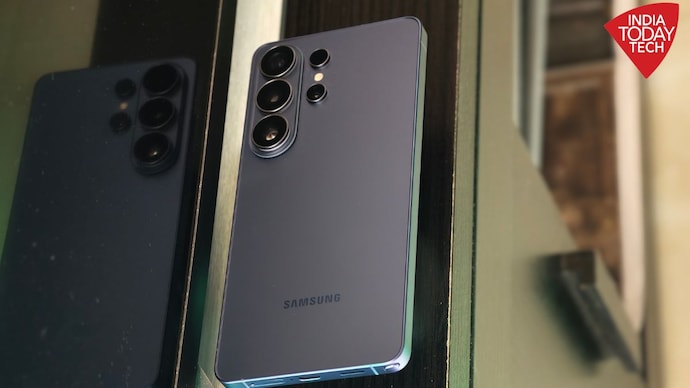
Samsung Galaxy S26 Ultra review
Pros
- Revolutionary privacy display
- Refined ergonomics
- Superior software longevity
Cons
- Ageing camera hardware
- Conservative battery
- Predictable design language
What is a flagship phone? What do you expect from a flagship phone? They are not the same questions. The former makes you look at things objectively. The latter is more subjective, for which the sky is the limit. Who’s to say who is right? No two people are alike. Everyone has their opinion much in the same way everyone must live with their own choices. If you look at the Samsung Galaxy S26 Ultra objectively, you’d think that it’s great. If you treat it subjectively, you’d find something is amiss. That is the nature of things. All things.
I am not here to defend – or diss – the S26 Ultra. But I do believe that it is a genuinely great smartphone, or at least it has all the underpinnings that should make for a great smartphone for most people, the type that is hard to replicate on any other phone out there, even some of Samsung’s own. I’d be surprised if it was anything less, given that this is its most high-end phone, the flag-bearer of the latest and greatest technology designed to make you sit up from your seat and go, “wow, that’s...wow!” The S26 Ultra doesn’t do that though.
The unboxing experience hasn’t changed in years. It is the same as before. If anything, things are more black and white than ever. Some colour would be nice. Not today, Samsung says. There is beauty in simplicity. You could say that and move on. Inside, everything is cut to size with expert precision. The phone sits end-to-end. Flush.
If you are a smartphone enthusiast, it would take some convincing to tell you that this is THE next-generation phone. You are not crazy. The times are crazy. Google just took the Pixel 9a and relaunched it as the Pixel 10a. The Internet caught the slip and had a field day. Nothing ever escapes it like the Eye of Sauron. But as God is my witness, Samsung did make a new phone even if it looks ridiculously similar to the old one, the S25 Ultra.
The devil is in the detail.
The blueprint is the same. The footprint is not. Instead of making big cosmetic changes on the outside, Samsung chose to make the chassis smaller. Or maybe compact is the word I am looking for. The build materials are slightly different. You get two sheets of flat glass – front Armor 2 and back Victus 2 – like the S25 Ultra, but they are joined by an aluminium frame. Titanium season is over for Samsung, as it is for Apple. That’s okay.
The corners are more rounded. As a result, the phone is a bit more comfortable to hold and a little easier to work around with in day-to-day. Though the elevated camera housing does make table-top use somewhat erratic. These phones have had a long history of being massive. To see them sizing down to this – the S26 Ultra – is both a relief and a reminder of how far Samsung has come. The S26 Ultra is over 10 percent thinner and 19g lighter than the iPhone 17 Pro Max.
The bulk may have disappeared, but it is a 6.9-inch phone. You’d want to use both hands to make the most of it. The S-Pen is still puttering around. It is the only thing standing between the new and old guard. Some might call it a paradox. On the one end, Samsung is pushing you to physically interact with your phone as little as possible. On the other hand, it is giving you a pen and an open canvas. Maybe that’s the point. At a time when less is becoming more and everything seems to be narrowing down to neither and or, Samsung offering the best of both worlds is worth some serious street cred. It is one of the things that make this phone “ultra.”
The other is the screen itself. We know that Samsung makes foldables too. Phones like the Galaxy Z Fold 7/Flip 7 run away with all the spotlights leaving others – the regular slab ones – look dull and boring. With the S24 Ultra, Samsung flipped the script and put an anti-reflective coating on the display. It became an instant hit. On the S26 Ultra, it has added another feature that – not unless you live under a rock – is grabbing headlines and for a good reason. It is called privacy display.
You can think of it as a privacy screen guard. The difference is that here, it is not third-party. It is available by default. And it is not a screen guard at all. It is integrated at the hardware level and managed through software. When switched on, the display limits off-angle viewing, so no one can peek into your phone when you’re using it.
How does it do it? The short answer is by altering the current. Since Samsung can do this for every pixel, you can apply this factory-fitted solution to specific areas of the screen, not just the whole thing. For instance, you can set it to work with notification pop-ups only. By extension, it can work with select apps – any app – like WhatsApp. I have to say, watching my phone’s screen go dark as I tilt it, wasn’t on my wishlist. Now? Well, I hate that my iPhone doesn’t do it.
It – along with the anti-reflective coating – is an Ultra-exclusive. No other phone has it. The catch is that normally the S26 Ultra’s display can hit 2,600 nits while playing HDR content, but it drops to noticeable levels when privacy display is running, especially at the maximum setting in which case even the contrast takes a hit. It is something that you have to live with. Alternatively, you can forget about it and use the S26 Ultra like any other phone on the market.
That aside, the S26 Ultra’s display performs like any other top-end Samsung display: it is pixel dense (1440p), fast (120Hz), efficient (LTPO) and churns out pleasing colours (AMOLED). The bezels are almost non-existent. Combined with the excellent stereo speaker setup, it’s a true treat for your eyes and senses if you’re in the habit of binge-watching or playing games.
Sticking to what is now an annual tradition, the S26 Ultra gets the first dibs at Qualcomm’s fastest chip on the block: an overclocked version of the Snapdragon 8 Gen Elite 5 with faster Oryon V3 Phoenix CPU cores (@4.74GHz) and a beefed-up Adreno 840 GPU (@1300MHz). The “Snapdragon for Galaxy” branding holds up in benchmarks smoking competition across multi- and single-core performance. Samsung says it has redesigned the vapour cooling chamber though, as is often the case, the dragon tends to run hot, throttling with extreme prejudice during CPU Throttling/3DMark Wildlife Extreme tests.
Cut to the real world and everything works predictably. There are no surprises. Apps open in a jiffy. Navigation is fast and fluid. Games are playable at the highest settings.
The phone’s a multitasking beast.
Samsung isn’t beating around the software bush. It is so confident, it summoned Bixby from the afterlife in One UI 8.5. And you know what, it got better this time. Smarter. Phones are a cornucopia of features and settings. We don’t usually know or understand half of it. In the past, you’d probably look through a manual, in case you got stuck somewhere. Lately, you search the web. On the S26 Ultra, Bixby is your go-to tech support.
It is more understanding, patient, and accommodating if you’re not tech-savvy. Ask a question about your phone or the world at large. Not only does it come back with prompt responses, but it is also happy to help with follow-up tasks. More importantly, it is not second guessing any more, it is actually helpful, especially at offloading tedious tasks like cranking the brightness or setting a timer without so much as skipping a beat.
Bixby should be enough for most people, but if you fancy an even more expert treatment, you can call Perplexity, or your usual suspect, Google Gemini as well. That’s right: the S26 Ultra officially supports three personal assistants at the time of writing. One too many, perhaps, but that’s classic Samsung. Better to have it and not need it than to need it and not have it.
There is more AI here than the Google Pixel. iPhone has left the chat. Speaking of which, Samsung made a chat feature that puts AI inside popular messaging apps and offers you real-time assistance based on context. Say you’re planning to meet a friend, it will nudge you to block your calendar or book a seat at the restaurant you discussed. While we’re on assistance, Photo Assist also gets a neat little trick that lets you virtually try on clothes on a photo you just clicked.
The cameras are a mixed bag. A step forward here, and a step backward there. On paper, they seem like a do-over from last year. But there are differences. The primary camera uses a 200-megapixel sensor, same as the S25 Ultra, but it sits behind a brighter f/1.4 lens. There are two telephotos, same as before, but while the 50-megapixel 5x zoom gets a new f/2.9 lens and longer minimum focusing distance of 52cm, the 10-megapixel 3x uses a smaller sensor (1/3.94-inch with 1.0-micron pixels). The ultra-wide remains unchanged at 50-megapixel f/1.9. The front camera is 12-megapixel, the same sensor but with a wider 23mm lens.
The main camera is the centre of attraction, delivering consistently good stills across a wide range of lighting scenarios. The low-light camera performance is a clear step-up over the S25 Ultra. Comparative shots generally have more dramatic effects in colour and contrast. Portraits at 2x stand out. They are pleasing and even larger than life in some cases. But as you go higher up, things start falling apart, slowly and gradually, with output getting softer. It is apparent that hardware is showing signs of ageing, having been used repeatedly for many years now. While Chinese players are doubling down on telephoto performance, going so far as to launch dedicated extender kits along with their phones, Samsung — once a leader in zoom theatrics — is missing a trick or two.
Check out full camera samples below; Click to access more
Much in the same way, Silicon-Carbon technology is also not on the radar yet. Instead, its Ultra phone is shipping with the same 5,000mAh capacity for over 5 years now. Battery life is good. Charging speeds have gone up from 45W to 60W (wired) and from 15W to 25W (wirelessly).
The S26 Ultra is an everything phone.
Once again, the term everything is open to interpretation. Objectively, it means that nothing gets left behind. Nothing which when it is not there, you’d go, “that’s not done, I needed that.” From the vantage point of objectivity, the S26 Ultra has everything: a premium and durable design, slick display, fast performance, long battery life, versatile cameras, and feature-packed software with 7-year support.
But when you look at it subjectively, you might want the design to be different, possibly with a more powerful IP rating, the display to have some degree of PWM dimming, cameras more tuned to 2026 trends, or simply a bigger battery with magnets that could allow for MagSafe-like wireless charging. The S26 Ultra can’t get you any of that and yet, chances are that most people might end up picking it over X, Y or Z phone, not because you can’t always get what you want, but because smartphone buying decisions are almost always governed by rhyme and reason.
With the S26 Ultra, Samsung isn’t selling you a dream. It is giving you something which is more genuine and practical, with more than enough futureproofing it will work for years without any compromise. It doesn’t make a big show, but it wins you over anyway.
What is a flagship phone? What do you expect from a flagship phone? They are not the same questions. The former makes you look at things objectively. The latter is more subjective, for which the sky is the limit. Who’s to say who is right? No two people are alike. Everyone has their opinion much in the same way everyone must live with their own choices. If you look at the Samsung Galaxy S26 Ultra objectively, you’d think that it’s great. If you treat it subjectively, you’d find something is amiss. That is the nature of things. All things.
I am not here to defend – or diss – the S26 Ultra. But I do believe that it is a genuinely great smartphone, or at least it has all the underpinnings that should make for a great smartphone for most people, the type that is hard to replicate on any other phone out there, even some of Samsung’s own. I’d be surprised if it was anything less, given that this is its most high-end phone, the flag-bearer of the latest and greatest technology designed to make you sit up from your seat and go, “wow, that’s...wow!” The S26 Ultra doesn’t do that though.
The unboxing experience hasn’t changed in years. It is the same as before. If anything, things are more black and white than ever. Some colour would be nice. Not today, Samsung says. There is beauty in simplicity. You could say that and move on. Inside, everything is cut to size with expert precision. The phone sits end-to-end. Flush.
If you are a smartphone enthusiast, it would take some convincing to tell you that this is THE next-generation phone. You are not crazy. The times are crazy. Google just took the Pixel 9a and relaunched it as the Pixel 10a. The Internet caught the slip and had a field day. Nothing ever escapes it like the Eye of Sauron. But as God is my witness, Samsung did make a new phone even if it looks ridiculously similar to the old one, the S25 Ultra.
The devil is in the detail.
The blueprint is the same. The footprint is not. Instead of making big cosmetic changes on the outside, Samsung chose to make the chassis smaller. Or maybe compact is the word I am looking for. The build materials are slightly different. You get two sheets of flat glass – front Armor 2 and back Victus 2 – like the S25 Ultra, but they are joined by an aluminium frame. Titanium season is over for Samsung, as it is for Apple. That’s okay.
The corners are more rounded. As a result, the phone is a bit more comfortable to hold and a little easier to work around with in day-to-day. Though the elevated camera housing does make table-top use somewhat erratic. These phones have had a long history of being massive. To see them sizing down to this – the S26 Ultra – is both a relief and a reminder of how far Samsung has come. The S26 Ultra is over 10 percent thinner and 19g lighter than the iPhone 17 Pro Max.
The bulk may have disappeared, but it is a 6.9-inch phone. You’d want to use both hands to make the most of it. The S-Pen is still puttering around. It is the only thing standing between the new and old guard. Some might call it a paradox. On the one end, Samsung is pushing you to physically interact with your phone as little as possible. On the other hand, it is giving you a pen and an open canvas. Maybe that’s the point. At a time when less is becoming more and everything seems to be narrowing down to neither and or, Samsung offering the best of both worlds is worth some serious street cred. It is one of the things that make this phone “ultra.”
The other is the screen itself. We know that Samsung makes foldables too. Phones like the Galaxy Z Fold 7/Flip 7 run away with all the spotlights leaving others – the regular slab ones – look dull and boring. With the S24 Ultra, Samsung flipped the script and put an anti-reflective coating on the display. It became an instant hit. On the S26 Ultra, it has added another feature that – not unless you live under a rock – is grabbing headlines and for a good reason. It is called privacy display.
You can think of it as a privacy screen guard. The difference is that here, it is not third-party. It is available by default. And it is not a screen guard at all. It is integrated at the hardware level and managed through software. When switched on, the display limits off-angle viewing, so no one can peek into your phone when you’re using it.
How does it do it? The short answer is by altering the current. Since Samsung can do this for every pixel, you can apply this factory-fitted solution to specific areas of the screen, not just the whole thing. For instance, you can set it to work with notification pop-ups only. By extension, it can work with select apps – any app – like WhatsApp. I have to say, watching my phone’s screen go dark as I tilt it, wasn’t on my wishlist. Now? Well, I hate that my iPhone doesn’t do it.
It – along with the anti-reflective coating – is an Ultra-exclusive. No other phone has it. The catch is that normally the S26 Ultra’s display can hit 2,600 nits while playing HDR content, but it drops to noticeable levels when privacy display is running, especially at the maximum setting in which case even the contrast takes a hit. It is something that you have to live with. Alternatively, you can forget about it and use the S26 Ultra like any other phone on the market.
That aside, the S26 Ultra’s display performs like any other top-end Samsung display: it is pixel dense (1440p), fast (120Hz), efficient (LTPO) and churns out pleasing colours (AMOLED). The bezels are almost non-existent. Combined with the excellent stereo speaker setup, it’s a true treat for your eyes and senses if you’re in the habit of binge-watching or playing games.
Sticking to what is now an annual tradition, the S26 Ultra gets the first dibs at Qualcomm’s fastest chip on the block: an overclocked version of the Snapdragon 8 Gen Elite 5 with faster Oryon V3 Phoenix CPU cores (@4.74GHz) and a beefed-up Adreno 840 GPU (@1300MHz). The “Snapdragon for Galaxy” branding holds up in benchmarks smoking competition across multi- and single-core performance. Samsung says it has redesigned the vapour cooling chamber though, as is often the case, the dragon tends to run hot, throttling with extreme prejudice during CPU Throttling/3DMark Wildlife Extreme tests.
Cut to the real world and everything works predictably. There are no surprises. Apps open in a jiffy. Navigation is fast and fluid. Games are playable at the highest settings.
The phone’s a multitasking beast.
Samsung isn’t beating around the software bush. It is so confident, it summoned Bixby from the afterlife in One UI 8.5. And you know what, it got better this time. Smarter. Phones are a cornucopia of features and settings. We don’t usually know or understand half of it. In the past, you’d probably look through a manual, in case you got stuck somewhere. Lately, you search the web. On the S26 Ultra, Bixby is your go-to tech support.
It is more understanding, patient, and accommodating if you’re not tech-savvy. Ask a question about your phone or the world at large. Not only does it come back with prompt responses, but it is also happy to help with follow-up tasks. More importantly, it is not second guessing any more, it is actually helpful, especially at offloading tedious tasks like cranking the brightness or setting a timer without so much as skipping a beat.
Bixby should be enough for most people, but if you fancy an even more expert treatment, you can call Perplexity, or your usual suspect, Google Gemini as well. That’s right: the S26 Ultra officially supports three personal assistants at the time of writing. One too many, perhaps, but that’s classic Samsung. Better to have it and not need it than to need it and not have it.
There is more AI here than the Google Pixel. iPhone has left the chat. Speaking of which, Samsung made a chat feature that puts AI inside popular messaging apps and offers you real-time assistance based on context. Say you’re planning to meet a friend, it will nudge you to block your calendar or book a seat at the restaurant you discussed. While we’re on assistance, Photo Assist also gets a neat little trick that lets you virtually try on clothes on a photo you just clicked.
The cameras are a mixed bag. A step forward here, and a step backward there. On paper, they seem like a do-over from last year. But there are differences. The primary camera uses a 200-megapixel sensor, same as the S25 Ultra, but it sits behind a brighter f/1.4 lens. There are two telephotos, same as before, but while the 50-megapixel 5x zoom gets a new f/2.9 lens and longer minimum focusing distance of 52cm, the 10-megapixel 3x uses a smaller sensor (1/3.94-inch with 1.0-micron pixels). The ultra-wide remains unchanged at 50-megapixel f/1.9. The front camera is 12-megapixel, the same sensor but with a wider 23mm lens.
The main camera is the centre of attraction, delivering consistently good stills across a wide range of lighting scenarios. The low-light camera performance is a clear step-up over the S25 Ultra. Comparative shots generally have more dramatic effects in colour and contrast. Portraits at 2x stand out. They are pleasing and even larger than life in some cases. But as you go higher up, things start falling apart, slowly and gradually, with output getting softer. It is apparent that hardware is showing signs of ageing, having been used repeatedly for many years now. While Chinese players are doubling down on telephoto performance, going so far as to launch dedicated extender kits along with their phones, Samsung — once a leader in zoom theatrics — is missing a trick or two.
Check out full camera samples below; Click to access more
Much in the same way, Silicon-Carbon technology is also not on the radar yet. Instead, its Ultra phone is shipping with the same 5,000mAh capacity for over 5 years now. Battery life is good. Charging speeds have gone up from 45W to 60W (wired) and from 15W to 25W (wirelessly).
The S26 Ultra is an everything phone.
Once again, the term everything is open to interpretation. Objectively, it means that nothing gets left behind. Nothing which when it is not there, you’d go, “that’s not done, I needed that.” From the vantage point of objectivity, the S26 Ultra has everything: a premium and durable design, slick display, fast performance, long battery life, versatile cameras, and feature-packed software with 7-year support.
But when you look at it subjectively, you might want the design to be different, possibly with a more powerful IP rating, the display to have some degree of PWM dimming, cameras more tuned to 2026 trends, or simply a bigger battery with magnets that could allow for MagSafe-like wireless charging. The S26 Ultra can’t get you any of that and yet, chances are that most people might end up picking it over X, Y or Z phone, not because you can’t always get what you want, but because smartphone buying decisions are almost always governed by rhyme and reason.
With the S26 Ultra, Samsung isn’t selling you a dream. It is giving you something which is more genuine and practical, with more than enough futureproofing it will work for years without any compromise. It doesn’t make a big show, but it wins you over anyway.

