Man questions why India's biggest cities offer little beyond cafes and shopping
An Instagram creator's video on limited affordable activities in major Indian cities has drawn attention online. It has widened discussion on public spaces, walkability and consumption-driven urban life.
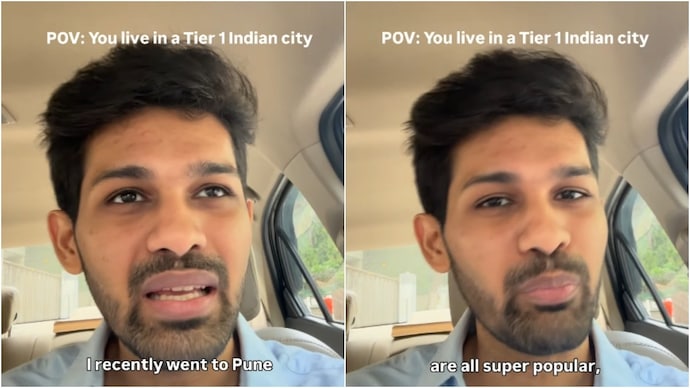
For many urban Indians, a weekend plan often comes down to the same choices: a caf, a mall or a restaurant. A viral video has now sparked a conversation over whether India's biggest cities are offering people enough ways to spend time beyond consumption.
In the video shared on Instagram by content creator @the.headless, he questioned why cities like Mumbai, Delhi, Bengaluru and Pune often leave residents with limited options when it comes to affordable recreation and cultural experiences.
Sharing his experience of exploring Pune, he said he struggled to find activities beyond visiting cafes and restaurants, a pattern he felt was similar to what he had experienced in Mumbai and Bengaluru.
"Have you ever realised that even though cities like Mumbai, Delhi and Bengaluru are so popular, there isn't much to do other than eat or drink somewhere?" he asked in the video.
The creator argued that the way Indian cities are developing has increasingly focused on spaces designed around spending money. According to him, malls, restaurants and commercial hubs dominate urban landscapes, while accessible cultural and public spaces remain limited.
"Our cities have become all about consumption. The only way to spend quality time is by spending money," he said, adding that affordable museums, libraries, art exhibitions, music events and performances are still not easily available for most people.
He also raised concerns about the lack of well-maintained public spaces, saying that citizens often have fewer opportunities to simply walk, relax or engage with their surroundings without having to pay for an experience.
"We're treated as consumers, not citizens," he said, pointing towards issues such as poor walkability, limited greenery and neglected public areas.
Watch here:
The video sparked a discussion online, with many users agreeing that Indian cities need more inclusive spaces where people can spend time without constantly opening their wallets.
Others pointed out that several cities do have cultural events, parks and community spaces, but accessibility and awareness remain challenges.
One user commented, "Big agree," while others joined the debate over whether India's urban growth has prioritised commercial spaces over community life.
The conversation has opened up a larger question about what makes a city truly liveable, not just the number of restaurants or shopping destinations it has, but whether it creates spaces where people can connect, explore and simply exist.
For many urban Indians, a weekend plan often comes down to the same choices: a caf, a mall or a restaurant. A viral video has now sparked a conversation over whether India's biggest cities are offering people enough ways to spend time beyond consumption.
In the video shared on Instagram by content creator @the.headless, he questioned why cities like Mumbai, Delhi, Bengaluru and Pune often leave residents with limited options when it comes to affordable recreation and cultural experiences.
Sharing his experience of exploring Pune, he said he struggled to find activities beyond visiting cafes and restaurants, a pattern he felt was similar to what he had experienced in Mumbai and Bengaluru.
"Have you ever realised that even though cities like Mumbai, Delhi and Bengaluru are so popular, there isn't much to do other than eat or drink somewhere?" he asked in the video.
The creator argued that the way Indian cities are developing has increasingly focused on spaces designed around spending money. According to him, malls, restaurants and commercial hubs dominate urban landscapes, while accessible cultural and public spaces remain limited.
"Our cities have become all about consumption. The only way to spend quality time is by spending money," he said, adding that affordable museums, libraries, art exhibitions, music events and performances are still not easily available for most people.
He also raised concerns about the lack of well-maintained public spaces, saying that citizens often have fewer opportunities to simply walk, relax or engage with their surroundings without having to pay for an experience.
"We're treated as consumers, not citizens," he said, pointing towards issues such as poor walkability, limited greenery and neglected public areas.
Watch here:
The video sparked a discussion online, with many users agreeing that Indian cities need more inclusive spaces where people can spend time without constantly opening their wallets.
Others pointed out that several cities do have cultural events, parks and community spaces, but accessibility and awareness remain challenges.
One user commented, "Big agree," while others joined the debate over whether India's urban growth has prioritised commercial spaces over community life.
The conversation has opened up a larger question about what makes a city truly liveable, not just the number of restaurants or shopping destinations it has, but whether it creates spaces where people can connect, explore and simply exist.
For many urban Indians, a weekend plan often comes down to the same choices: a caf, a mall or a restaurant. A viral video has now sparked a conversation over whether India's biggest cities are offering people enough ways to spend time beyond consumption.
In the video shared on Instagram by content creator @the.headless, he questioned why cities like Mumbai, Delhi, Bengaluru and Pune often leave residents with limited options when it comes to affordable recreation and cultural experiences.
Sharing his experience of exploring Pune, he said he struggled to find activities beyond visiting cafes and restaurants, a pattern he felt was similar to what he had experienced in Mumbai and Bengaluru.
"Have you ever realised that even though cities like Mumbai, Delhi and Bengaluru are so popular, there isn't much to do other than eat or drink somewhere?" he asked in the video.
The creator argued that the way Indian cities are developing has increasingly focused on spaces designed around spending money. According to him, malls, restaurants and commercial hubs dominate urban landscapes, while accessible cultural and public spaces remain limited.
"Our cities have become all about consumption. The only way to spend quality time is by spending money," he said, adding that affordable museums, libraries, art exhibitions, music events and performances are still not easily available for most people.
He also raised concerns about the lack of well-maintained public spaces, saying that citizens often have fewer opportunities to simply walk, relax or engage with their surroundings without having to pay for an experience.
"We're treated as consumers, not citizens," he said, pointing towards issues such as poor walkability, limited greenery and neglected public areas.
Watch here:
The video sparked a discussion online, with many users agreeing that Indian cities need more inclusive spaces where people can spend time without constantly opening their wallets.
Others pointed out that several cities do have cultural events, parks and community spaces, but accessibility and awareness remain challenges.
One user commented, "Big agree," while others joined the debate over whether India's urban growth has prioritised commercial spaces over community life.
The conversation has opened up a larger question about what makes a city truly liveable, not just the number of restaurants or shopping destinations it has, but whether it creates spaces where people can connect, explore and simply exist.

