Watch: Elephants, deer return to Tamil Nadu forests after massive restoration drive
A viral video shared by Supriya Sahu shows elephants, deer and gaurs returning to restored forests in Tamil Nadu. The footage has spotlighted a large restoration drive that links biodiversity recovery with biomass-based climate action.
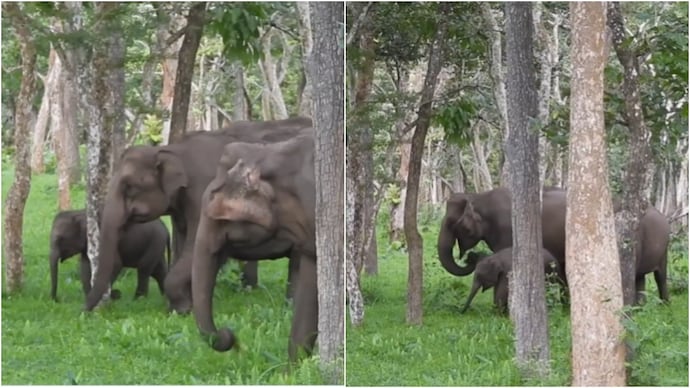
A heartening video from Tamil Nadu is giving conservationists a reason to celebrate. Shared by senior bureaucrat Supriya Sahu, the footage shows elephants, gaurs and deer returning to forest areas that were once overrun by invasive plant species, offering a glimpse of how large-scale ecological restoration can help wildlife reclaim its natural habitat.
The video highlights the impact of an ambitious restoration effort undertaken by the Tamil Nadu Forest Department. According to Sahu, more than 40,000 hectares of forest land have been restored so far, including nearly 31,000 hectares cleared of lantana, an invasive shrub that spreads aggressively and suppresses native vegetation.
“Elephants, gaurs, deer and countless other species are returning to areas once overrun by invasive plants,” Sahu wrote while sharing the clip on social media.
The footage captures animals moving through lush forest landscapes that have been revived after years of restoration work. For conservationists, the scenes are more than just visually striking — they are evidence that native ecosystems are beginning to recover.
Sahu emphasised that the success of the project cannot be measured solely by the number of hectares restored.
“The true measure of success is not the number of hectares cleared but the return of life,” she noted.
According to her, landscapes that were once choked by invasive species are now witnessing the return of native habitats. Large mammals such as elephants and gaurs, along with ground-nesting birds and other wildlife, are gradually reclaiming these spaces.
Watch the video here:
The initiative has also found a sustainable use for the removed vegetation. Instead of treating the invasive biomass as waste, forest officials have converted it into briquettes, creating a circular climate solution. Sahu said around 120 metric tonnes of these briquettes have already been supplied to local tea factories.
The project, she added, advances two major environmental goals at once, biodiversity restoration and climate action through sustainable carbon management.
She also credited the many forest officers and frontline staff who have worked on the initiative, writing, “Kudos to all the DFOs, DDs and frontline staff who are behind this initiative.”
As the video continues to gain attention online, many users have hailed it as a rare piece of positive environmental news, proof that when ecosystems are given a chance to recover, wildlife often finds its way back home.
A heartening video from Tamil Nadu is giving conservationists a reason to celebrate. Shared by senior bureaucrat Supriya Sahu, the footage shows elephants, gaurs and deer returning to forest areas that were once overrun by invasive plant species, offering a glimpse of how large-scale ecological restoration can help wildlife reclaim its natural habitat.
The video highlights the impact of an ambitious restoration effort undertaken by the Tamil Nadu Forest Department. According to Sahu, more than 40,000 hectares of forest land have been restored so far, including nearly 31,000 hectares cleared of lantana, an invasive shrub that spreads aggressively and suppresses native vegetation.
“Elephants, gaurs, deer and countless other species are returning to areas once overrun by invasive plants,” Sahu wrote while sharing the clip on social media.
The footage captures animals moving through lush forest landscapes that have been revived after years of restoration work. For conservationists, the scenes are more than just visually striking — they are evidence that native ecosystems are beginning to recover.
Sahu emphasised that the success of the project cannot be measured solely by the number of hectares restored.
“The true measure of success is not the number of hectares cleared but the return of life,” she noted.
According to her, landscapes that were once choked by invasive species are now witnessing the return of native habitats. Large mammals such as elephants and gaurs, along with ground-nesting birds and other wildlife, are gradually reclaiming these spaces.
Watch the video here:
The initiative has also found a sustainable use for the removed vegetation. Instead of treating the invasive biomass as waste, forest officials have converted it into briquettes, creating a circular climate solution. Sahu said around 120 metric tonnes of these briquettes have already been supplied to local tea factories.
The project, she added, advances two major environmental goals at once, biodiversity restoration and climate action through sustainable carbon management.
She also credited the many forest officers and frontline staff who have worked on the initiative, writing, “Kudos to all the DFOs, DDs and frontline staff who are behind this initiative.”
As the video continues to gain attention online, many users have hailed it as a rare piece of positive environmental news, proof that when ecosystems are given a chance to recover, wildlife often finds its way back home.

