This Bengaluru cafe wants Rs 99 an hour if you plan to work there
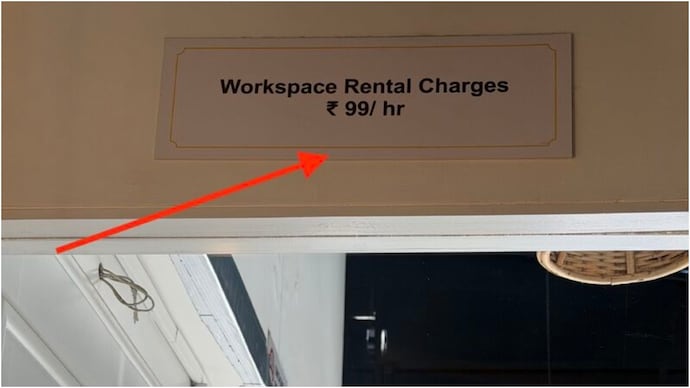
A Bengaluru cafe in Indiranagar drew attention after displaying a Rs 99-an-hour workspace fee sign. The notice started a debate over how coffee shops balance revenue pressures with a welcoming atmosphere.
How long is too long to occupy a cafe table? A Bengaluru coffee shop's decision to introduce a Rs 99 hourly workspace fee has reignited the debate over remote work etiquette.
The debate began when Karthik Suroju, a Bengaluru-based professional, shared a post on LinkedIn describing what he encountered while visiting the cafe. At the entrance, a prominently displayed sign informed visitors that using the space as a workspace would cost Rs 99 per hour.
Curious about the policy, Suroju stepped inside expecting to see people working on laptops. Instead, he found the cafe largely empty.
Reflecting on the experience, he questioned whether the pricing strategy was addressing the real issue.
"Nobody was sitting there working. Not one person. I think the sign is solving the wrong problem," he wrote.
Suroju acknowledged that cafs often struggle when customers occupy tables for several hours after ordering only a single drink. In busy neighbourhoods such as Indiranagar, where commercial rents are among the highest in Bengaluru, slow table turnover can directly affect a caf's earnings.
However, he argued that openly charging customers for using the space sends the wrong message.
See the post:
"Cafes genuinely can't absorb someone nursing one coffee for five hours. Fair enough. But pricing the awkwardness out loud doesn't invite people in. It repels them," he said.
His post quickly struck a chord with LinkedIn users, many of whom weighed in with their own experiences and opinions.
Some felt the cafe's decision was understandable, arguing that businesses cannot be expected to function as free co-working spaces. They pointed out that long-staying customers who make minimal purchases reduce seating availability and ultimately impact revenue, especially during peak hours.
Others, however, believed the policy risked discouraging genuine customers before they even entered.
Several users suggested that cafs could instead introduce a minimum spend requirement, designated laptop-friendly zones or time limits during busy hours rather than charging an hourly fee upfront.
The discussion has once again highlighted a growing challenge for cafs in India's major cities, balancing the needs of remote workers seeking a comfortable workspace with the realities of running a sustainable business in high-rent neighbourhoods.
How long is too long to occupy a cafe table? A Bengaluru coffee shop's decision to introduce a Rs 99 hourly workspace fee has reignited the debate over remote work etiquette.
The debate began when Karthik Suroju, a Bengaluru-based professional, shared a post on LinkedIn describing what he encountered while visiting the cafe. At the entrance, a prominently displayed sign informed visitors that using the space as a workspace would cost Rs 99 per hour.
Curious about the policy, Suroju stepped inside expecting to see people working on laptops. Instead, he found the cafe largely empty.
Reflecting on the experience, he questioned whether the pricing strategy was addressing the real issue.
"Nobody was sitting there working. Not one person. I think the sign is solving the wrong problem," he wrote.
Suroju acknowledged that cafs often struggle when customers occupy tables for several hours after ordering only a single drink. In busy neighbourhoods such as Indiranagar, where commercial rents are among the highest in Bengaluru, slow table turnover can directly affect a caf's earnings.
However, he argued that openly charging customers for using the space sends the wrong message.
See the post:
"Cafes genuinely can't absorb someone nursing one coffee for five hours. Fair enough. But pricing the awkwardness out loud doesn't invite people in. It repels them," he said.
His post quickly struck a chord with LinkedIn users, many of whom weighed in with their own experiences and opinions.
Some felt the cafe's decision was understandable, arguing that businesses cannot be expected to function as free co-working spaces. They pointed out that long-staying customers who make minimal purchases reduce seating availability and ultimately impact revenue, especially during peak hours.
Others, however, believed the policy risked discouraging genuine customers before they even entered.
Several users suggested that cafs could instead introduce a minimum spend requirement, designated laptop-friendly zones or time limits during busy hours rather than charging an hourly fee upfront.
The discussion has once again highlighted a growing challenge for cafs in India's major cities, balancing the needs of remote workers seeking a comfortable workspace with the realities of running a sustainable business in high-rent neighbourhoods.
How long is too long to occupy a cafe table? A Bengaluru coffee shop's decision to introduce a Rs 99 hourly workspace fee has reignited the debate over remote work etiquette.
The debate began when Karthik Suroju, a Bengaluru-based professional, shared a post on LinkedIn describing what he encountered while visiting the cafe. At the entrance, a prominently displayed sign informed visitors that using the space as a workspace would cost Rs 99 per hour.
Curious about the policy, Suroju stepped inside expecting to see people working on laptops. Instead, he found the cafe largely empty.
Reflecting on the experience, he questioned whether the pricing strategy was addressing the real issue.
"Nobody was sitting there working. Not one person. I think the sign is solving the wrong problem," he wrote.
Suroju acknowledged that cafs often struggle when customers occupy tables for several hours after ordering only a single drink. In busy neighbourhoods such as Indiranagar, where commercial rents are among the highest in Bengaluru, slow table turnover can directly affect a caf's earnings.
However, he argued that openly charging customers for using the space sends the wrong message.
See the post:
"Cafes genuinely can't absorb someone nursing one coffee for five hours. Fair enough. But pricing the awkwardness out loud doesn't invite people in. It repels them," he said.
His post quickly struck a chord with LinkedIn users, many of whom weighed in with their own experiences and opinions.
Some felt the cafe's decision was understandable, arguing that businesses cannot be expected to function as free co-working spaces. They pointed out that long-staying customers who make minimal purchases reduce seating availability and ultimately impact revenue, especially during peak hours.
Others, however, believed the policy risked discouraging genuine customers before they even entered.
Several users suggested that cafs could instead introduce a minimum spend requirement, designated laptop-friendly zones or time limits during busy hours rather than charging an hourly fee upfront.
The discussion has once again highlighted a growing challenge for cafs in India's major cities, balancing the needs of remote workers seeking a comfortable workspace with the realities of running a sustainable business in high-rent neighbourhoods.

