5.6-magnitude earthquake jolts Venezuela days after twin tremors claim 1,400 lives
The fresh quake comes amid an ongoing humanitarian and recovery effort following the devastating earthquakes that struck northern Venezuela on June 24.
A magnitude 5.6 earthquake struck offshore near Venezuela’s Aragua region on Sunday, triggering fresh concern in a country still reeling from one of its deadliest seismic disasters in recent history.
The latest tremor came just days after two powerful earthquakes devastated parts of northern Venezuela, leaving at least 1,430 people dead, more than 3,200 injured, and over 3,100 residents displaced from their homes, according to official updates.
There were no immediate reports of casualties or significant damage linked to the latest offshore earthquake, but authorities continued monitoring the region amid fears of ongoing seismic instability and possible aftershocks.
LATEST TREMOR HITS DURING ONGOING RECOVERY EFFORT
The offshore earthquake comes at a time when emergency responders across Venezuela remain engaged in rescue, relief and recovery operations following the catastrophic earthquakes that struck earlier this week.
The twin earthquakes — measuring magnitude 7.2 and 7.5 — hit within less than a minute of each other on Wednesday, causing widespread destruction across multiple regions.
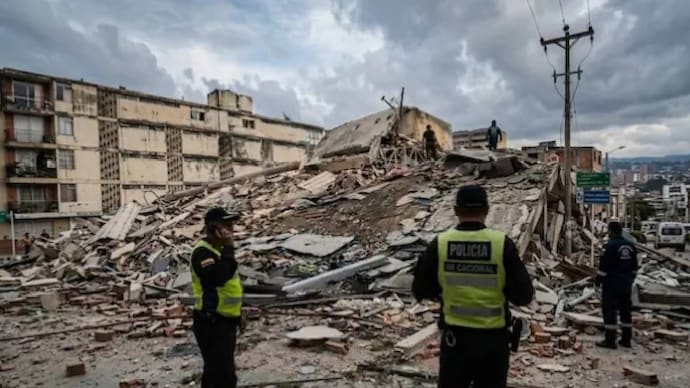
The strongest impact was reported in coastal and northern parts of the country, particularly around La Guaira, where residential neighbourhoods, apartment blocks and infrastructure suffered extensive damage.
Satellite imagery released after the disaster showed collapsed buildings, damaged industrial facilities and entire sections of urban neighbourhoods reduced to rubble.
Several roads were rendered unusable while disruptions to electricity and communication networks complicated emergency response efforts.
DEATH TOLL RISES AS SEARCH OPERATIONS CONTINUE
Authorities said the death toll from the twin earthquakes climbed steadily as rescue teams gained access to heavily damaged zones and continued search operations under collapsed structures.
More than 3,200 people sustained injuries, placing enormous pressure on hospitals and emergency services.
Officials also reported that at least 3,100 people were left homeless, forcing authorities to open temporary shelters and emergency relief centres.
Search-and-rescue teams, assisted by military personnel and emergency agencies, continued operations in affected areas while humanitarian support was mobilised for displaced families.
Emergency officials warned that casualty figures could change further as assessments continued across remote and heavily impacted locations.
AFTERSHOCKS RAISE FEARS OF FURTHER DAMAGE
The fresh 5.6-magnitude earthquake renewed concerns over continued seismic activity in the region.
A day before, a separate magnitude 4.9 earthquake had also been recorded in Venezuela as authorities warned residents to remain prepared for aftershocks following the initial disaster.
Seismologists have said aftershock sequences following major earthquakes can continue for days or even weeks as tectonic stress redistributes across fault lines.
Emergency agencies have urged residents to remain cautious, particularly in areas where buildings may already have been structurally weakened.
Officials have also advised people to avoid damaged structures until safety inspections are completed.
WHY VENEZUELA IS PRONE TO EARTHQUAKES
Venezuela lies in a seismically active region shaped by the interaction between the Caribbean Plate and the South American Plate, making parts of the country vulnerable to periodic earthquakes.
While moderate tremors are relatively common, the scale and intensity of the twin earthquakes earlier this week made the disaster one of the country’s most severe in recent years.
Experts said the close timing of the two major quakes amplified destruction, leaving limited time for residents to react between the initial shock and the second, stronger tremor.
Authorities are continuing structural assessments and humanitarian operations as the country faces the long process of recovery.
The latest offshore earthquake, although less destructive, has added to concerns among residents already coping with loss, displacement and uncertainty in the aftermath of the deadly disaster.
A magnitude 5.6 earthquake struck offshore near Venezuela’s Aragua region on Sunday, triggering fresh concern in a country still reeling from one of its deadliest seismic disasters in recent history.
The latest tremor came just days after two powerful earthquakes devastated parts of northern Venezuela, leaving at least 1,430 people dead, more than 3,200 injured, and over 3,100 residents displaced from their homes, according to official updates.
There were no immediate reports of casualties or significant damage linked to the latest offshore earthquake, but authorities continued monitoring the region amid fears of ongoing seismic instability and possible aftershocks.
LATEST TREMOR HITS DURING ONGOING RECOVERY EFFORT
The offshore earthquake comes at a time when emergency responders across Venezuela remain engaged in rescue, relief and recovery operations following the catastrophic earthquakes that struck earlier this week.
The twin earthquakes — measuring magnitude 7.2 and 7.5 — hit within less than a minute of each other on Wednesday, causing widespread destruction across multiple regions.
The strongest impact was reported in coastal and northern parts of the country, particularly around La Guaira, where residential neighbourhoods, apartment blocks and infrastructure suffered extensive damage.
Satellite imagery released after the disaster showed collapsed buildings, damaged industrial facilities and entire sections of urban neighbourhoods reduced to rubble.
Several roads were rendered unusable while disruptions to electricity and communication networks complicated emergency response efforts.
DEATH TOLL RISES AS SEARCH OPERATIONS CONTINUE
Authorities said the death toll from the twin earthquakes climbed steadily as rescue teams gained access to heavily damaged zones and continued search operations under collapsed structures.
More than 3,200 people sustained injuries, placing enormous pressure on hospitals and emergency services.
Officials also reported that at least 3,100 people were left homeless, forcing authorities to open temporary shelters and emergency relief centres.
Search-and-rescue teams, assisted by military personnel and emergency agencies, continued operations in affected areas while humanitarian support was mobilised for displaced families.
Emergency officials warned that casualty figures could change further as assessments continued across remote and heavily impacted locations.
AFTERSHOCKS RAISE FEARS OF FURTHER DAMAGE
The fresh 5.6-magnitude earthquake renewed concerns over continued seismic activity in the region.
A day before, a separate magnitude 4.9 earthquake had also been recorded in Venezuela as authorities warned residents to remain prepared for aftershocks following the initial disaster.
Seismologists have said aftershock sequences following major earthquakes can continue for days or even weeks as tectonic stress redistributes across fault lines.
Emergency agencies have urged residents to remain cautious, particularly in areas where buildings may already have been structurally weakened.
Officials have also advised people to avoid damaged structures until safety inspections are completed.
WHY VENEZUELA IS PRONE TO EARTHQUAKES
Venezuela lies in a seismically active region shaped by the interaction between the Caribbean Plate and the South American Plate, making parts of the country vulnerable to periodic earthquakes.
While moderate tremors are relatively common, the scale and intensity of the twin earthquakes earlier this week made the disaster one of the country’s most severe in recent years.
Experts said the close timing of the two major quakes amplified destruction, leaving limited time for residents to react between the initial shock and the second, stronger tremor.
Authorities are continuing structural assessments and humanitarian operations as the country faces the long process of recovery.
The latest offshore earthquake, although less destructive, has added to concerns among residents already coping with loss, displacement and uncertainty in the aftermath of the deadly disaster.

