Need Indian Army's Agniveer entry, not Gulf jobs: Former Gorkha soldiers protest in Nepal
Former Gorkha soldiers and their supporters staged a protest in Nepal's Pokhara, demanding the resumption of recruitment of Nepalese people into the Indian Army under the Agnipath scheme. The protest for Agniveer jobs comes just days ahead of Indian Army Chief General Dhiraj Seth's visit to Nepal.
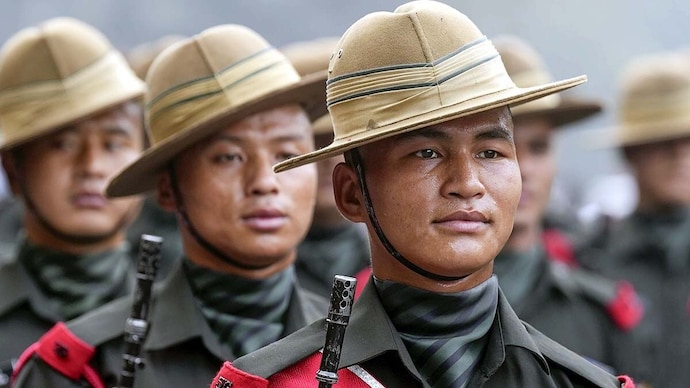
Former Gorkha soldiers and their supporters have staged a protest in the Nepalese city of Pokhara, demanding that the recruitment of youths from Nepal be restarted in the Indian Army under the Agnipath scheme. Nepali citizens have served in the British Indian Army and, after India's Independence, with the Indian Army, but the recruitment of Nepali youths has been disrupted since 2020. The protests come just days ahead of the scheduled Nepal visit of Indian Army Chief, General Dhiraj Seth.
The protest took place on Wednesday (August 12), according to Nepali news portal Ratopati.
Gorkha soldiers' recruitment in the Indian Army has long been one of the strongest bonds between the two countries.
The protest was organised on Wednesday by the Indian Ex-Servicemen Gorkha Brigade Nepal Pokhara, reported Ratopati.
The group submitted a two-point memorandum to the federal government through the District Administration Office, seeking the immediate resumption of recruitment and the renewal of ex-servicemen organisations that use the word "soldier" in their names, Ratopati reported.
Brigade Chairman Colonel Krishna Bahadur Khatri was quoted as saying by Ratopati that recruitment of Nepali youths into the Indian Army had continued for more than two centuries after the Sugauli Treaty, but was now at risk of losing its historical significance following the introduction of the Agnipath scheme.
"The process of recruiting Nepali youths in India began after the Sugauli Treaty and has been ongoing for 207 years. However, after India started the Agnipath scheme, the Nepal government, citing various reasons, has deprived Nepali youths from being recruited into the Indian Army," Khatri was quoted as saying by Ratopati.
NEPALI YOUTH PREFER JOINING INDIAN ARMY OVER GOING TO GULF COUNTRIES FOR EMPLOYMENT
Khatri said the recruitment freeze had deprived Nepali youths of employment while also threatening a tradition associated with generations of Gorkha soldiers. He also argued that Agnipath scheme could offer Nepali youths an alternative to difficult and low-paid employment overseas.
"During the four-year period, youth earn approximately 4.5 to 5 million rupees with various facilities," the memorandum sent to the government stated, according to Ratopati.
"This profession [a job in the Indian Army] is hundreds of times better than going to the Gulf with 50 degrees Celsius temperature and working for a minimum wage," the memorandum sent to the government also stated, according to Ratopati.
The Indian government introduced the Agnipath scheme in 2022 as a new recruitment model for the armed forces.
Under the scheme, recruits, known as Agniveers, serve for four years, after which up to 25% can be retained for longer military service. The Indian Armed Forces, however, are reportedly seeking a significant upward revision in the retention percentage of Agniveers.
The scheme became a stumbling block for the recruitment of Nepali Gorkhas.
Recruitment had already been disrupted around 2020 because of the Covid-19 pandemic. After Agnipath was introduced, Nepal did not allow the recruitment process to restart, amid concerns over its compatibility with the longstanding arrangements governing Gorkha recruitment.
INDIAN ARMY CHIEF'S 5-DAY NEPAL VISIT FROM AUGUST 16
Historically, India and Nepal have had deep military ties. Gorkha soldiers from Nepal have served in the Indian Army for centuries, with their recruitment becoming an enduring feature of India-Nepal military relations.
The relationship will also receive a ceremonial reaffirmation this month.
Indian Army chief, General Dhiraj Seth, is reportedly scheduled to visit Nepal for five days from August 16. During the visit, General Seth will be conferred the honorary rank of "General of the Nepali Army" by President Ramchandra Paudel, continuing the reciprocal tradition between the two armies.
General Seth is also likely to "pay a courtesy call on Prime Minister Balendra Shah" during his visit, reported The Kathmandu Post.
"Whenever a new army chief assumes office in either country, there is a tradition of exchanging high-level visits during which both chiefs are conferred with the honorary rank of General," Nepal Army Brigadier General Rajaram Basnet was quoted as saying by The Kathmandu Post.
The Gorkha protesters have warned of further demonstrations if their demands of recruitment in the Indian Army are not addressed.
NEPAL HALTED GORKHA RECRUITMENT UNDER AGNIPATH SCHEME
In 2022, Nepal asked India to put on hold the recruitment of Gorkhas into the Indian Army under the Agnipath scheme, which introduced shorter-term military service, until there was greater clarity on the recruits' future after completing their service.
Following India's Independence in 1947, an agreement between India, Britain and Nepal allowed India and the UK to continue recruiting Gorkhas. They had been serving in the British Army since 1815, when the East India Company began recruiting them after the Anglo-Nepalese War.
Arun Subedi, then-foreign affairs adviser to former Nepali Prime Minister Sher Bahadur Deuba, said Gorkha recruitment would be "withheld for the time being" as political parties in Nepal debated the future of the soldiers after their retirement.
The Indian Army has had Gorkha regiments since 1947, when six Gorkha regiments of the British Indian Army became part of the newly independent Indian Army under a tripartite agreement between India, Nepal and Britain.
Former Chief of Defence Staff (CDS) General Anil Chauhan told The Print on August 3 that the onus is now on Kathmandu to decide whether it will send its soldiers to be employed in the Indian Army under the Agnipath scheme.
General Chauhan (Retd) also underlined that there cannot be one scheme for citizens of Nepal, and one for Indian nationals, reported The Print.
Notably, both General Chauhan and his predecessor, the late General Bipin Rawat, began their military careers with the 11th Gorkha Rifles.
Former Gorkha soldiers and their supporters have staged a protest in the Nepalese city of Pokhara, demanding that the recruitment of youths from Nepal be restarted in the Indian Army under the Agnipath scheme. Nepali citizens have served in the British Indian Army and, after India's Independence, with the Indian Army, but the recruitment of Nepali youths has been disrupted since 2020. The protests come just days ahead of the scheduled Nepal visit of Indian Army Chief, General Dhiraj Seth.
The protest took place on Wednesday (August 12), according to Nepali news portal Ratopati.
Gorkha soldiers' recruitment in the Indian Army has long been one of the strongest bonds between the two countries.
The protest was organised on Wednesday by the Indian Ex-Servicemen Gorkha Brigade Nepal Pokhara, reported Ratopati.
The group submitted a two-point memorandum to the federal government through the District Administration Office, seeking the immediate resumption of recruitment and the renewal of ex-servicemen organisations that use the word "soldier" in their names, Ratopati reported.
Brigade Chairman Colonel Krishna Bahadur Khatri was quoted as saying by Ratopati that recruitment of Nepali youths into the Indian Army had continued for more than two centuries after the Sugauli Treaty, but was now at risk of losing its historical significance following the introduction of the Agnipath scheme.
"The process of recruiting Nepali youths in India began after the Sugauli Treaty and has been ongoing for 207 years. However, after India started the Agnipath scheme, the Nepal government, citing various reasons, has deprived Nepali youths from being recruited into the Indian Army," Khatri was quoted as saying by Ratopati.
NEPALI YOUTH PREFER JOINING INDIAN ARMY OVER GOING TO GULF COUNTRIES FOR EMPLOYMENT
Khatri said the recruitment freeze had deprived Nepali youths of employment while also threatening a tradition associated with generations of Gorkha soldiers. He also argued that Agnipath scheme could offer Nepali youths an alternative to difficult and low-paid employment overseas.
"During the four-year period, youth earn approximately 4.5 to 5 million rupees with various facilities," the memorandum sent to the government stated, according to Ratopati.
"This profession [a job in the Indian Army] is hundreds of times better than going to the Gulf with 50 degrees Celsius temperature and working for a minimum wage," the memorandum sent to the government also stated, according to Ratopati.
The Indian government introduced the Agnipath scheme in 2022 as a new recruitment model for the armed forces.
Under the scheme, recruits, known as Agniveers, serve for four years, after which up to 25% can be retained for longer military service. The Indian Armed Forces, however, are reportedly seeking a significant upward revision in the retention percentage of Agniveers.
The scheme became a stumbling block for the recruitment of Nepali Gorkhas.
Recruitment had already been disrupted around 2020 because of the Covid-19 pandemic. After Agnipath was introduced, Nepal did not allow the recruitment process to restart, amid concerns over its compatibility with the longstanding arrangements governing Gorkha recruitment.
INDIAN ARMY CHIEF'S 5-DAY NEPAL VISIT FROM AUGUST 16
Historically, India and Nepal have had deep military ties. Gorkha soldiers from Nepal have served in the Indian Army for centuries, with their recruitment becoming an enduring feature of India-Nepal military relations.
The relationship will also receive a ceremonial reaffirmation this month.
Indian Army chief, General Dhiraj Seth, is reportedly scheduled to visit Nepal for five days from August 16. During the visit, General Seth will be conferred the honorary rank of "General of the Nepali Army" by President Ramchandra Paudel, continuing the reciprocal tradition between the two armies.
General Seth is also likely to "pay a courtesy call on Prime Minister Balendra Shah" during his visit, reported The Kathmandu Post.
"Whenever a new army chief assumes office in either country, there is a tradition of exchanging high-level visits during which both chiefs are conferred with the honorary rank of General," Nepal Army Brigadier General Rajaram Basnet was quoted as saying by The Kathmandu Post.
The Gorkha protesters have warned of further demonstrations if their demands of recruitment in the Indian Army are not addressed.
NEPAL HALTED GORKHA RECRUITMENT UNDER AGNIPATH SCHEME
In 2022, Nepal asked India to put on hold the recruitment of Gorkhas into the Indian Army under the Agnipath scheme, which introduced shorter-term military service, until there was greater clarity on the recruits' future after completing their service.
Following India's Independence in 1947, an agreement between India, Britain and Nepal allowed India and the UK to continue recruiting Gorkhas. They had been serving in the British Army since 1815, when the East India Company began recruiting them after the Anglo-Nepalese War.
Arun Subedi, then-foreign affairs adviser to former Nepali Prime Minister Sher Bahadur Deuba, said Gorkha recruitment would be "withheld for the time being" as political parties in Nepal debated the future of the soldiers after their retirement.
The Indian Army has had Gorkha regiments since 1947, when six Gorkha regiments of the British Indian Army became part of the newly independent Indian Army under a tripartite agreement between India, Nepal and Britain.
Former Chief of Defence Staff (CDS) General Anil Chauhan told The Print on August 3 that the onus is now on Kathmandu to decide whether it will send its soldiers to be employed in the Indian Army under the Agnipath scheme.
General Chauhan (Retd) also underlined that there cannot be one scheme for citizens of Nepal, and one for Indian nationals, reported The Print.
Notably, both General Chauhan and his predecessor, the late General Bipin Rawat, began their military careers with the 11th Gorkha Rifles.
Former Gorkha soldiers and their supporters have staged a protest in the Nepalese city of Pokhara, demanding that the recruitment of youths from Nepal be restarted in the Indian Army under the Agnipath scheme. Nepali citizens have served in the British Indian Army and, after India's Independence, with the Indian Army, but the recruitment of Nepali youths has been disrupted since 2020. The protests come just days ahead of the scheduled Nepal visit of Indian Army Chief, General Dhiraj Seth.
The protest took place on Wednesday (August 12), according to Nepali news portal Ratopati.
Gorkha soldiers' recruitment in the Indian Army has long been one of the strongest bonds between the two countries.
The protest was organised on Wednesday by the Indian Ex-Servicemen Gorkha Brigade Nepal Pokhara, reported Ratopati.
The group submitted a two-point memorandum to the federal government through the District Administration Office, seeking the immediate resumption of recruitment and the renewal of ex-servicemen organisations that use the word "soldier" in their names, Ratopati reported.
Brigade Chairman Colonel Krishna Bahadur Khatri was quoted as saying by Ratopati that recruitment of Nepali youths into the Indian Army had continued for more than two centuries after the Sugauli Treaty, but was now at risk of losing its historical significance following the introduction of the Agnipath scheme.
"The process of recruiting Nepali youths in India began after the Sugauli Treaty and has been ongoing for 207 years. However, after India started the Agnipath scheme, the Nepal government, citing various reasons, has deprived Nepali youths from being recruited into the Indian Army," Khatri was quoted as saying by Ratopati.
NEPALI YOUTH PREFER JOINING INDIAN ARMY OVER GOING TO GULF COUNTRIES FOR EMPLOYMENT
Khatri said the recruitment freeze had deprived Nepali youths of employment while also threatening a tradition associated with generations of Gorkha soldiers. He also argued that Agnipath scheme could offer Nepali youths an alternative to difficult and low-paid employment overseas.
"During the four-year period, youth earn approximately 4.5 to 5 million rupees with various facilities," the memorandum sent to the government stated, according to Ratopati.
"This profession [a job in the Indian Army] is hundreds of times better than going to the Gulf with 50 degrees Celsius temperature and working for a minimum wage," the memorandum sent to the government also stated, according to Ratopati.
The Indian government introduced the Agnipath scheme in 2022 as a new recruitment model for the armed forces.
Under the scheme, recruits, known as Agniveers, serve for four years, after which up to 25% can be retained for longer military service. The Indian Armed Forces, however, are reportedly seeking a significant upward revision in the retention percentage of Agniveers.
The scheme became a stumbling block for the recruitment of Nepali Gorkhas.
Recruitment had already been disrupted around 2020 because of the Covid-19 pandemic. After Agnipath was introduced, Nepal did not allow the recruitment process to restart, amid concerns over its compatibility with the longstanding arrangements governing Gorkha recruitment.
INDIAN ARMY CHIEF'S 5-DAY NEPAL VISIT FROM AUGUST 16
Historically, India and Nepal have had deep military ties. Gorkha soldiers from Nepal have served in the Indian Army for centuries, with their recruitment becoming an enduring feature of India-Nepal military relations.
The relationship will also receive a ceremonial reaffirmation this month.
Indian Army chief, General Dhiraj Seth, is reportedly scheduled to visit Nepal for five days from August 16. During the visit, General Seth will be conferred the honorary rank of "General of the Nepali Army" by President Ramchandra Paudel, continuing the reciprocal tradition between the two armies.
General Seth is also likely to "pay a courtesy call on Prime Minister Balendra Shah" during his visit, reported The Kathmandu Post.
"Whenever a new army chief assumes office in either country, there is a tradition of exchanging high-level visits during which both chiefs are conferred with the honorary rank of General," Nepal Army Brigadier General Rajaram Basnet was quoted as saying by The Kathmandu Post.
The Gorkha protesters have warned of further demonstrations if their demands of recruitment in the Indian Army are not addressed.
NEPAL HALTED GORKHA RECRUITMENT UNDER AGNIPATH SCHEME
In 2022, Nepal asked India to put on hold the recruitment of Gorkhas into the Indian Army under the Agnipath scheme, which introduced shorter-term military service, until there was greater clarity on the recruits' future after completing their service.
Following India's Independence in 1947, an agreement between India, Britain and Nepal allowed India and the UK to continue recruiting Gorkhas. They had been serving in the British Army since 1815, when the East India Company began recruiting them after the Anglo-Nepalese War.
Arun Subedi, then-foreign affairs adviser to former Nepali Prime Minister Sher Bahadur Deuba, said Gorkha recruitment would be "withheld for the time being" as political parties in Nepal debated the future of the soldiers after their retirement.
The Indian Army has had Gorkha regiments since 1947, when six Gorkha regiments of the British Indian Army became part of the newly independent Indian Army under a tripartite agreement between India, Nepal and Britain.
Former Chief of Defence Staff (CDS) General Anil Chauhan told The Print on August 3 that the onus is now on Kathmandu to decide whether it will send its soldiers to be employed in the Indian Army under the Agnipath scheme.
General Chauhan (Retd) also underlined that there cannot be one scheme for citizens of Nepal, and one for Indian nationals, reported The Print.
Notably, both General Chauhan and his predecessor, the late General Bipin Rawat, began their military careers with the 11th Gorkha Rifles.

