UK's PM-in-waiting wants to take power away from London. Here's his plan
In his first major policy speech since returning to Parliament, Andy Burnham said Britain needed a "circuit breaker" after years of political instability and sluggish economic growth.
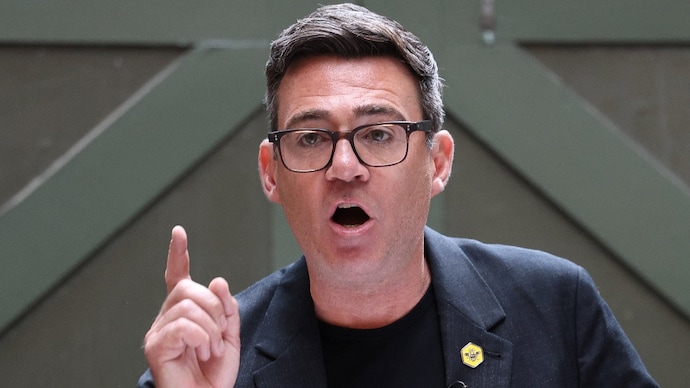
Britain's prime minister-in-waiting Andy Burnham on Monday unveiled an ambitious blueprint to shift power away from Westminster. He pledged a 10-year programme to drive regional growth, expand social housing and give local communities greater control while keeping the country's fiscal rules intact.
In his first major policy speech since returning to Parliament, Burnham said Britain needed a "circuit breaker" after years of political instability and sluggish economic growth. Speaking at the People's History Museum in Manchester, the former Greater Manchester mayor promised the country's biggest transfer of power from central government, arguing that decisions affecting local communities should no longer be driven solely from London.
The Labour leader-in-waiting is expected to replace Prime Minister Keir Starmer later this month after emerging as the only candidate in the party's leadership race following Starmer's decision to step down last week.
'NO. 10 NORTH' AT CENTRE OF PLAN
At the heart of Burnham's blueprint is the creation of a "No. 10 North" in Manchester, which he said would work alongside Downing Street to oversee regional development, housing, utility reform and industrial policy.
"I am going to give Britain the circuit breaker it needs by building a more collaborative politics in Westminster, by taking power out of the centre and putting it in the hands of the people and places who can use it best," Burnham said.
He said the new office would become "the nerve centre of a rewired Britain", coordinating national and local governments to develop long-term economic strategies tailored to different regions.
Burnham argued that Britain's highly centralised political model had failed to improve living standards despite years of promises from successive governments.
"After 10 years of political turbulence since Brexit and 20 years of falling living standards since the 2008 financial crash, Westminster has not been working for people, and it has not been working for a very long time. It is time for Whitehall to accept that growth cannot be ordered from the top down. Instead, it can only be nurtured from the bottom up," he said.
FOCUS ON HOUSING, JOBS AND REGIONAL GROWTH
Burnham outlined a domestic agenda centred on rebuilding Britain's economy through regional investment rather than increased central control.
His proposals include a major expansion of social housing, greater powers for local governments over essential utilities, support for reindustrialisation and measures aimed at helping more young people enter the workforce.
He also pledged to revitalise high streets by reducing business rates for shops and pubs while maintaining the government's existing fiscal rules, seeking to reassure investors concerned about public borrowing.
"We will be a 10-year mission to raise living standards across the land," Burnham said. "Imagine good growth in every postcode and hope in every heart. Imagine no more, let's make it happen."
PRAISE MIXED WITH SCEPTICISM
Burnham sought to ease concerns over public finances by insisting his reforms would not come at the expense of fiscal discipline. He said his government would respect existing budget rules and preserve "the stability that comes from sound public finances" while pursuing long-term structural reforms.
Financial markets reacted positively, with British government borrowing costs easing slightly during the speech, although some analysts said the proposals lacked detail on how they would be implemented and financed.
Business groups broadly welcomed the emphasis on devolution and regional growth.
"It's crucial that the devolution agenda has local business at its heart and brings benefits to all parts of the UK," said Shevaun Haviland, director general of the British Chambers of Commerce, as per news agency Reuters. "The difficult truth is, whoever leads the UK, the primary challenge remains the same -- delivering growth."
RIVALS DEMAND ANSWERS
Burnham's address was warmly received by Labour MPs, including former health minister Wes Streeting, who has ruled out challenging for the party leadership.
"Finally some hope again," Streeting said.
Opposition parties, however, questioned both the substance of Burnham's plans and the process through which he is expected to become prime minister.
Conservative leader Kemi Badenoch criticised Burnham for not taking questions after the speech.
"He doesn't have a plan beyond telling the mayors to go and sort it out," she said. "If he wants to be the leader of our country, it's time to start acting like it."
Richard Tice of Reform UK also attacked Burnham's expected elevation without a national vote, saying it was further evidence of what he called "Burnham's coup".
"We need a general election," he wrote on X.
Burnham is set to inherit an economy struggling with weak growth, stubborn cost-of-living pressures and tight public finances. He will also face the growing challenge of rising support for populist parties ahead of the next general election.
Britain's prime minister-in-waiting Andy Burnham on Monday unveiled an ambitious blueprint to shift power away from Westminster. He pledged a 10-year programme to drive regional growth, expand social housing and give local communities greater control while keeping the country's fiscal rules intact.
In his first major policy speech since returning to Parliament, Burnham said Britain needed a "circuit breaker" after years of political instability and sluggish economic growth. Speaking at the People's History Museum in Manchester, the former Greater Manchester mayor promised the country's biggest transfer of power from central government, arguing that decisions affecting local communities should no longer be driven solely from London.
The Labour leader-in-waiting is expected to replace Prime Minister Keir Starmer later this month after emerging as the only candidate in the party's leadership race following Starmer's decision to step down last week.
'NO. 10 NORTH' AT CENTRE OF PLAN
At the heart of Burnham's blueprint is the creation of a "No. 10 North" in Manchester, which he said would work alongside Downing Street to oversee regional development, housing, utility reform and industrial policy.
"I am going to give Britain the circuit breaker it needs by building a more collaborative politics in Westminster, by taking power out of the centre and putting it in the hands of the people and places who can use it best," Burnham said.
He said the new office would become "the nerve centre of a rewired Britain", coordinating national and local governments to develop long-term economic strategies tailored to different regions.
Burnham argued that Britain's highly centralised political model had failed to improve living standards despite years of promises from successive governments.
"After 10 years of political turbulence since Brexit and 20 years of falling living standards since the 2008 financial crash, Westminster has not been working for people, and it has not been working for a very long time. It is time for Whitehall to accept that growth cannot be ordered from the top down. Instead, it can only be nurtured from the bottom up," he said.
FOCUS ON HOUSING, JOBS AND REGIONAL GROWTH
Burnham outlined a domestic agenda centred on rebuilding Britain's economy through regional investment rather than increased central control.
His proposals include a major expansion of social housing, greater powers for local governments over essential utilities, support for reindustrialisation and measures aimed at helping more young people enter the workforce.
He also pledged to revitalise high streets by reducing business rates for shops and pubs while maintaining the government's existing fiscal rules, seeking to reassure investors concerned about public borrowing.
"We will be a 10-year mission to raise living standards across the land," Burnham said. "Imagine good growth in every postcode and hope in every heart. Imagine no more, let's make it happen."
PRAISE MIXED WITH SCEPTICISM
Burnham sought to ease concerns over public finances by insisting his reforms would not come at the expense of fiscal discipline. He said his government would respect existing budget rules and preserve "the stability that comes from sound public finances" while pursuing long-term structural reforms.
Financial markets reacted positively, with British government borrowing costs easing slightly during the speech, although some analysts said the proposals lacked detail on how they would be implemented and financed.
Business groups broadly welcomed the emphasis on devolution and regional growth.
"It's crucial that the devolution agenda has local business at its heart and brings benefits to all parts of the UK," said Shevaun Haviland, director general of the British Chambers of Commerce, as per news agency Reuters. "The difficult truth is, whoever leads the UK, the primary challenge remains the same -- delivering growth."
RIVALS DEMAND ANSWERS
Burnham's address was warmly received by Labour MPs, including former health minister Wes Streeting, who has ruled out challenging for the party leadership.
"Finally some hope again," Streeting said.
Opposition parties, however, questioned both the substance of Burnham's plans and the process through which he is expected to become prime minister.
Conservative leader Kemi Badenoch criticised Burnham for not taking questions after the speech.
"He doesn't have a plan beyond telling the mayors to go and sort it out," she said. "If he wants to be the leader of our country, it's time to start acting like it."
Richard Tice of Reform UK also attacked Burnham's expected elevation without a national vote, saying it was further evidence of what he called "Burnham's coup".
"We need a general election," he wrote on X.
Burnham is set to inherit an economy struggling with weak growth, stubborn cost-of-living pressures and tight public finances. He will also face the growing challenge of rising support for populist parties ahead of the next general election.

