Never submit to tyranny: Amid war, Karbala message resonates at Khamenei funeral
At Ayatollah Ali Khamenei's funeral in Tehran, mourners linked his death to Imam Hussain's legacy of martyrdom and resistance. Their chants, red flags and invocations of Karbala cast the moment as a living expression of Shia defiance against tyranny.
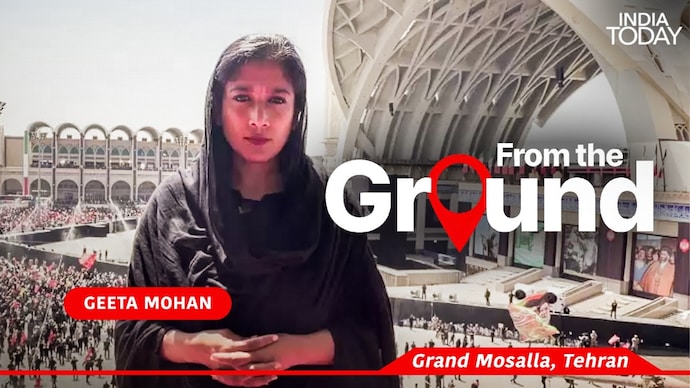
For many Iranians gathered at the funeral of Ayatollah Ali Khamenei in Tehran, the death of the Supreme Leader is being framed not merely as the loss of a political figure, but as the continuation of a deeply rooted Shia tradition of sacrifice, resistance and martyrdom inspired by Imam Hussain.
As thousands thronged the funeral ceremonies, symbols associated with Karbala dominated the landscape. Red flags fluttered above religious sites alongside the Iranian national flag, representing what many attendees described as an enduring call to resist oppression and seek justice, even at the cost of one's life.
Speaking to India Today's Geeta Mohan on the sidelines of the funeral, one mourner explained that the concept of martyrdom, or "Shahadat", occupies a central place in Islamic belief and particularly in Shia theology.
"Shahadat is in the Quran, not only in Iran," he said. "Whoever gives his life for the cause of Allah, and for the cause of humanity, is a martyr."
For many present, that belief is inseparable from the story of Imam Hussain, the grandson of Prophet Muhammad, who was killed in the Battle of Karbala in 680 CE after refusing to pledge allegiance to the Umayyad ruler Yazid. His death remains the defining event in Shia Islam and symbolises resistance against tyranny.
The mourner at Ayatollah Ali Khamenei's funeral also drew a stark contrast between what he called the "Epstein class people" and those who follow the path of Imam Hussein, describing the latter as standing against tyranny and remaining committed to justice and sacrifice.
Pointing towards the red flag atop the shrine's dome, the attendee said it represented Imam Hussain's timeless message: never surrender to oppression.
"The message of Imam Hussain is to stand against tyranny and never submit yourself to it, no matter if it means giving your life," he said. "It is not only for Muslims, it is for humanity. The word of Imam Hussain is for the whole world."
Drawing a direct parallel between Karbala and the present day, the mourner said Ayatollah Ali Khamenei had followed the same path.
"Late Imam Shaheed Khamenei gave his life in the same cause," he said, reflecting a sentiment echoed by several mourners who view the Supreme Leader's death through the prism of Karbala rather than contemporary geopolitics.
The comparison underscores how the narrative of Imam Hussain continues to shape Iran's political and religious consciousness. For many supporters of the Islamic Republic, resistance against perceived injustice is not simply a matter of state policy but a sacred duty rooted in centuries of Shia history.
Also, a sea of mourners has gathered to pay tribute to their leader Ayatollah Ali Khamenei. Geeta Mohan also spoke with another attendee.
As Khamenei’s funeral mobilsed Iran, chants, flags and religious symbolism reinforced that message. For those in attendance, Karbala was not viewed as a distant historical event, but as a living legacy they believe continues through those they regard as martyrs in the struggle against tyranny.
For many Iranians gathered at the funeral of Ayatollah Ali Khamenei in Tehran, the death of the Supreme Leader is being framed not merely as the loss of a political figure, but as the continuation of a deeply rooted Shia tradition of sacrifice, resistance and martyrdom inspired by Imam Hussain.
As thousands thronged the funeral ceremonies, symbols associated with Karbala dominated the landscape. Red flags fluttered above religious sites alongside the Iranian national flag, representing what many attendees described as an enduring call to resist oppression and seek justice, even at the cost of one's life.
Speaking to India Today's Geeta Mohan on the sidelines of the funeral, one mourner explained that the concept of martyrdom, or "Shahadat", occupies a central place in Islamic belief and particularly in Shia theology.
"Shahadat is in the Quran, not only in Iran," he said. "Whoever gives his life for the cause of Allah, and for the cause of humanity, is a martyr."
For many present, that belief is inseparable from the story of Imam Hussain, the grandson of Prophet Muhammad, who was killed in the Battle of Karbala in 680 CE after refusing to pledge allegiance to the Umayyad ruler Yazid. His death remains the defining event in Shia Islam and symbolises resistance against tyranny.
The mourner at Ayatollah Ali Khamenei's funeral also drew a stark contrast between what he called the "Epstein class people" and those who follow the path of Imam Hussein, describing the latter as standing against tyranny and remaining committed to justice and sacrifice.
Pointing towards the red flag atop the shrine's dome, the attendee said it represented Imam Hussain's timeless message: never surrender to oppression.
"The message of Imam Hussain is to stand against tyranny and never submit yourself to it, no matter if it means giving your life," he said. "It is not only for Muslims, it is for humanity. The word of Imam Hussain is for the whole world."
Drawing a direct parallel between Karbala and the present day, the mourner said Ayatollah Ali Khamenei had followed the same path.
"Late Imam Shaheed Khamenei gave his life in the same cause," he said, reflecting a sentiment echoed by several mourners who view the Supreme Leader's death through the prism of Karbala rather than contemporary geopolitics.
The comparison underscores how the narrative of Imam Hussain continues to shape Iran's political and religious consciousness. For many supporters of the Islamic Republic, resistance against perceived injustice is not simply a matter of state policy but a sacred duty rooted in centuries of Shia history.
Also, a sea of mourners has gathered to pay tribute to their leader Ayatollah Ali Khamenei. Geeta Mohan also spoke with another attendee.
As Khamenei’s funeral mobilsed Iran, chants, flags and religious symbolism reinforced that message. For those in attendance, Karbala was not viewed as a distant historical event, but as a living legacy they believe continues through those they regard as martyrs in the struggle against tyranny.

