Missing since Ali Khamenei killing, will Mojtaba emerge in public at father's funeral?
Iran is preparing for Ayatollah Ali Khamenei's state funeral. The current attention now is whether Ayatollah's son, the present Supreme Leader, Mojtaba Khamenei, makes his first public appearance. Mojtaba's continued absence has been increasing questions and speculation over his health, authority, and the leadership transition.
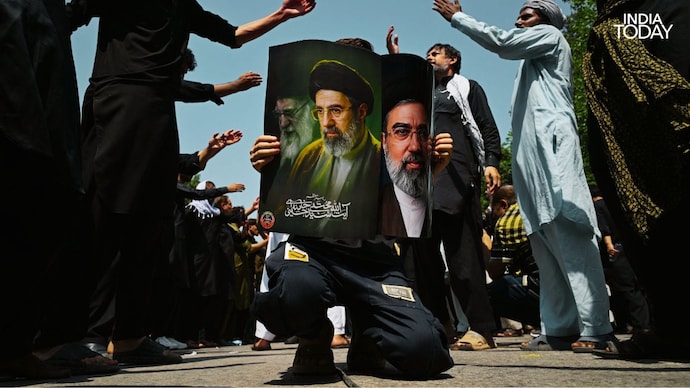
More than four months after the US and Israeli airstrike killed Iran's Supreme Leader Ayatollah Ali Khamenei, the Islamic Republic is preparing an elaborate state funeral for the man who ruled for decades. Ceremonies are scheduled to begin in Tehran on July 4, with processions in Qom, visits to holy sites in Iraq, and burial in Mashhad on July 9.
As the nation gears up for what officials promise will be a massive display of mourning, all eyes are on one man who has been almost entirely invisible — Mojtaba Khamenei, Ali's son and the country's new Supreme Leader.
Mojtaba Khamenei, 56, was injured in the same February 28 airstrike on the supreme leader's compound in central Tehran that killed his father and several senior officials. Iranian state media and officials have confirmed he suffered significant injuries, including severe facial disfigurement and leg wounds. He has not appeared in public, on video, or in any audio recording since assuming the role of Supreme Leader shortly after his father's death.
Instead, all statements attributed to him have been read out by news anchors on state television or state media websites. These messages have been carefully calibrated to project continuity and resolve amid the war with Israel and the United States.
In his first public message in mid-March, read on state TV, Mojtaba Khamenei vowed to maintain pressure on Iran's enemies. He emphasised that Iran "does not want war" but "will not renounce legitimate rights", pledged to keep blocking the Strait of Hormuz, and warned that attacks on US bases in the region could continue if necessary. He called for national unity and thanked Iran’s fighters.
Subsequent statements have followed a similar pattern. In April, he was quoted as saying Iran would move management of the Strait of Hormuz into a "new phase", reiterated that the country "will not forfeit its rights", and described all resistance fronts as a "unified entity". Another message around the same time stressed friendship with neighbours while maintaining threats against bases hosting US forces.
In later communications, including one tied to the National Persian Gulf Day, he called for continued demonstrations and unity even during periods of ceasefire. Officials have repeatedly assured the public that he remains mentally sharp, participates in key decisions via audio links, and is recovering.
Despite these reassurances, his prolonged absence has fuelled speculation, rumours, and even "missing person" notices posted by citizens in places like Karaj. Some hardliners justify the low profile on security grounds, citing the need to deny enemies targets or intelligence. Others point to his injuries as the primary reason.
In his latest statement on Sunday, marking Iran's National Judiciary Week, Mojtaba Khamenei instructed the judiciary to pursue those responsible for crimes during the June 2025 war, and the latest war that began in February. "The perpetrators of these crimes must be seized and made to answer for them," he said in a statement. He highlighted the killing of children in Minab and Lamerd, attacks on medical facilities, and "the assassination of Sayyed Ali Khamenei," along with broad harm to the Iranian people. He called for serious pursuit "until a ruling is reached", noting that US and Israeli officials' "confessions and even the shameless boasting" provide "admission of guilt" and groundwork for accountability.
However, he hasn't appeared in person, or on camera even once.
Hence, the upcoming funeral rites for Ali Khamenei are a pivotal moment.
Traditionally, such events have been opportunities for Iran's top leaders to project strength and solidarity. Ali Khamenei himself attended major commemorations for his predecessor, Ruhollah Khomeini, for years. Will his son break his seclusion to stand before the nation and the world at his father's funeral is the primary question.
Iranian officials have given no clear indication. Some reports suggest Mojtaba has taken a more active behind-the-scenes role in recent weeks as ceasefire negotiations with the US have progressed. Yet the pattern of written statements read by others has held firm.
Public opinion across the region and beyond has shifted amid the fighting, as highlighted in a recent Pew Research Center report titled "What Happens When War Breaks Out in the Middle of a Survey?" The study found that as fieldwork progressed during the conflict, views of the United States became more negative in several countries, with declining favourability toward the US as a partner for peace and stability.
Inside Iran, the leadership transition has unfolded against this backdrop of war, mourning, and uncertainty. The Assembly of Experts selected Mojtaba as successor, but his lack of public presence has raised questions about stability and the regime's ability to project unified authority.
An appearance by Mojtaba could help quell doubts about his health and leadership, rally hardline supporters, and send a message of defiance and continuity to adversaries. A continued absence, on the other hand, might deepen speculation and signal ongoing caution, or vulnerability, at the highest levels.
For now, the public is left to read between the lines of carefully worded statements and official assurances. As funeral preparations intensify and millions are expected to fill the streets in Tehran, Qom, and Mashhad, the sight of the son might be the most telling sign of all.
The answer, when it comes, could reveal much about the direction of Iran's leadership in one of the most turbulent chapters in its modern history.
More than four months after the US and Israeli airstrike killed Iran's Supreme Leader Ayatollah Ali Khamenei, the Islamic Republic is preparing an elaborate state funeral for the man who ruled for decades. Ceremonies are scheduled to begin in Tehran on July 4, with processions in Qom, visits to holy sites in Iraq, and burial in Mashhad on July 9.
As the nation gears up for what officials promise will be a massive display of mourning, all eyes are on one man who has been almost entirely invisible — Mojtaba Khamenei, Ali's son and the country's new Supreme Leader.
Mojtaba Khamenei, 56, was injured in the same February 28 airstrike on the supreme leader's compound in central Tehran that killed his father and several senior officials. Iranian state media and officials have confirmed he suffered significant injuries, including severe facial disfigurement and leg wounds. He has not appeared in public, on video, or in any audio recording since assuming the role of Supreme Leader shortly after his father's death.
Instead, all statements attributed to him have been read out by news anchors on state television or state media websites. These messages have been carefully calibrated to project continuity and resolve amid the war with Israel and the United States.
In his first public message in mid-March, read on state TV, Mojtaba Khamenei vowed to maintain pressure on Iran's enemies. He emphasised that Iran "does not want war" but "will not renounce legitimate rights", pledged to keep blocking the Strait of Hormuz, and warned that attacks on US bases in the region could continue if necessary. He called for national unity and thanked Iran’s fighters.
Subsequent statements have followed a similar pattern. In April, he was quoted as saying Iran would move management of the Strait of Hormuz into a "new phase", reiterated that the country "will not forfeit its rights", and described all resistance fronts as a "unified entity". Another message around the same time stressed friendship with neighbours while maintaining threats against bases hosting US forces.
In later communications, including one tied to the National Persian Gulf Day, he called for continued demonstrations and unity even during periods of ceasefire. Officials have repeatedly assured the public that he remains mentally sharp, participates in key decisions via audio links, and is recovering.
Despite these reassurances, his prolonged absence has fuelled speculation, rumours, and even "missing person" notices posted by citizens in places like Karaj. Some hardliners justify the low profile on security grounds, citing the need to deny enemies targets or intelligence. Others point to his injuries as the primary reason.
In his latest statement on Sunday, marking Iran's National Judiciary Week, Mojtaba Khamenei instructed the judiciary to pursue those responsible for crimes during the June 2025 war, and the latest war that began in February. "The perpetrators of these crimes must be seized and made to answer for them," he said in a statement. He highlighted the killing of children in Minab and Lamerd, attacks on medical facilities, and "the assassination of Sayyed Ali Khamenei," along with broad harm to the Iranian people. He called for serious pursuit "until a ruling is reached", noting that US and Israeli officials' "confessions and even the shameless boasting" provide "admission of guilt" and groundwork for accountability.
However, he hasn't appeared in person, or on camera even once.
Hence, the upcoming funeral rites for Ali Khamenei are a pivotal moment.
Traditionally, such events have been opportunities for Iran's top leaders to project strength and solidarity. Ali Khamenei himself attended major commemorations for his predecessor, Ruhollah Khomeini, for years. Will his son break his seclusion to stand before the nation and the world at his father's funeral is the primary question.
Iranian officials have given no clear indication. Some reports suggest Mojtaba has taken a more active behind-the-scenes role in recent weeks as ceasefire negotiations with the US have progressed. Yet the pattern of written statements read by others has held firm.
Public opinion across the region and beyond has shifted amid the fighting, as highlighted in a recent Pew Research Center report titled "What Happens When War Breaks Out in the Middle of a Survey?" The study found that as fieldwork progressed during the conflict, views of the United States became more negative in several countries, with declining favourability toward the US as a partner for peace and stability.
Inside Iran, the leadership transition has unfolded against this backdrop of war, mourning, and uncertainty. The Assembly of Experts selected Mojtaba as successor, but his lack of public presence has raised questions about stability and the regime's ability to project unified authority.
An appearance by Mojtaba could help quell doubts about his health and leadership, rally hardline supporters, and send a message of defiance and continuity to adversaries. A continued absence, on the other hand, might deepen speculation and signal ongoing caution, or vulnerability, at the highest levels.
For now, the public is left to read between the lines of carefully worded statements and official assurances. As funeral preparations intensify and millions are expected to fill the streets in Tehran, Qom, and Mashhad, the sight of the son might be the most telling sign of all.
The answer, when it comes, could reveal much about the direction of Iran's leadership in one of the most turbulent chapters in its modern history.

