US strikes Iran overnight, Tehran retaliates as Gulf spirals into deeper conflict
As Washington and Tehran exchanged fresh blows, the fallout was felt across multiple countries in the region. The developments have heightened fears of a wider regional conflict involving US forces and their allies stationed across the Middle East.
Explosions were reported across multiple regions of Iran, including Sirik and Minab, on Wednesday after the United States launched a fresh wave of military strikes against the country for the second consecutive day, marking a further escalation in tensions between Washington and Tehran. Iranian media and local sources also reported air defence activity in several areas as authorities responded to the developing situation.
In response, Iranian state media claimed that powerful explosions were reported at Jordan's Al-Azraq airbase, a facility known to host US military personnel and support American military operations in the region. Iran's Islamic Revolutionary Guard Corps (IRGC) also said it had targeted the Al-Azraq airbase with 12 ballistic missiles and struck US aircraft stationed there.
The IRGC claimed early on Thursday that it had launched retaliatory strikes against 18 US military targets at airbases in Kuwait and Bahrain. Bahrain's Interior Ministry said sirens were activated, while Kuwait temporarily shut its airspace amid reports of incoming Iranian missiles and drones, reported international news agency Reuters.
However, the US Central Command (CENTCOM) dismissed Iran's earlier claims that a US warship had been attacked in the Strait of Hormuz, calling them false and stating that no American naval vessels had come under attack.
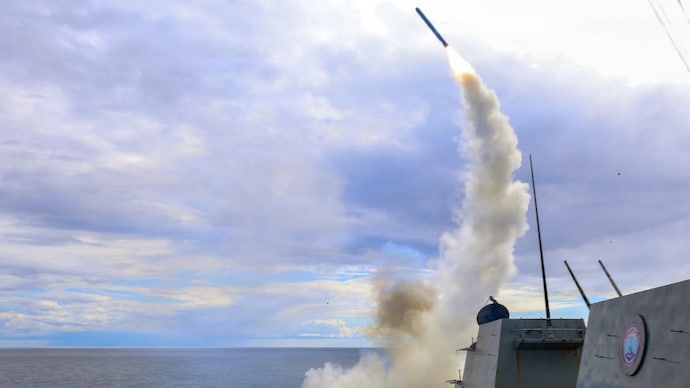
CENTCOM released footage of overnight cruise missile launches after US President Donald Trump claimed in an interview with Fox News that 49 Tomahawk missiles had been used to strike targets deep inside Iran.
The strikes came hours after Trump and Defence Secretary Pete Hegseth warned that Washington was prepared to target key Iranian facilities and intensify military action unless Tehran changed course.
CENTCOM later announced that American forces had begun launching additional self-defence strikes against multiple targets in Iran at 5:15 pm ET (3:45 am) on the orders of the Commander in Chief.
"The strikes are in response to Iran's unwarranted and continued aggression," CENTCOM said.
EXPLOSIONS IN IRAN AFTER TRUMP'S WARNING
Following the announcement, reports emerged of explosions in Sirik and Minab, while air defence systems were activated across parts of southern Iran. Iranian media have also reported explosions in several other locations, the southern towns of Sirik and Minab, Bandar Abbas, Qeshm island and Gorgan.
Earlier in the day, Trump signalled that more military action was imminent.
"We hit them hard yesterday and we're going to hit them hard again today," Trump told reporters in the Oval Office.
"We're going to be attacking them, attacking them very hard," he said, while urging Tehran to reach a deal to avoid further escalation. "Sign a deal."
Defense Secretary Pete Hegseth reinforced the warning, saying CENTCOM would be "busy tonight" and indicating that the United States was preparing a major military operation.
"The US will be hitting Iran hard tonight," Hegseth said, adding that strikes would target key facilities inside Iran and would be "strong and clear."
According to Hegseth, the operation was intended to advance US military objectives while strengthening Washington's diplomatic position in the region.
Later, the chief of the Iranian parliament's national security committee, Ebrahim Azizi, warned in response that the "war won't be limited to the region."
IRAN CLOSES HORMUZ STRAIT, US CONTESTS CLAIM
Following US strikes on targets in southern Iran, Iran's top joint military command announced the closure of the Strait of Hormuz on Thursday, declaring that all vessel traffic, including oil tankers and commercial ships, would be barred from passage. The command warned that any ship attempting to transit the strategic waterway would be targeted. Shortly after the announcement, Iranian media reported that two "violating ships" attempting to pass through the strait were struck by Iran's Revolutionary Guards Navy.
However, CENTCOM dismissed the claims, saying that commercial ships continue to move in and out of the Strait of Hormuz. The move marks a major escalation in the confrontation between Tehran and Washington and raises concerns over disruptions to global energy supplies and maritime trade.
TRUMP SAYS IRAN ASKED TO HALT STRIKES, TEHRAN DENIES
US President Donald Trump told Fox News that US fighter jets were operating over Iran and that he had spoken directly with Iranian officials, who allegedly asked him to stop the bombing. Trump said the strikes would end shortly but left open the possibility of further military action if necessary. He also stressed that Israel was not involved in the latest US strikes on Iran. However, Iran's state media cited a senior official who denied that any Iranian representatives had contacted Trump, describing his claim as false and accusing him of using it as a cover to avoid a broader war with Iran.
MULTIPLE INCIDENTS OF ESCALATION
The United States and Iran have traded fire several times since the tentative ceasefire took hold, even as negotiators have unsuccessfully sought an end to the three-month-old war. Trump has repeatedly said a deal is close, though there has been no sign of a breakthrough, while also threatening to resume bombing.
The latest strikes come after the US military targeted Iranian air defence and radar facilities near the Strait of Hormuz following the downing of a US attack helicopter earlier this week. Iran subsequently launched missile and drone attacks against US bases in Jordan, Kuwait and Bahrain, though US officials said there was no significant damage.
Iran accused Washington of targeting water infrastructure serving several villages and condemned the attacks as a violation of international law. Tehran also warned that any further escalation could expand beyond the region.
Explosions were reported across multiple regions of Iran, including Sirik and Minab, on Wednesday after the United States launched a fresh wave of military strikes against the country for the second consecutive day, marking a further escalation in tensions between Washington and Tehran. Iranian media and local sources also reported air defence activity in several areas as authorities responded to the developing situation.
In response, Iranian state media claimed that powerful explosions were reported at Jordan's Al-Azraq airbase, a facility known to host US military personnel and support American military operations in the region. Iran's Islamic Revolutionary Guard Corps (IRGC) also said it had targeted the Al-Azraq airbase with 12 ballistic missiles and struck US aircraft stationed there.
The IRGC claimed early on Thursday that it had launched retaliatory strikes against 18 US military targets at airbases in Kuwait and Bahrain. Bahrain's Interior Ministry said sirens were activated, while Kuwait temporarily shut its airspace amid reports of incoming Iranian missiles and drones, reported international news agency Reuters.
However, the US Central Command (CENTCOM) dismissed Iran's earlier claims that a US warship had been attacked in the Strait of Hormuz, calling them false and stating that no American naval vessels had come under attack.
CENTCOM released footage of overnight cruise missile launches after US President Donald Trump claimed in an interview with Fox News that 49 Tomahawk missiles had been used to strike targets deep inside Iran.
The strikes came hours after Trump and Defence Secretary Pete Hegseth warned that Washington was prepared to target key Iranian facilities and intensify military action unless Tehran changed course.
CENTCOM later announced that American forces had begun launching additional self-defence strikes against multiple targets in Iran at 5:15 pm ET (3:45 am) on the orders of the Commander in Chief.
"The strikes are in response to Iran's unwarranted and continued aggression," CENTCOM said.
EXPLOSIONS IN IRAN AFTER TRUMP'S WARNING
Following the announcement, reports emerged of explosions in Sirik and Minab, while air defence systems were activated across parts of southern Iran. Iranian media have also reported explosions in several other locations, the southern towns of Sirik and Minab, Bandar Abbas, Qeshm island and Gorgan.
Earlier in the day, Trump signalled that more military action was imminent.
"We hit them hard yesterday and we're going to hit them hard again today," Trump told reporters in the Oval Office.
"We're going to be attacking them, attacking them very hard," he said, while urging Tehran to reach a deal to avoid further escalation. "Sign a deal."
Defense Secretary Pete Hegseth reinforced the warning, saying CENTCOM would be "busy tonight" and indicating that the United States was preparing a major military operation.
"The US will be hitting Iran hard tonight," Hegseth said, adding that strikes would target key facilities inside Iran and would be "strong and clear."
According to Hegseth, the operation was intended to advance US military objectives while strengthening Washington's diplomatic position in the region.
Later, the chief of the Iranian parliament's national security committee, Ebrahim Azizi, warned in response that the "war won't be limited to the region."
IRAN CLOSES HORMUZ STRAIT, US CONTESTS CLAIM
Following US strikes on targets in southern Iran, Iran's top joint military command announced the closure of the Strait of Hormuz on Thursday, declaring that all vessel traffic, including oil tankers and commercial ships, would be barred from passage. The command warned that any ship attempting to transit the strategic waterway would be targeted. Shortly after the announcement, Iranian media reported that two "violating ships" attempting to pass through the strait were struck by Iran's Revolutionary Guards Navy.
However, CENTCOM dismissed the claims, saying that commercial ships continue to move in and out of the Strait of Hormuz. The move marks a major escalation in the confrontation between Tehran and Washington and raises concerns over disruptions to global energy supplies and maritime trade.
TRUMP SAYS IRAN ASKED TO HALT STRIKES, TEHRAN DENIES
US President Donald Trump told Fox News that US fighter jets were operating over Iran and that he had spoken directly with Iranian officials, who allegedly asked him to stop the bombing. Trump said the strikes would end shortly but left open the possibility of further military action if necessary. He also stressed that Israel was not involved in the latest US strikes on Iran. However, Iran's state media cited a senior official who denied that any Iranian representatives had contacted Trump, describing his claim as false and accusing him of using it as a cover to avoid a broader war with Iran.
MULTIPLE INCIDENTS OF ESCALATION
The United States and Iran have traded fire several times since the tentative ceasefire took hold, even as negotiators have unsuccessfully sought an end to the three-month-old war. Trump has repeatedly said a deal is close, though there has been no sign of a breakthrough, while also threatening to resume bombing.
The latest strikes come after the US military targeted Iranian air defence and radar facilities near the Strait of Hormuz following the downing of a US attack helicopter earlier this week. Iran subsequently launched missile and drone attacks against US bases in Jordan, Kuwait and Bahrain, though US officials said there was no significant damage.
Iran accused Washington of targeting water infrastructure serving several villages and condemned the attacks as a violation of international law. Tehran also warned that any further escalation could expand beyond the region.

