Bilawal Bhutto cites nuclear armageddon as Pak escalates Indus waters row
Bilawal Bhutto-Zardari said any move to restrict Pakistan's Indus waters must be treated as a national security threat. He linked the treaty dispute to Pakistan's survival and warned that Islamabad would defend its water rights.
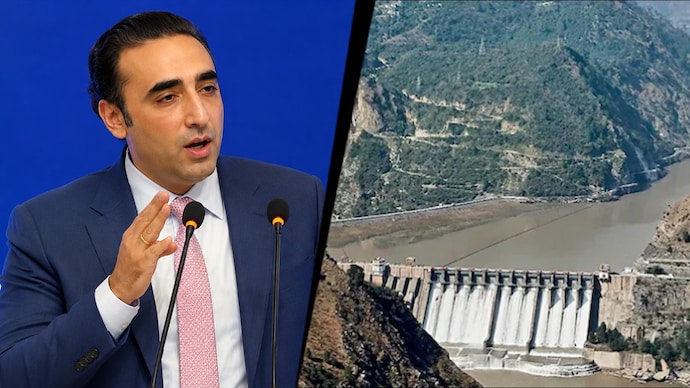
Pakistan Peoples Party (PPP) chairman Bilawal Bhutto-Zardari has intensified rhetoric over the Indus Waters Treaty (IWT) dispute with India by invoking Islamabad’s nuclear doctrine and warning that any attempt to undermine Pakistan’s water rights could trigger a “national response.”
Signed in 1960, India suspended the IWT last year in response to the Pahalgam terror attack. The move triggered a strong reaction from Pakistan, where the Indus River system remains crucial for agriculture, with waters from the basin supporting around 80 per cent of the country’s farmland.
To highlight its concerns, Pakistan organised an international seminar on Tuesday, where Bhutto argued that the dispute could not be viewed merely as an environmental or diplomatic issue but as a matter linked to national security and survival.
Responding to a question on why the Treaty should not be treated as a “diplomatic theatre”, the PPP chairman said Pakistan’s nuclear doctrine identifies certain extreme scenarios, including threats to its economy and waterways, as matters of national survival.
“One of the key aspects of Pakistan’s nuclear doctrine is that attempts to strangle the country’s economy or restrict its waterways fall among the rare scenarios that Pakistan has said could trigger a nuclear response,” he said.
Bhutto added that if restricting Pakistan’s water access amounted to a “nuclear armageddon scenario”, Islamabad must view it as an existential challenge requiring a broader response.
“If the closing of Pakistan's waters is a nuclear armageddon scenario, then Pakistan must not merely deal with this as an environmental issue, but as an existential assault on Pakistan that requires a collaborative military response,” he said.
Pakistan’s nuclear doctrine is based on “credible minimum deterrence” and has evolved into what it calls “full-spectrum deterrence” — meaning it aims to prevent threats at every level, from limited conflicts to large-scale wars.
Unlike India, Pakistan does not maintain a No First Use nuclear policy and has retained the option of using nuclear weapons first if it perceives a major threat to its survival.
'PAKISTAN WILL DEFEND ITS WATER'
In his address at the seminar, Bhutto accused India of using water as a pressure tool and said Islamabad would not compromise on what he described as the country’s fundamental water rights.
“If anyone believes that Pakistan will surrender the Sindh, they do not know Pakistan. They do not know Sindh. They do not know Punjab. They do not know Balochistan. They do not know Khyber Pakhtunkhwa. They do not know Kashmir or Gilgit Baltistan,” he said.
“We want peace, but peace with dignity. We want dialogue, but dialogue under law. We want coexistence, but not submission. Pakistan will defend its water, its people, its treaty, its sovereignty and its future,” the PPP leader added.
Bhutto added that the Indus was not a bargaining tool but a lifeline for Pakistan, warning that any attempt to turn it into a “noose” would be viewed as a threat to the country’s survival.
“The Indus is not a pressure point. The Indus is not a bargaining chip. The Indus is not a weapon to be placed in India's hands. The Indus is a lifeline of Pakistan,” he added.
BILAWAL'S SIMILAR REMARKS IN 2025
Shortly after India placed the IWT in abeyance in April 2025, Bhutto intensified his criticism of New Delhi, claiming Pakistan had a historic and civilisational connection with the Indus River system.
At the time, the PPP chairman warned India against any move to restrict Pakistan’s water access, saying, “The Indus is ours and will remain ours. Either our water will flow through it, or their blood will.”
Targeting Prime Minister Narendra Modi, Bhutto accused India of pursuing a “warmongering” approach and asserted that neither Pakistan nor the international community would accept any attempt to divert or control the Indus waters.
Pakistan Peoples Party (PPP) chairman Bilawal Bhutto-Zardari has intensified rhetoric over the Indus Waters Treaty (IWT) dispute with India by invoking Islamabad’s nuclear doctrine and warning that any attempt to undermine Pakistan’s water rights could trigger a “national response.”
Signed in 1960, India suspended the IWT last year in response to the Pahalgam terror attack. The move triggered a strong reaction from Pakistan, where the Indus River system remains crucial for agriculture, with waters from the basin supporting around 80 per cent of the country’s farmland.
To highlight its concerns, Pakistan organised an international seminar on Tuesday, where Bhutto argued that the dispute could not be viewed merely as an environmental or diplomatic issue but as a matter linked to national security and survival.
Responding to a question on why the Treaty should not be treated as a “diplomatic theatre”, the PPP chairman said Pakistan’s nuclear doctrine identifies certain extreme scenarios, including threats to its economy and waterways, as matters of national survival.
“One of the key aspects of Pakistan’s nuclear doctrine is that attempts to strangle the country’s economy or restrict its waterways fall among the rare scenarios that Pakistan has said could trigger a nuclear response,” he said.
Bhutto added that if restricting Pakistan’s water access amounted to a “nuclear armageddon scenario”, Islamabad must view it as an existential challenge requiring a broader response.
“If the closing of Pakistan's waters is a nuclear armageddon scenario, then Pakistan must not merely deal with this as an environmental issue, but as an existential assault on Pakistan that requires a collaborative military response,” he said.
Pakistan’s nuclear doctrine is based on “credible minimum deterrence” and has evolved into what it calls “full-spectrum deterrence” — meaning it aims to prevent threats at every level, from limited conflicts to large-scale wars.
Unlike India, Pakistan does not maintain a No First Use nuclear policy and has retained the option of using nuclear weapons first if it perceives a major threat to its survival.
'PAKISTAN WILL DEFEND ITS WATER'
In his address at the seminar, Bhutto accused India of using water as a pressure tool and said Islamabad would not compromise on what he described as the country’s fundamental water rights.
“If anyone believes that Pakistan will surrender the Sindh, they do not know Pakistan. They do not know Sindh. They do not know Punjab. They do not know Balochistan. They do not know Khyber Pakhtunkhwa. They do not know Kashmir or Gilgit Baltistan,” he said.
“We want peace, but peace with dignity. We want dialogue, but dialogue under law. We want coexistence, but not submission. Pakistan will defend its water, its people, its treaty, its sovereignty and its future,” the PPP leader added.
Bhutto added that the Indus was not a bargaining tool but a lifeline for Pakistan, warning that any attempt to turn it into a “noose” would be viewed as a threat to the country’s survival.
“The Indus is not a pressure point. The Indus is not a bargaining chip. The Indus is not a weapon to be placed in India's hands. The Indus is a lifeline of Pakistan,” he added.
BILAWAL'S SIMILAR REMARKS IN 2025
Shortly after India placed the IWT in abeyance in April 2025, Bhutto intensified his criticism of New Delhi, claiming Pakistan had a historic and civilisational connection with the Indus River system.
At the time, the PPP chairman warned India against any move to restrict Pakistan’s water access, saying, “The Indus is ours and will remain ours. Either our water will flow through it, or their blood will.”
Targeting Prime Minister Narendra Modi, Bhutto accused India of pursuing a “warmongering” approach and asserted that neither Pakistan nor the international community would accept any attempt to divert or control the Indus waters.

