Did Iran pressure people to attend Ayatollah Khamenei's funeral?
Hundreds of thousands attended Ayatollah Ali Khamenei's funeral ceremony in Tehran on Saturday. Just months ago, the people were out on the streets protesting against Khamenei. It has raised questions whether the massive turnout was voluntary.
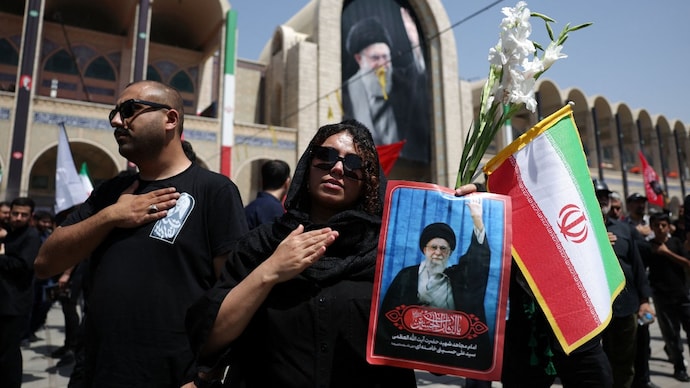
It was just months ago that Iran witnessed its biggest protest against then Supreme Leader Ayatollah Ali Khamenei over economic hardships. Fast forward to July 4: hundreds of thousands of people turned up at Grand Mosalla mosque in Tehran for the funeral of Khamenei, who was killed in US-Israel strikes at the start of the war. Was the massive turnout voluntary? A report has now claimed that Iranian authorities allegedly pressured workers, businesses and charities to take part in the week-long funeral ceremonies.
In the days leading up to July 4, there was a broad campaign of workplace directives, business closures and logistical mobilisation, according to the report in Iran International. A report in CNN described it as one of the "largest logistical efforts" in Iran's history as authorities mobilised students, soldiers, labour unions, firefighters and even religious "mourning" groups.
IRAN'S SHOW OF STRENGTH?
In fact, Iran has left no stone unturned to give Khamenei, the longest-serving Supreme Leader of Iran, a grand farewell in what is being seen by many as a display of strength. Interestingly, the funeral ceremony coincides with the 250th US Independence Day celebrations.
Experts believe that, behind the spectacle, lies Iran's attempt to send a message to its adverseries - the regime is still standing despite the loss of its supreme leader. Images of thousands of mourners, clutching portraits of Khamenei, and thronging the mosque are being projected as symbols of resilience and national unity.
However, the huge turnout on the first day of the funeral, which was originally planned for March, has raised questions.
BUSINESSES SHUT, PEOPLE PRESSURED?
As per the Iran International report, businesses were directed to close during the week-long funeral ceremony or face penalties. Khamenei will be cremated in his home town of Mashhad on July 9.
"We received a text message from the real estate union... to mandatorily attend the ceremonies," a Tehran resident said.
Residents also said that members of the Basij Resistance Force, a volunteer paramilitary outfit, visited shops and warned owners against keeping their businesses open. Those violating the diktat were threatened with having their shops sealed.
The Basij force operates under the powerful Islamic Revolutionary Guards (IRGC), which reports directly to the Supreme Leader. After Khamenei's death, his son Mojtaba was appointed the Supreme Leader.
However, Mojtaba has not made any public appearance since March, leading to speculation that he might be severely injured.
Even gyms and fitness centres have been directed to shut shop from July 4 to July 8. Tehran's Grand Bazaar, the economic hub of the Iranian capital, was also deserted on Saturday.
The Iran war has already severely affected shopkeepers and traders. Another week-long closure will further put pressure on the struggling businesses, locals said.
According to the report, public-sector employees have been ordered to attend the funeral ceremonies along with their parents and children. The leaves of all staff across municipal bodies have been cancelled, one Tehran municipality employee said.
Some offices have been instructed by the authorities to provide 200 employees for the ceremonies. Automaker Saipa has been asked to prepare its facilities to accommodate around 2,000 visitors from Iraq, the report said.
DIKTATS FOR RESTAURANTS, MEDIA AS WELL
Beyond government entities and private firms, charitable organisations were also directed to contribute to the funeral. They were warned that failing to comply would lead to their work being disrupted.
Restaurant owners also claimed that military personnel ordered them to prepare thousands of "free meals" for mourners. Those refusing to comply risk permanent closure, the report said.
Even the media has been barred from airing anything other than the funeral procession over the next few days. TV channels have to provide the "most magnificent possible coverage" of the ceremonies, a confidential directive accessed by Iran International mentioned.
It further said that the media coverage could focus on explaining the personal and political journey of "Iran's martyr".
Even before the funeral ceremony kicked off on Saturday, TV channels devoted much of their broadcast to tribute songs and documentaries on Khamenei's life.
For Iran, the funeral ceremony is not merely about giving a grand farewell to Khamenei. It is also about political messaging. However, gauging whether the massive crowds reflect genuine public mourning or a forced mobilisation is difficult. Previous state events in Iran are a testament to it. For now, the matter remains open to debate.
It was just months ago that Iran witnessed its biggest protest against then Supreme Leader Ayatollah Ali Khamenei over economic hardships. Fast forward to July 4: hundreds of thousands of people turned up at Grand Mosalla mosque in Tehran for the funeral of Khamenei, who was killed in US-Israel strikes at the start of the war. Was the massive turnout voluntary? A report has now claimed that Iranian authorities allegedly pressured workers, businesses and charities to take part in the week-long funeral ceremonies.
In the days leading up to July 4, there was a broad campaign of workplace directives, business closures and logistical mobilisation, according to the report in Iran International. A report in CNN described it as one of the "largest logistical efforts" in Iran's history as authorities mobilised students, soldiers, labour unions, firefighters and even religious "mourning" groups.
IRAN'S SHOW OF STRENGTH?
In fact, Iran has left no stone unturned to give Khamenei, the longest-serving Supreme Leader of Iran, a grand farewell in what is being seen by many as a display of strength. Interestingly, the funeral ceremony coincides with the 250th US Independence Day celebrations.
Experts believe that, behind the spectacle, lies Iran's attempt to send a message to its adverseries - the regime is still standing despite the loss of its supreme leader. Images of thousands of mourners, clutching portraits of Khamenei, and thronging the mosque are being projected as symbols of resilience and national unity.
However, the huge turnout on the first day of the funeral, which was originally planned for March, has raised questions.
BUSINESSES SHUT, PEOPLE PRESSURED?
As per the Iran International report, businesses were directed to close during the week-long funeral ceremony or face penalties. Khamenei will be cremated in his home town of Mashhad on July 9.
"We received a text message from the real estate union... to mandatorily attend the ceremonies," a Tehran resident said.
Residents also said that members of the Basij Resistance Force, a volunteer paramilitary outfit, visited shops and warned owners against keeping their businesses open. Those violating the diktat were threatened with having their shops sealed.
The Basij force operates under the powerful Islamic Revolutionary Guards (IRGC), which reports directly to the Supreme Leader. After Khamenei's death, his son Mojtaba was appointed the Supreme Leader.
However, Mojtaba has not made any public appearance since March, leading to speculation that he might be severely injured.
Even gyms and fitness centres have been directed to shut shop from July 4 to July 8. Tehran's Grand Bazaar, the economic hub of the Iranian capital, was also deserted on Saturday.
The Iran war has already severely affected shopkeepers and traders. Another week-long closure will further put pressure on the struggling businesses, locals said.
According to the report, public-sector employees have been ordered to attend the funeral ceremonies along with their parents and children. The leaves of all staff across municipal bodies have been cancelled, one Tehran municipality employee said.
Some offices have been instructed by the authorities to provide 200 employees for the ceremonies. Automaker Saipa has been asked to prepare its facilities to accommodate around 2,000 visitors from Iraq, the report said.
DIKTATS FOR RESTAURANTS, MEDIA AS WELL
Beyond government entities and private firms, charitable organisations were also directed to contribute to the funeral. They were warned that failing to comply would lead to their work being disrupted.
Restaurant owners also claimed that military personnel ordered them to prepare thousands of "free meals" for mourners. Those refusing to comply risk permanent closure, the report said.
Even the media has been barred from airing anything other than the funeral procession over the next few days. TV channels have to provide the "most magnificent possible coverage" of the ceremonies, a confidential directive accessed by Iran International mentioned.
It further said that the media coverage could focus on explaining the personal and political journey of "Iran's martyr".
Even before the funeral ceremony kicked off on Saturday, TV channels devoted much of their broadcast to tribute songs and documentaries on Khamenei's life.
For Iran, the funeral ceremony is not merely about giving a grand farewell to Khamenei. It is also about political messaging. However, gauging whether the massive crowds reflect genuine public mourning or a forced mobilisation is difficult. Previous state events in Iran are a testament to it. For now, the matter remains open to debate.

