Iran claims strike on US radar in Bahrain, warns of 'even harsher' response
Bahrain issued its first shelter alerts since September after Iran's Revolutionary Guards said they sent six drones after a US radar. With peace talks stalled, a retreat by Saudi-backed forces in Yemen has put another key route for Gulf oil under pressure.
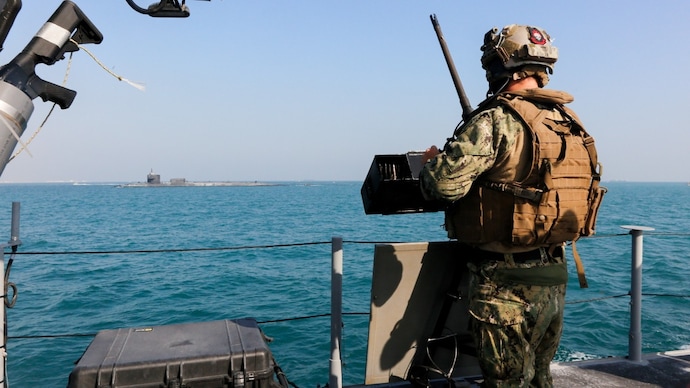
Iran’s Revolutionary Guards said on Sunday that they had launched six drones at a US air defence radar at a military base in Bahrain in retaliation for what they called “hostile US actions”. Bahrain said it intercepted several incoming threats and issued its first shelter alerts since September.
The attack raised fears of renewed fighting as talks to end the nearly nine-month war remain deadlocked.
“The US air defence radar system at the Al-Riffa helicopter base in Bahrain was targeted by six drones belonging to the IRGC Aerospace Force,” the Guards said in a statement carried by Iran’s state broadcaster.
Bahrain’s military said it intercepted and destroyed several incoming threats before they reached their targets. The interior ministry issued two alerts urging residents to seek shelter.
Neither Bahrain nor the US immediately confirmed that the radar had been hit. Bahrain hosts the US Navy’s Fifth Fleet and has come under repeated Iranian attack during the war.
On Friday, the Revolutionary Guards claimed they had struck a US early-warning radar facility in the kingdom. The US military said it had intercepted two Iranian drones and reported no damage.
WHERE THE IRAN-US PEACE TALKS STAND
The US and Iran remain at odds over the terms of a deal to end the war. Washington is maintaining its naval blockade, while Tehran continues to restrict shipping through the Strait of Hormuz, a key route for Gulf oil exports.
“The Strait of Hormuz is closed, and any aggression by the American enemy will be met with an even harsher and more forceful response,” Iran’s Revolutionary Guards said in the same statement.
US President Donald Trump has threatened further strikes but has so far held off on a return to major combat. He told advisers he might refrain from attacking Iran if there were no new provocations from Tehran or the Iran-backed Houthis in Yemen, Reuters reported on Saturday.
Trump has also said the US no longer needs a deal with Tehran. He directed Vice President JD Vance, who had led the US negotiating effort, to shift his “complete and total attention” to alleged crime and corruption in Democratic-run cities and states.
Iran says Washington must agree to its ceasefire conditions before Tehran will discuss its nuclear programme.
FRESH PRESSURE ON GULF OIL ROUTES
With shipping through Hormuz already disrupted, a military withdrawal in Yemen has put another route used by Gulf oil producers under pressure.
Saudi-backed Yemeni government forces said on Sunday they were pulling back from territory overlooking the Bab el-Mandeb Strait, giving the Houthis greater leverage over the southern entrance to the Red Sea.
Hours later, the Saudi-led coalition said it intercepted two Houthi ballistic missiles headed towards Riyadh and three drones in Saudi Arabia’s oil-rich Eastern Province.
The war began on February 28 with US and Israeli strikes on Iran. Tehran retaliated with attacks on US military bases and civilian and energy infrastructure across the Gulf. The conflict also spread to Lebanon and Yemen, with Iran-backed Hezbollah attacking Israel and the Houthis targeting Saudi Arabia.

