Iran's social media WMDs- Lego shorts
How Iran reverse engineered Hollywood adaptations of a European toymaker to perfect its own Weapon of Mass Distraction.
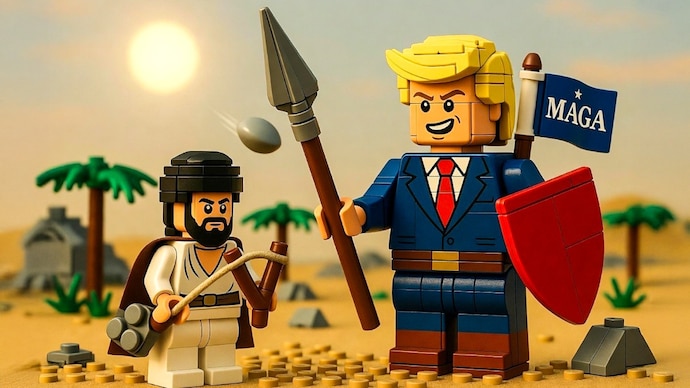
For nearly two months now, Iran has attacked the United States with one of the most lethal weapons in its arsenal— pro-Iranian Lego propaganda movie shorts, set to rap soundtracks.
Lego likenesses of President Donald Trump, Pete Hegseth, Marco Rubio, JD Vance, and even White House press secretary Karoline Leavitt are mercilessly lampooned. The US government is shown as linked to the Epstein files, and defeated by the good guys, the Iranians. The theme is almost always David versus Goliath. The Iranians are the little Davids.
Iran’s ballistic missiles and kamikaze drones targeted US air bases and military infrastructure in the GCC countries during the 40-day conflict this year. Iranian Lego shorts have impacted the world as global viral video sensations, viewed hundreds of millions of times on social media platforms like X and TikTok in a world of declining attention spans, and where the smartphone is the extension of the human hand. This is also a world where the US President communicates about foreign policy through his own social media platform, Truth Social, and the Secretary of War was once a Fox News talk show host.
A shaky ceasefire has been in effect since April 7, but the Iranian information blitz using its new Weapon of Mass Distraction (WMD), is ceaseless.
The concept is American. ‘The Lego Movie’, was a 2014 Hollywood computer animation blockbuster voiced by mainstream actors like Chris Pratt and Morgan Freeman, which grossed $470 million on a $65 million budget. The movie was based on a line of plastic construction toys made by the Lego Group, the world’s Number One toymaker, a privately held company headquartered in Billund, Denmark.
Lego’s home country must be the ones laughing the loudest at these shorts. In January 2026, President Trump had threatened to seize Greenland, a Danish island.
Trump deferred his invasion plans, choosing instead, to strike at Venezuela. The stunning abduction of President Nicolas Maduro by US special forces might have emboldened Trump to strike at Iran on February 28. And this is where Trump seems to have been caught up in a Persian quagmire. Not only did the Iranian regime withstand a decapitation strike which killed 40 of its top leaders including Supreme Leader Ayatollah Ali Khamenei, but it also survived one of the most intense air campaigns of the 21st century. Tehran has also executed a sophisticated social media and AI-driven information warfare campaign it first revealed flashes of during the 12-day war with Israel last year.
The BBC interviewed the anonymous creators of the Lego shorts, an Iran-based company, appropriately called Explosive Media. The team has less than ten people. They use Lego-style graphics ‘because it is a world language’. Team lead ‘Mr Explosive’ admits he is commissioned by the Iranian government.
It is the 21st century’s most sophisticated and effective use of propaganda by the weaker side.
The Iranians are no strangers to reverse-engineering western concepts. Over a decade ago, Tehran introduced the world to the Shahed-136 kamikaze drone, the cheapest way to deliver high-explosives at extended ranges. The Shahed has European origins, Germany’s Drohne Anti Radar (DAR), a small, cheap, mass-produced pilotless aircraft with a bomb in its nose, meant to crash into Soviet radars. The US and Germany pulled the plug on the Dornier-DAR project in 1994 when the Cold War ended, turning early prototypes into museum pieces.
Iran’s Lego shorts are the Shahed-136 of soft power. A western-origin product reverse-engineered and fired back at its developers. It arrives at a time when notions of victory and defeat are shaped by cognitive warfare and memes. The Iranian Lego shorts are so popular precisely for the reason the Hollywood animated movie was in 2014, it brought witty visual relief for a Hollywood marketplace crowded with anemic 3D feature animation.
The Shahed-136 set the pace for cheap, mass-produced platforms defining 21st century industrial warfare. The drone has been reverse-engineered by both the US and Russia. Iran's Lego propaganda shorts have defined the new grammar of narrative warfare in the 21st century.
For nearly two months now, Iran has attacked the United States with one of the most lethal weapons in its arsenal— pro-Iranian Lego propaganda movie shorts, set to rap soundtracks.
Lego likenesses of President Donald Trump, Pete Hegseth, Marco Rubio, JD Vance, and even White House press secretary Karoline Leavitt are mercilessly lampooned. The US government is shown as linked to the Epstein files, and defeated by the good guys, the Iranians. The theme is almost always David versus Goliath. The Iranians are the little Davids.
Iran’s ballistic missiles and kamikaze drones targeted US air bases and military infrastructure in the GCC countries during the 40-day conflict this year. Iranian Lego shorts have impacted the world as global viral video sensations, viewed hundreds of millions of times on social media platforms like X and TikTok in a world of declining attention spans, and where the smartphone is the extension of the human hand. This is also a world where the US President communicates about foreign policy through his own social media platform, Truth Social, and the Secretary of War was once a Fox News talk show host.
A shaky ceasefire has been in effect since April 7, but the Iranian information blitz using its new Weapon of Mass Distraction (WMD), is ceaseless.
The concept is American. ‘The Lego Movie’, was a 2014 Hollywood computer animation blockbuster voiced by mainstream actors like Chris Pratt and Morgan Freeman, which grossed $470 million on a $65 million budget. The movie was based on a line of plastic construction toys made by the Lego Group, the world’s Number One toymaker, a privately held company headquartered in Billund, Denmark.
Lego’s home country must be the ones laughing the loudest at these shorts. In January 2026, President Trump had threatened to seize Greenland, a Danish island.
Trump deferred his invasion plans, choosing instead, to strike at Venezuela. The stunning abduction of President Nicolas Maduro by US special forces might have emboldened Trump to strike at Iran on February 28. And this is where Trump seems to have been caught up in a Persian quagmire. Not only did the Iranian regime withstand a decapitation strike which killed 40 of its top leaders including Supreme Leader Ayatollah Ali Khamenei, but it also survived one of the most intense air campaigns of the 21st century. Tehran has also executed a sophisticated social media and AI-driven information warfare campaign it first revealed flashes of during the 12-day war with Israel last year.
The BBC interviewed the anonymous creators of the Lego shorts, an Iran-based company, appropriately called Explosive Media. The team has less than ten people. They use Lego-style graphics ‘because it is a world language’. Team lead ‘Mr Explosive’ admits he is commissioned by the Iranian government.
It is the 21st century’s most sophisticated and effective use of propaganda by the weaker side.
The Iranians are no strangers to reverse-engineering western concepts. Over a decade ago, Tehran introduced the world to the Shahed-136 kamikaze drone, the cheapest way to deliver high-explosives at extended ranges. The Shahed has European origins, Germany’s Drohne Anti Radar (DAR), a small, cheap, mass-produced pilotless aircraft with a bomb in its nose, meant to crash into Soviet radars. The US and Germany pulled the plug on the Dornier-DAR project in 1994 when the Cold War ended, turning early prototypes into museum pieces.
Iran’s Lego shorts are the Shahed-136 of soft power. A western-origin product reverse-engineered and fired back at its developers. It arrives at a time when notions of victory and defeat are shaped by cognitive warfare and memes. The Iranian Lego shorts are so popular precisely for the reason the Hollywood animated movie was in 2014, it brought witty visual relief for a Hollywood marketplace crowded with anemic 3D feature animation.
The Shahed-136 set the pace for cheap, mass-produced platforms defining 21st century industrial warfare. The drone has been reverse-engineered by both the US and Russia. Iran's Lego propaganda shorts have defined the new grammar of narrative warfare in the 21st century.

