US left with only nuke option: Tehran Deputy Mayor warns Trump over attacking Iran
Responding to a question on whether there were concerns about Israel or the US targeting the funeral procession, Hamidreza Gholamzadeh claimed both countries had considered disrupting the event but ultimately refrained.
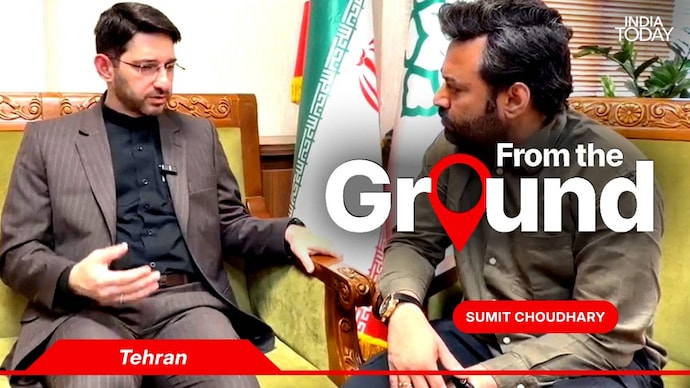
Tehran Deputy Mayor Hamidreza Gholamzadeh has claimed that the US has run out of conventional military options against Iran, saying the only option left for Washington is a nuclear strike.
Speaking to India Today TV from Tehran, Gholamzadeh, who heads the city's Centre for Communication and International Relations, argued that Iran would continue to fight even if faced with further military action.
"Now the only option Americans can use against us is nuclear bombing. They can't do anything beyond this. We will still fight," he said.
Asked whether there were concerns over a possible US or Israeli attack on the ongoing funeral procession of Ali Khamenei, Gholamzadeh alleged that both countries had considered disrupting the event but backed down after witnessing the scale of public participation and the presence of international guests.
"They were planning to disrupt it, but after seeing the large gatherings and the presence of international guests, they pulled back," he alleged.
Gholamzadeh said the funeral ceremony is now in its final phase and has drawn a massive turnout, with large crowds gathering to pay their respects.
The Tehran Deputy Mayor said that the Strait of Hormuz, the strategically important waterway responsible for a fifth of the world's shipping, remains open. "But after 60 days, we will impose a tax. International law does not apply to the Strait of Hormuz," he added.
Speaking about the status of indirect negotiations between Tehran and Washington, Gholamzadeh said there had been no progress so far. "The negotiations are not moving forward. We know it, and the US also knows it," the Deputy Mayor, who is associated with Iran's negotiating team as an expert, said.
His remarks come amid continued tensions in the region despite an interim understanding reached between the United States and Iran.
IRAN-US TENSIONS CONTINUE
While talks between the two sides have hit a deadlock, fresh incidents in the Strait of Hormuz have raised concerns over the fragile arrangement.
Iran's Revolutionary Guards fired at least two missiles at commercial vessels transiting the strategic waterway, damaging two ships, though no casualties were reported, Axios reported, citing a US official.
The reported strikes on Monday have raised questions over a memorandum of understanding signed less than three weeks ago, under which Tehran had agreed to halt attacks in the Strait of Hormuz. They also came shortly after the expiry of a Qatar-mediated week-long arrangement between the US and Iran to suspend attacks in the area.
Since the US-Israeli conflict began with the airstrike that killed Khamenei, Iran has tightened its control over the Strait of Hormuz and has been seeking to establish a permanent system to levy transit fees on commercial vessels passing through the strategic waterway.
Tehran Deputy Mayor Hamidreza Gholamzadeh has claimed that the US has run out of conventional military options against Iran, saying the only option left for Washington is a nuclear strike.
Speaking to India Today TV from Tehran, Gholamzadeh, who heads the city's Centre for Communication and International Relations, argued that Iran would continue to fight even if faced with further military action.
"Now the only option Americans can use against us is nuclear bombing. They can't do anything beyond this. We will still fight," he said.
Asked whether there were concerns over a possible US or Israeli attack on the ongoing funeral procession of Ali Khamenei, Gholamzadeh alleged that both countries had considered disrupting the event but backed down after witnessing the scale of public participation and the presence of international guests.
"They were planning to disrupt it, but after seeing the large gatherings and the presence of international guests, they pulled back," he alleged.
Gholamzadeh said the funeral ceremony is now in its final phase and has drawn a massive turnout, with large crowds gathering to pay their respects.
The Tehran Deputy Mayor said that the Strait of Hormuz, the strategically important waterway responsible for a fifth of the world's shipping, remains open. "But after 60 days, we will impose a tax. International law does not apply to the Strait of Hormuz," he added.
Speaking about the status of indirect negotiations between Tehran and Washington, Gholamzadeh said there had been no progress so far. "The negotiations are not moving forward. We know it, and the US also knows it," the Deputy Mayor, who is associated with Iran's negotiating team as an expert, said.
His remarks come amid continued tensions in the region despite an interim understanding reached between the United States and Iran.
IRAN-US TENSIONS CONTINUE
While talks between the two sides have hit a deadlock, fresh incidents in the Strait of Hormuz have raised concerns over the fragile arrangement.
Iran's Revolutionary Guards fired at least two missiles at commercial vessels transiting the strategic waterway, damaging two ships, though no casualties were reported, Axios reported, citing a US official.
The reported strikes on Monday have raised questions over a memorandum of understanding signed less than three weeks ago, under which Tehran had agreed to halt attacks in the Strait of Hormuz. They also came shortly after the expiry of a Qatar-mediated week-long arrangement between the US and Iran to suspend attacks in the area.
Since the US-Israeli conflict began with the airstrike that killed Khamenei, Iran has tightened its control over the Strait of Hormuz and has been seeking to establish a permanent system to levy transit fees on commercial vessels passing through the strategic waterway.

