Iran President orders restoration of internet access after 87-day blackout: Report
The order was confirmed by officials from Iran's Communications Ministry, with state-linked outlets including Mehr News Agency reporting that Masoud Pezeshkian had issued a formal decree to reopen internet access.
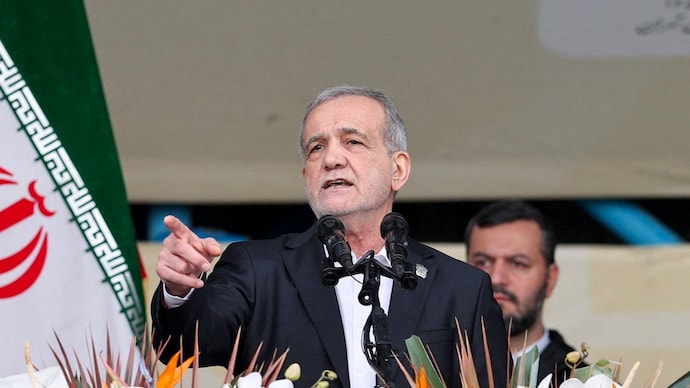
Iranian President Masoud Pezeshkian has ordered the restoration of international internet access across Iran after nearly three months of severe restrictions that left much of the country cut off from the global web, according to Iranian state media reports on Monday.
Iran first imposed heavy internet restrictions on January 8 following nationwide anti-regime protests. The curbs were partially eased on January 23 before authorities reimposed them on February 28, the same day the US and Israel launched attacks on Iran. According to NetBlocks, internet connectivity across the country remained between just 1 per cent and 2 per cent of normal levels for weeks, compared with 90 per cent to 100 per cent before the restrictions were introduced.
The order was confirmed by officials from Iran's Communications Ministry, with state-linked outlets including Mehr News Agency reporting that Pezeshkian approved a plan to restore internet access after a high-level meeting involving Iran's Cyber Space Steering and Organising Headquarters. Fars News Agency, which is linked to the Islamic Revolutionary Guard Corps, reported that the decision to restore access passed with nine votes in favour and three against during Monday's meeting.
Iran has faced a near-total internet blackout for more than 87 days, according to internet monitoring group NetBlocks. During the restrictions, most Iranians were unable to access international websites and social media platforms unless they used expensive and sophisticated VPN services designed to bypass state controls.
BLACKOUT TURNED DAILY LIFE UPSIDE DOWN
The internet restrictions first began on January 8 after anti-government protests erupted across the country amid worsening economic conditions.
Authorities briefly eased some restrictions on January 23. But the blackout returned with far greater intensity on February 28 — the same day the United States and Israel launched attacks on Iran.
NetBlocks later called the shutdown "the most severe, by extent and duration, that we've tracked in the history of modern internet connectivity".
For many Iranians, the restrictions felt like life suddenly slowing to a standstill. Families struggled to contact loved ones during military tensions. Business owners lost access to customers and suppliers. Online workers saw projects collapse almost overnight. The blackout also limited access to independent information at a time when Iranian cities were facing protests, economic unrest and military strikes.
BUSINESSES COLLAPSED DUE TO BLOCKED ONLINE ACCESS
Long before the blackout, Iran's internet was already heavily controlled. Many international platforms were blocked, forcing users to rely on VPNs to access services such as Instagram, WhatsApp and Telegram. But the latest restrictions went far beyond censorship.
Entire sectors of Iran's digital economy were suddenly paralysed.
According to a report by The Wall Street Journal, more than a million people are believed to have lost work due to the combined effects of war, protests and internet restrictions.
Small businesses that depended entirely on social media advertising were among the hardest hit. Freelancers working with overseas clients lost communication channels. Tech startups stalled. Software developers saw projects abandoned.
INTERNET ACCESS BECAME A PRIVILEGE
As the blackout deepened, internet access increasingly became something only a small number of people could afford. Iran introduced a restricted paid system known as "Internet Pro", offering selected users less-filtered internet through special white SIM cards.
Applicants reportedly had to provide personal documents and explain why they needed access.
Meanwhile, the satellite-based internet system, Starlink, quietly spread inside the country. Thousands of terminals were reportedly smuggled into Iran after the government crackdown earlier this year, allowing some people to bypass state restrictions.
But using Starlink remains illegal in Iran. Authorities have reportedly searched homes and rooftops to find users accused of connecting to the service.
Despite the latest announcement, Iranian authorities have not yet clarified when full internet access will be restored nationwide or whether restrictions on foreign platforms will remain intact.
Iranian President Masoud Pezeshkian has ordered the restoration of international internet access across Iran after nearly three months of severe restrictions that left much of the country cut off from the global web, according to Iranian state media reports on Monday.
Iran first imposed heavy internet restrictions on January 8 following nationwide anti-regime protests. The curbs were partially eased on January 23 before authorities reimposed them on February 28, the same day the US and Israel launched attacks on Iran. According to NetBlocks, internet connectivity across the country remained between just 1 per cent and 2 per cent of normal levels for weeks, compared with 90 per cent to 100 per cent before the restrictions were introduced.
The order was confirmed by officials from Iran's Communications Ministry, with state-linked outlets including Mehr News Agency reporting that Pezeshkian approved a plan to restore internet access after a high-level meeting involving Iran's Cyber Space Steering and Organising Headquarters. Fars News Agency, which is linked to the Islamic Revolutionary Guard Corps, reported that the decision to restore access passed with nine votes in favour and three against during Monday's meeting.
Iran has faced a near-total internet blackout for more than 87 days, according to internet monitoring group NetBlocks. During the restrictions, most Iranians were unable to access international websites and social media platforms unless they used expensive and sophisticated VPN services designed to bypass state controls.
BLACKOUT TURNED DAILY LIFE UPSIDE DOWN
The internet restrictions first began on January 8 after anti-government protests erupted across the country amid worsening economic conditions.
Authorities briefly eased some restrictions on January 23. But the blackout returned with far greater intensity on February 28 — the same day the United States and Israel launched attacks on Iran.
NetBlocks later called the shutdown "the most severe, by extent and duration, that we've tracked in the history of modern internet connectivity".
For many Iranians, the restrictions felt like life suddenly slowing to a standstill. Families struggled to contact loved ones during military tensions. Business owners lost access to customers and suppliers. Online workers saw projects collapse almost overnight. The blackout also limited access to independent information at a time when Iranian cities were facing protests, economic unrest and military strikes.
BUSINESSES COLLAPSED DUE TO BLOCKED ONLINE ACCESS
Long before the blackout, Iran's internet was already heavily controlled. Many international platforms were blocked, forcing users to rely on VPNs to access services such as Instagram, WhatsApp and Telegram. But the latest restrictions went far beyond censorship.
Entire sectors of Iran's digital economy were suddenly paralysed.
According to a report by The Wall Street Journal, more than a million people are believed to have lost work due to the combined effects of war, protests and internet restrictions.
Small businesses that depended entirely on social media advertising were among the hardest hit. Freelancers working with overseas clients lost communication channels. Tech startups stalled. Software developers saw projects abandoned.
INTERNET ACCESS BECAME A PRIVILEGE
As the blackout deepened, internet access increasingly became something only a small number of people could afford. Iran introduced a restricted paid system known as "Internet Pro", offering selected users less-filtered internet through special white SIM cards.
Applicants reportedly had to provide personal documents and explain why they needed access.
Meanwhile, the satellite-based internet system, Starlink, quietly spread inside the country. Thousands of terminals were reportedly smuggled into Iran after the government crackdown earlier this year, allowing some people to bypass state restrictions.
But using Starlink remains illegal in Iran. Authorities have reportedly searched homes and rooftops to find users accused of connecting to the service.
Despite the latest announcement, Iranian authorities have not yet clarified when full internet access will be restored nationwide or whether restrictions on foreign platforms will remain intact.

