Lebanon, Syria sign non-interference pact in landmark reset of ties
The agreement was reached during Syrian Foreign Minister Asaad al-Shaibani's visit to the Lebanese capital, where he met Prime Minister Nawaf Salam and other senior Lebanese officials.
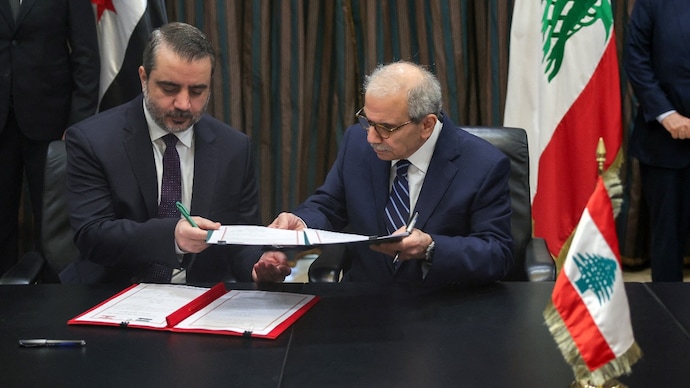
Amid boiling tensions in the Middle East, Lebanon and Syria have signed a landmark agreement pledging mutual respect for each other's sovereignty and a commitment to stay out of one another's internal affairs.
The agreement was reached during Syrian Foreign Minister Asaad al-Shaibani's visit to the Lebanese capital, where he met Prime Minister Nawaf Salam and other senior Lebanese officials. Delegations from both countries attended the talks, which focused on opening what both sides described as a new chapter in bilateral relations after years of strained ties.
According to Lebanon's National News Agency, the agreement lays out "principles of cooperation, including respect for the sovereignty, independence, unity, and territorial integrity of either state, equality between the two parties, and non-interference".
"We signed the agreement establishing the Joint Higher Committee for Cooperation and Partnership with Lebanon. This framework will serve as a platform for ministries in both countries to develop partnerships, security coordination and broader cooperation," Lebanese Prime Minister Nawaf Salam said.
FRESH RESET IN BILATERAL RELATIONS
Lebanese President Joseph Aoun welcomed the visit of Syrian Foreign Minister, saying it had helped ease concerns among some Lebanese that Syria's new leadership intended to revive the kind of political influence Damascus once exercised in Lebanon.
Speaking before a delegation from the Maronite League in Beirut, Aoun said the visit sent a clear message that Syria was seeking a different relationship with its neighbour.
"The visit being made today by the Syrian foreign minister removes the concerns of some Lebanese about the existence of an intention by Syrian President Ahmad al-Sharaa to interfere in Lebanon," Aoun said.
According to a statement from the Lebanese presidency, the purpose of the visit was to establish "sound relations" between the two countries based on mutual respect and non-interference in each other's domestic affairs.
Aoun also said the Syrian delegation stressed that future cooperation should take place through constitutional institutions, operating "from state to state," rather than through political parties or factions.
The Lebanese president reaffirmed that Beirut remains committed to building brotherly relations with Syria through cooperation, coordination and mutual respect.
He added that Lebanon's stability is closely linked to Syria's stability and highlighted growing coordination on border security, preventing the smuggling of people and weapons, and tackling activities that threaten the security of both countries.
Aoun also revealed that Syrian President Ahmed al-Sharaa had repeatedly assured him during previous meetings and phone calls that Syria's role in Lebanon "will not be the same as it was in the past", signalling a break from decades of Syrian political influence.
He also welcomed the creation of a joint high-level committee tasked with protecting the interests of both nations.
SYRIA INVITES AOUN TO DAMASCUS
During the meetings, al-Shaibani conveyed greetings from President al-Sharaa and formally invited Aoun to visit Damascus.
Addressing reporters, al-Shaibani also reiterated Syria's position on the ongoing conflict in Lebanon.
"Syria's official position is to reject all Israeli attacks against Lebanon."
"We also reject all acts of shelling and displacement that have affected the Lebanese people during the recent period."
"This is our firm position, and we remain committed to it."
When asked whether Syria would accept any US pressure for involvement in disarming Hezbollah, both sides declined to elaborate.
Lebanese Prime Minister Nawaf Salam responded: "No, no, neither he nor I will answer this question."
He added: "I believe President Ahmed al-Sharaa has already answered this question, and more."
Speaking on behalf of the Syrian delegation, Salam continued: "On behalf of Minister Asaad al-Shaibani, there is nothing to add to what President Ahmed al-Sharaa said, and I have nothing to add either."
SHARAA'S MESSAGE ON HEZBOLLAH
The visit follows comments made by President al-Sharaa during a televised interview with Al Mashhad TV on June 21, when he indicated Damascus was prepared to engage with all Lebanese political groups, including Hezbollah.
"We will sit at the same table with Hezbollah if it serves the interests of Syria and Lebanon," he said.
Rejecting suggestions that Syria was seeking military involvement in Lebanon, al-Sharaa added: "We have enough courage that, if we wanted to enter a war, we would say so openly."
"We intend nothing but good and a peaceful life for our people in Lebanon," he said, stressing that Damascus' role would be "purely positive" and guided by the shared interests of both countries.
HEZBOLLAH REMAINS IN FOCUS
The agreement also comes against the backdrop of growing regional pressure over Hezbollah.
On June 21, US President Donald Trump criticised Israel's efforts against the Lebanese armed group during an interview with Fox News.
"I am disappointed Israel cannot put Hezbollah away," Trump said.
He suggested Syria could play a greater role in addressing the issue, adding, "I am close to giving this to Syria."
Days earlier, on June 16, Trump said he had assured Israel that it allow Syria to "take care of Hezbollah" in Lebanon.
Despite those remarks, Thursday's discussions in Beirut focused on strengthening state-to-state cooperation and reaffirming the principle that neither country would interfere in the other's internal affairs.
Amid boiling tensions in the Middle East, Lebanon and Syria have signed a landmark agreement pledging mutual respect for each other's sovereignty and a commitment to stay out of one another's internal affairs.
The agreement was reached during Syrian Foreign Minister Asaad al-Shaibani's visit to the Lebanese capital, where he met Prime Minister Nawaf Salam and other senior Lebanese officials. Delegations from both countries attended the talks, which focused on opening what both sides described as a new chapter in bilateral relations after years of strained ties.
According to Lebanon's National News Agency, the agreement lays out "principles of cooperation, including respect for the sovereignty, independence, unity, and territorial integrity of either state, equality between the two parties, and non-interference".
"We signed the agreement establishing the Joint Higher Committee for Cooperation and Partnership with Lebanon. This framework will serve as a platform for ministries in both countries to develop partnerships, security coordination and broader cooperation," Lebanese Prime Minister Nawaf Salam said.
FRESH RESET IN BILATERAL RELATIONS
Lebanese President Joseph Aoun welcomed the visit of Syrian Foreign Minister, saying it had helped ease concerns among some Lebanese that Syria's new leadership intended to revive the kind of political influence Damascus once exercised in Lebanon.
Speaking before a delegation from the Maronite League in Beirut, Aoun said the visit sent a clear message that Syria was seeking a different relationship with its neighbour.
"The visit being made today by the Syrian foreign minister removes the concerns of some Lebanese about the existence of an intention by Syrian President Ahmad al-Sharaa to interfere in Lebanon," Aoun said.
According to a statement from the Lebanese presidency, the purpose of the visit was to establish "sound relations" between the two countries based on mutual respect and non-interference in each other's domestic affairs.
Aoun also said the Syrian delegation stressed that future cooperation should take place through constitutional institutions, operating "from state to state," rather than through political parties or factions.
The Lebanese president reaffirmed that Beirut remains committed to building brotherly relations with Syria through cooperation, coordination and mutual respect.
He added that Lebanon's stability is closely linked to Syria's stability and highlighted growing coordination on border security, preventing the smuggling of people and weapons, and tackling activities that threaten the security of both countries.
Aoun also revealed that Syrian President Ahmed al-Sharaa had repeatedly assured him during previous meetings and phone calls that Syria's role in Lebanon "will not be the same as it was in the past", signalling a break from decades of Syrian political influence.
He also welcomed the creation of a joint high-level committee tasked with protecting the interests of both nations.
SYRIA INVITES AOUN TO DAMASCUS
During the meetings, al-Shaibani conveyed greetings from President al-Sharaa and formally invited Aoun to visit Damascus.
Addressing reporters, al-Shaibani also reiterated Syria's position on the ongoing conflict in Lebanon.
"Syria's official position is to reject all Israeli attacks against Lebanon."
"We also reject all acts of shelling and displacement that have affected the Lebanese people during the recent period."
"This is our firm position, and we remain committed to it."
When asked whether Syria would accept any US pressure for involvement in disarming Hezbollah, both sides declined to elaborate.
Lebanese Prime Minister Nawaf Salam responded: "No, no, neither he nor I will answer this question."
He added: "I believe President Ahmed al-Sharaa has already answered this question, and more."
Speaking on behalf of the Syrian delegation, Salam continued: "On behalf of Minister Asaad al-Shaibani, there is nothing to add to what President Ahmed al-Sharaa said, and I have nothing to add either."
SHARAA'S MESSAGE ON HEZBOLLAH
The visit follows comments made by President al-Sharaa during a televised interview with Al Mashhad TV on June 21, when he indicated Damascus was prepared to engage with all Lebanese political groups, including Hezbollah.
"We will sit at the same table with Hezbollah if it serves the interests of Syria and Lebanon," he said.
Rejecting suggestions that Syria was seeking military involvement in Lebanon, al-Sharaa added: "We have enough courage that, if we wanted to enter a war, we would say so openly."
"We intend nothing but good and a peaceful life for our people in Lebanon," he said, stressing that Damascus' role would be "purely positive" and guided by the shared interests of both countries.
HEZBOLLAH REMAINS IN FOCUS
The agreement also comes against the backdrop of growing regional pressure over Hezbollah.
On June 21, US President Donald Trump criticised Israel's efforts against the Lebanese armed group during an interview with Fox News.
"I am disappointed Israel cannot put Hezbollah away," Trump said.
He suggested Syria could play a greater role in addressing the issue, adding, "I am close to giving this to Syria."
Days earlier, on June 16, Trump said he had assured Israel that it allow Syria to "take care of Hezbollah" in Lebanon.
Despite those remarks, Thursday's discussions in Beirut focused on strengthening state-to-state cooperation and reaffirming the principle that neither country would interfere in the other's internal affairs.

