POK not part of Pakistan: Protesters slam Islamabad, hint at seeking India's help
Thousands of protesters gathered in Rawalakot to declare that POK is not part of Pakistan and oppose food supply restrictions. The rally marked a sharp challenge to Islamabad's control, with demonstrators accusing the authorities of neglect, exploitation and repression.
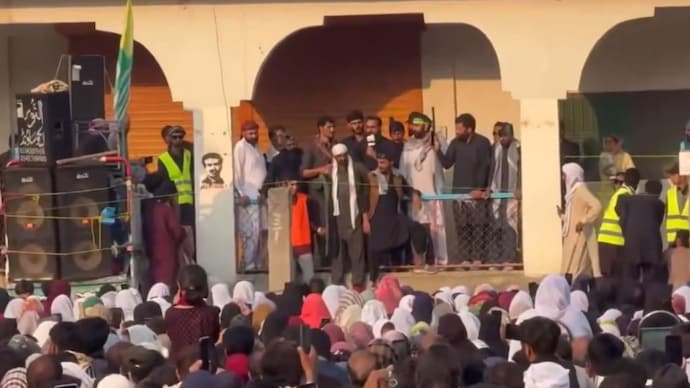
A massive protest in Pakistan-occupied Kashmir (POK) has intensified the region's political turmoil, with thousands of demonstrators gathering in near the Line of Control (LoC) to declare that "POK is not part of Pakistan" and warn Islamabad that continued restrictions on food supplies could push residents to seek "other roads", a remark widely interpreted as signalling closer engagement with India.
The demonstration at Rawalakot's Eidgah Ground marked one of the strongest challenges yet to Pakistan's control over the region. Protesters accused the Pakistani government and security forces of decades of political neglect, economic exploitation and administrative repression, while alleging that authorities had imposed a blockade on essential food supplies to weaken the movement.
'WE DON'T NEED PAKISTAN'
Addressing thousands of protesters, Joint Awami Action Committee (JAAC) leader Sardar Amman Khan delivered one of his strongest speeches yet against Islamabad, declaring that POK did not belong to Pakistan.
"POK is not a part of Pakistan. We do not need Pakistan; rather, it is Pakistan that desperately needs POK," Khan told the crowd.
His remarks drew loud applause from demonstrators, many of whom waved flags and chanted slogans against Pakistan's administration.
The protest comes amid an anti-government movement that has gathered momentum across parts of POK in recent weeks. Thousands of people have maintained a continuous sit-in at Rawalakot for more than three weeks despite growing pressure from the authorities.
WARNING OF 'OTHER ROADS'
Referring to the sit-in near the LoC, where protesters have been camped since June 9, Khan accused the Pakistani administration of attempting to starve the movement into submission.
"Our women and children have been sitting in protest at Zero Point on the Ceasefire Line. They say they will stop food supplies to Kashmiris. I say we do not need your rations. You need us. Think carefully -- you need us. Don't let it come to a point where the remaining routes are opened, and then you are forced to plead with us and beg us to stay. Don't let it come to a point where other trade routes are reopened."
He also appealed to Pakistan's rulers to de-escalate the situation, saying the administration should recognise the will of the people rather than rely on force.
"So, I have one request. If you want to normalise the situation, the rulers must understand that this is the rule of the people. There is no martial law here. There is no dictator here. And even if there were one, we would not accept any dictator."
"Someone once put a box of matches in a monkey's hands, and it set everything on fire. Likewise, someone has now put mobile phones and Twitter into their hands. They keep saying that Kashmiris should first prove their loyalty. Kashmir is not part of Pakistan. Remember this -- Kashmir is not the property of Pakistan," he added.
FOOD BLOCKADE FUELS ANGER
Protesers say the latest phase of the agitation was triggered after Pakistani authorities blocked the movement of food grains, flour and other daily essentials into parts of POK.
The protesters claim the restrictions were intended to weaken the movement by creating shortages and increasing economic pressure on residents.
According to protest leaders, the movement is now centred on a 38-point charter of demands covering inflation, electricity prices, governance, subsidies, unemployment and what they describe as decades of political discrimination.
Pakistani authorities have increasingly treated the protest movement as a security issue.
According to several reports, activists, including Aman Khan, and members of the Joint Awami Action Committee have been booked under anti-terrorism laws after the organisation was banned earlier this month.
The protesters claim the legal action was taken to suppress a movement that began over economic difficulties but has now taken on a broader political character. Reports from the region also suggest internet services have remained suspended across parts of POK since early June.
Protesters allege communication restrictions were imposed to prevent images and videos of the demonstrations from reaching the outside world.
WHY POK IS BOILING OVER
The latest wave of protests did not erupt overnight. It is rooted in years of simmering anger over governance, soaring prices and what many residents describe as the unequal distribution of the region's resources.
People in POK have long demanded subsidies on wheat, flour and electricity, arguing that although the region generates substantial hydropower, much of it is diverted to Pakistan's provinces while local households continue to grapple with steep power bills.
Frustration deepened after protesters accused Islamabad of failing to honour commitments made under earlier agreements with local groups. The movement gathered further momentum after authorities banned the JAAC under anti-terrorism act, accusing it of disrupting public order. JAAC has rejected the allegations and vowed to continue its campaign.
Anger intensified further after Pakistan Defence Minister Khawaja Asif reportedly remarked that residents of Rawalakot and Mirpur were "not proper Kashmiris". It triggered outrage across the region and added fresh fuel to an already volatile movement.
A massive protest in Pakistan-occupied Kashmir (POK) has intensified the region's political turmoil, with thousands of demonstrators gathering in near the Line of Control (LoC) to declare that "POK is not part of Pakistan" and warn Islamabad that continued restrictions on food supplies could push residents to seek "other roads", a remark widely interpreted as signalling closer engagement with India.
The demonstration at Rawalakot's Eidgah Ground marked one of the strongest challenges yet to Pakistan's control over the region. Protesters accused the Pakistani government and security forces of decades of political neglect, economic exploitation and administrative repression, while alleging that authorities had imposed a blockade on essential food supplies to weaken the movement.
'WE DON'T NEED PAKISTAN'
Addressing thousands of protesters, Joint Awami Action Committee (JAAC) leader Sardar Amman Khan delivered one of his strongest speeches yet against Islamabad, declaring that POK did not belong to Pakistan.
"POK is not a part of Pakistan. We do not need Pakistan; rather, it is Pakistan that desperately needs POK," Khan told the crowd.
His remarks drew loud applause from demonstrators, many of whom waved flags and chanted slogans against Pakistan's administration.
The protest comes amid an anti-government movement that has gathered momentum across parts of POK in recent weeks. Thousands of people have maintained a continuous sit-in at Rawalakot for more than three weeks despite growing pressure from the authorities.
WARNING OF 'OTHER ROADS'
Referring to the sit-in near the LoC, where protesters have been camped since June 9, Khan accused the Pakistani administration of attempting to starve the movement into submission.
"Our women and children have been sitting in protest at Zero Point on the Ceasefire Line. They say they will stop food supplies to Kashmiris. I say we do not need your rations. You need us. Think carefully -- you need us. Don't let it come to a point where the remaining routes are opened, and then you are forced to plead with us and beg us to stay. Don't let it come to a point where other trade routes are reopened."
He also appealed to Pakistan's rulers to de-escalate the situation, saying the administration should recognise the will of the people rather than rely on force.
"So, I have one request. If you want to normalise the situation, the rulers must understand that this is the rule of the people. There is no martial law here. There is no dictator here. And even if there were one, we would not accept any dictator."
"Someone once put a box of matches in a monkey's hands, and it set everything on fire. Likewise, someone has now put mobile phones and Twitter into their hands. They keep saying that Kashmiris should first prove their loyalty. Kashmir is not part of Pakistan. Remember this -- Kashmir is not the property of Pakistan," he added.
FOOD BLOCKADE FUELS ANGER
Protesers say the latest phase of the agitation was triggered after Pakistani authorities blocked the movement of food grains, flour and other daily essentials into parts of POK.
The protesters claim the restrictions were intended to weaken the movement by creating shortages and increasing economic pressure on residents.
According to protest leaders, the movement is now centred on a 38-point charter of demands covering inflation, electricity prices, governance, subsidies, unemployment and what they describe as decades of political discrimination.
Pakistani authorities have increasingly treated the protest movement as a security issue.
According to several reports, activists, including Aman Khan, and members of the Joint Awami Action Committee have been booked under anti-terrorism laws after the organisation was banned earlier this month.
The protesters claim the legal action was taken to suppress a movement that began over economic difficulties but has now taken on a broader political character. Reports from the region also suggest internet services have remained suspended across parts of POK since early June.
Protesters allege communication restrictions were imposed to prevent images and videos of the demonstrations from reaching the outside world.
WHY POK IS BOILING OVER
The latest wave of protests did not erupt overnight. It is rooted in years of simmering anger over governance, soaring prices and what many residents describe as the unequal distribution of the region's resources.
People in POK have long demanded subsidies on wheat, flour and electricity, arguing that although the region generates substantial hydropower, much of it is diverted to Pakistan's provinces while local households continue to grapple with steep power bills.
Frustration deepened after protesters accused Islamabad of failing to honour commitments made under earlier agreements with local groups. The movement gathered further momentum after authorities banned the JAAC under anti-terrorism act, accusing it of disrupting public order. JAAC has rejected the allegations and vowed to continue its campaign.
Anger intensified further after Pakistan Defence Minister Khawaja Asif reportedly remarked that residents of Rawalakot and Mirpur were "not proper Kashmiris". It triggered outrage across the region and added fresh fuel to an already volatile movement.

