A Versailles deal in 2026 and US's total surrender
More than a century after US President Woodrow Wilson helped shape the Treaty of Versailles, Donald Trump signed a 14-point accord with Iran at the same palace. While Wilson projected American dominance, critics argue the new deal marks a reversal, with Washington making greater concessions than Tehran.
On June 28, 1919, the Treaty of Versailles ended World War I and cemented the victors' terms on Germany. At the centre of the negotiations stood US President Woodrow Wilson.
Wilson was one of the principal decision-makers in the Big Four Council -- France, Great Britain, Italy and the United States -- that shaped the terms of peace.
Six months before the treaty was signed, Wilson, addressing the Paris Peace Conference at Versailles, declared: “At last, the world knows America as the saviour of the world.”
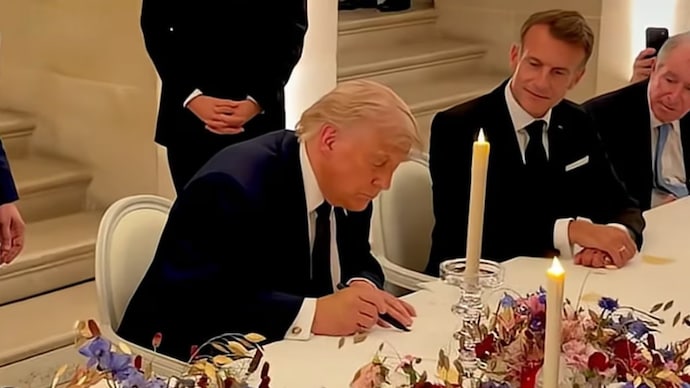
But more than a century later, just 10 days before the anniversary of the World War I peace treaty, US President Donald Trump sat in the same palace and signed a 14-point agreement with Iran to bring the Gulf crisis to an end.
VERSAILLES, THEN AND NOW
The symbolism is striking. Wilson's famous Fourteen Points formed the basis of his 1918 vision for ending World War I. Now, in a twist of history, another American president has signed a 14-point accord at Versailles. But this time, the tables appear to have turned. A closer look at the US-Iran pact suggests that it is Trump, not Tehran, who has made the larger concessions.
In a video shared by French President Emmanuel Macron, Trump pauses for a moment before signing the agreement and tells other guests, “This was not easy, I can tell you.”
As he left Versailles on Wednesday after signing the deal during a dinner marking the 250th anniversary of American independence, a crowd of reporters gathered around Trump and shouted, “Did you sign the deal? Did you sign the MOU?”
“It’s signed, yeah,” Trump shouted back, cupping his hands around his mouth, before adding, “I signed it in Versailles.”
Trump followed it up by mimicking a signature in the air and pointing towards the palace.
On social media, several users struggled to reconcile the irony of Trump signing the deal at the same palace where Germany was made to capitulate at Versailles in 1919.
“He signed an unconditional surrender at Versailles?” historian Kevin Kruse quipped.
Reacting with disbelief, David Horovitz, founding editor of The Times of Israel, penned an article titled: “Trump’s deal is a catastrophic capitulation to Iran’s aggressors, leaves Israel vulnerable and constrained.”
The criticism was not merely symbolic. Those arguing that Trump had conceded too much pointed to several provisions of the agreement that appeared to depart sharply from the administration's stated war aims.
FROM MISSILE STRIKES TO CONCESSIONS
As the US and Israel launched strikes on Iran on February 28, Trump said the operation was aimed at preventing Tehran from “developing long-range missiles that can now threaten our very good friends and allies in Europe, our troops stationed overseas and could soon reach the American homeland.”
“We’re going to destroy their missiles and raze their missile industry to the ground,” the president insisted. “It will be totally, again, obliterated.”
Yet 109 days later, after putting his signature on the 14-point US-Iran deal, Trump appeared to soften his position dramatically. Speaking to reporters in Paris, he suggested it would be unfair to deny Iran the right to possess at least some ballistic missiles.
“I’m saying that if other countries have them, it’s a little bit unfair for them not to have some,” Trump said. “A ballistic missile is not the same thing as what we’re talking about when we talk nuclear. But if Saudi Arabia and Qatar -- they all have some -- I would say, in relative proportion, I think it’s OK.”
The remarks marked a striking departure from Trump's earlier pledge to dismantle Iran's missile programme entirely.
The missile issue is only one example. Critics of the deal have also highlighted provisions affecting Israel's freedom of action, Iran's maritime leverage and the release of long-frozen Iranian assets.
Another sticking point, particularly for Israel, is the provision in the Memorandum of Understanding (MOU) requiring the cessation of all attacks on Lebanon, effectively ruling out any future strikes.
IRAN'S HORMUZ LEVERAGE
The MOU states that the US will begin lifting the naval blockade on Iran. However, Iran's chief negotiator, Mohammad Bagher Ghalibaf, told state television that the Strait of Hormuz “will not return to pre-war conditions”.
Ghalibaf said Iran would begin charging vessels transiting the strategic energy chokepoint once the 60-day free-passage period outlined in the MOU expires.
“Iran has the right to sovereignty over the Strait of Hormuz and, of course, we will receive a fee for services,” he said.
“The United States of America undertakes to make fully available for use the frozen or restricted funds and assets of the Islamic Republic of Iran,” reads another provision of the MOU -- one of the biggest gains Iran stands to secure from the months-long standoff.
By unlocking billions of dollars in Iranian assets that have remained frozen or restricted for years, the agreement would provide Tehran with a much-needed financial boost.
In its op-ed for the Times of Israel, Horovitz goes on to write, "Trump’s capitulation is a betrayal of the Iranian citizenry. It will come back to bite America. It leaves Israel more vulnerable than before the war began, with a new US-Iran ceasefire agreement that aims to deny Israel the freedom to protect and defend itself."
History often has a way of repeating itself. It is worth remembering that Germany's capitulation under the Treaty of Versailles helped sow the seeds of an even larger conflict -- World War II.
Whether the comparison to Versailles is fair remains a matter of fierce debate. Supporters of the agreement argue that Trump succeeded in ending a potentially catastrophic regional war without further bloodshed. Critics counter that peace achieved through concessions to an adversary can carry long-term costs that are not immediately visible.
That is what makes the symbolism of Versailles so striking. In 1919, America arrived at the palace as the architect of a new world order. In 2026, according to the deal's detractors, it left having accepted terms that granted Iran significant economic relief, preserved elements of its missile capability and restricted the military options of America's closest regional ally.
History rarely repeats itself in exactly the same way. But it often rhymes. More than a century after Versailles became synonymous with a peace settlement that shaped the decades that followed, another agreement signed in the same palace is already raising questions about whether it has ended a conflict -- or merely postponed the next chapter.
On June 28, 1919, the Treaty of Versailles ended World War I and cemented the victors' terms on Germany. At the centre of the negotiations stood US President Woodrow Wilson.
Wilson was one of the principal decision-makers in the Big Four Council -- France, Great Britain, Italy and the United States -- that shaped the terms of peace.
Six months before the treaty was signed, Wilson, addressing the Paris Peace Conference at Versailles, declared: “At last, the world knows America as the saviour of the world.”
But more than a century later, just 10 days before the anniversary of the World War I peace treaty, US President Donald Trump sat in the same palace and signed a 14-point agreement with Iran to bring the Gulf crisis to an end.
VERSAILLES, THEN AND NOW
The symbolism is striking. Wilson's famous Fourteen Points formed the basis of his 1918 vision for ending World War I. Now, in a twist of history, another American president has signed a 14-point accord at Versailles. But this time, the tables appear to have turned. A closer look at the US-Iran pact suggests that it is Trump, not Tehran, who has made the larger concessions.
In a video shared by French President Emmanuel Macron, Trump pauses for a moment before signing the agreement and tells other guests, “This was not easy, I can tell you.”
As he left Versailles on Wednesday after signing the deal during a dinner marking the 250th anniversary of American independence, a crowd of reporters gathered around Trump and shouted, “Did you sign the deal? Did you sign the MOU?”
“It’s signed, yeah,” Trump shouted back, cupping his hands around his mouth, before adding, “I signed it in Versailles.”
Trump followed it up by mimicking a signature in the air and pointing towards the palace.
On social media, several users struggled to reconcile the irony of Trump signing the deal at the same palace where Germany was made to capitulate at Versailles in 1919.
“He signed an unconditional surrender at Versailles?” historian Kevin Kruse quipped.
Reacting with disbelief, David Horovitz, founding editor of The Times of Israel, penned an article titled: “Trump’s deal is a catastrophic capitulation to Iran’s aggressors, leaves Israel vulnerable and constrained.”
The criticism was not merely symbolic. Those arguing that Trump had conceded too much pointed to several provisions of the agreement that appeared to depart sharply from the administration's stated war aims.
FROM MISSILE STRIKES TO CONCESSIONS
As the US and Israel launched strikes on Iran on February 28, Trump said the operation was aimed at preventing Tehran from “developing long-range missiles that can now threaten our very good friends and allies in Europe, our troops stationed overseas and could soon reach the American homeland.”
“We’re going to destroy their missiles and raze their missile industry to the ground,” the president insisted. “It will be totally, again, obliterated.”
Yet 109 days later, after putting his signature on the 14-point US-Iran deal, Trump appeared to soften his position dramatically. Speaking to reporters in Paris, he suggested it would be unfair to deny Iran the right to possess at least some ballistic missiles.
“I’m saying that if other countries have them, it’s a little bit unfair for them not to have some,” Trump said. “A ballistic missile is not the same thing as what we’re talking about when we talk nuclear. But if Saudi Arabia and Qatar -- they all have some -- I would say, in relative proportion, I think it’s OK.”
The remarks marked a striking departure from Trump's earlier pledge to dismantle Iran's missile programme entirely.
The missile issue is only one example. Critics of the deal have also highlighted provisions affecting Israel's freedom of action, Iran's maritime leverage and the release of long-frozen Iranian assets.
Another sticking point, particularly for Israel, is the provision in the Memorandum of Understanding (MOU) requiring the cessation of all attacks on Lebanon, effectively ruling out any future strikes.
IRAN'S HORMUZ LEVERAGE
The MOU states that the US will begin lifting the naval blockade on Iran. However, Iran's chief negotiator, Mohammad Bagher Ghalibaf, told state television that the Strait of Hormuz “will not return to pre-war conditions”.
Ghalibaf said Iran would begin charging vessels transiting the strategic energy chokepoint once the 60-day free-passage period outlined in the MOU expires.
“Iran has the right to sovereignty over the Strait of Hormuz and, of course, we will receive a fee for services,” he said.
“The United States of America undertakes to make fully available for use the frozen or restricted funds and assets of the Islamic Republic of Iran,” reads another provision of the MOU -- one of the biggest gains Iran stands to secure from the months-long standoff.
By unlocking billions of dollars in Iranian assets that have remained frozen or restricted for years, the agreement would provide Tehran with a much-needed financial boost.
In its op-ed for the Times of Israel, Horovitz goes on to write, "Trump’s capitulation is a betrayal of the Iranian citizenry. It will come back to bite America. It leaves Israel more vulnerable than before the war began, with a new US-Iran ceasefire agreement that aims to deny Israel the freedom to protect and defend itself."
History often has a way of repeating itself. It is worth remembering that Germany's capitulation under the Treaty of Versailles helped sow the seeds of an even larger conflict -- World War II.
Whether the comparison to Versailles is fair remains a matter of fierce debate. Supporters of the agreement argue that Trump succeeded in ending a potentially catastrophic regional war without further bloodshed. Critics counter that peace achieved through concessions to an adversary can carry long-term costs that are not immediately visible.
That is what makes the symbolism of Versailles so striking. In 1919, America arrived at the palace as the architect of a new world order. In 2026, according to the deal's detractors, it left having accepted terms that granted Iran significant economic relief, preserved elements of its missile capability and restricted the military options of America's closest regional ally.
History rarely repeats itself in exactly the same way. But it often rhymes. More than a century after Versailles became synonymous with a peace settlement that shaped the decades that followed, another agreement signed in the same palace is already raising questions about whether it has ended a conflict -- or merely postponed the next chapter.

