I like her, but she made mistake: Trump on Meloni's stance on Iran
Donald Trump said Giorgia Meloni's refusal to support Washington during the Iran conflict had damaged their relationship. The dispute has exposed wider policy differences between Rome and Washington ahead of a tense NATO summit meeting.
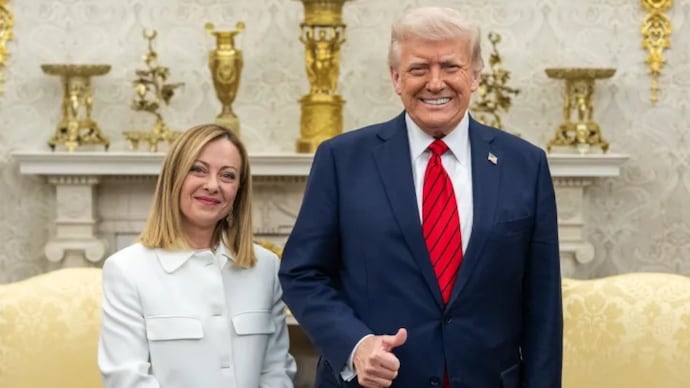
US President Donald Trump on Tuesday again blamed Italian Prime Minister Giorgia Meloni for refusing to support Washington during the Iran conflict. He said the decision had strained their relationship despite describing her as a "nice person."
Speaking to reporters during the NATO summit in Ankara, Trump said his relationship with the Italian leader had deteriorated because Rome chose not to back US efforts in the Middle East. While he softened his criticism with personal praise, he insisted Meloni had made the wrong decision.
The remarks cap weeks of increasing friction between the two leaders, as disagreements over Iran, NATO and a series of personal social media exchanges have changed what was once seen as one of Trump's strongest partnerships with a European leader.
TRUMP SAYS MELONI 'MADE A MISTAKE'
Asked about his relationship with Meloni, Trump said their ties had cooled over Italy's stance during the Iran conflict.
"She refused to get involved, so it soured my relationship with her a little bit. But I like her. I think she's a nice person, actually. But I think she made a mistake," Trump told reporters.
He added that the disagreement centred on Italy's refusal to assist Washington during the crisis.
"She refused to help us" with Iran, Trump said.
His comments followed renewed criticism of European allies that he believes failed to support the US during the conflict with Tehran.
HOW TRUMP AND MELONI FELL OUT
Trump and Meloni were once regarded as natural political partners. Both leaders shared conservative views on immigration, national sovereignty and security. Meloni was also the only European leader to attend Trump's inauguration in 2025, reinforcing perceptions that Rome could serve as Washington's closest ally in Europe.
However, relations have steadily deteriorated this year.
The first signs of tension emerged after Trump criticised Pope Leo for condemning the Iran war. Meloni defended the pontiff's position, prompting fresh criticism from the US president.
The dispute escalated after Trump accused Italy of refusing to help reopen the Strait of Hormuz during the conflict with Iran, a vital shipping route for global oil supplies.
In March, Italy also denied permission for US military aircraft to land at Sigonella Air Base in Sicily before flying to the Middle East, saying Washington had not obtained the required authorisation from Rome.
Those disagreements transformed what had largely been policy differences into an increasingly personal dispute.
SOCIAL MEDIA POST ADDS FUEL TO ROW
The latest diplomatic tension intensified after Trump posted a doctored image of Meloni on Truth Social over the weekend. The image showed the Italian prime minister looking up at Trump with the caption: "RESTRAINING ORDER NEEDED."
It also followed another controversial claim made by Trump after the recent G7 summit in France. He told Italian broadcaster La7 that Meloni had "begged" him to take a photograph with her during the summit.
Meloni firmly rejected the allegation.
"Italy and I never beg," she said.
She also accused Trump of inventing the story and dismissed repeated personal attacks from the US president.
"These constant, unprovoked attacks are senseless," she said.
In another pointed response, she added: "Being your friend certainly has not helped" her popularity before telling Trump: "I suggest you focus on yours."
ROME PLAYS DOWN THE DISPUTE
Despite the sharp rhetoric, Italy's government has tried to prevent the disagreement from escalating into a broader diplomatic crisis.
Foreign Minister Antonio Tajani said Rome would not respond to every provocative comment made by Trump.
"Trump speaks for himself. We have a US president who loves to provoke, especially on social media. We have decided to stop responding to these remarks," Tajani told La Stampa.
Defence Minister Guido Crosetto also sought to calm concerns about the relationship between the two NATO allies.
"I did not have any reaction (to the post), the fundamental thing is to maintain relations with a key ally like the USA," Crosetto said.
"People come and go but relationships remain," he added.
NATO SUMMIT SETS STAGE FOR AWKWARD ENCOUNTER
The latest exchange unfolded as Trump and Meloni gathered in Ankara for the NATO summit, where defence spending, support for Ukraine and instability in the Middle East dominated discussions.
A source close to Meloni told Reuters that there was never any question of avoiding Trump during the summit despite the public criticism.
Instead, the source said the Italian leader knew how to handle such situations and would greet the US president "with a smile."
Behind the scenes, however, the dispute reflects deeper policy differences.
Trump has repeatedly argued that European allies should contribute more to international security and back Washington during regional conflicts. Italy, meanwhile, has sought to balance its alliance with the United States while avoiding direct military involvement in the Iran crisis.
US President Donald Trump on Tuesday again blamed Italian Prime Minister Giorgia Meloni for refusing to support Washington during the Iran conflict. He said the decision had strained their relationship despite describing her as a "nice person."
Speaking to reporters during the NATO summit in Ankara, Trump said his relationship with the Italian leader had deteriorated because Rome chose not to back US efforts in the Middle East. While he softened his criticism with personal praise, he insisted Meloni had made the wrong decision.
The remarks cap weeks of increasing friction between the two leaders, as disagreements over Iran, NATO and a series of personal social media exchanges have changed what was once seen as one of Trump's strongest partnerships with a European leader.
TRUMP SAYS MELONI 'MADE A MISTAKE'
Asked about his relationship with Meloni, Trump said their ties had cooled over Italy's stance during the Iran conflict.
"She refused to get involved, so it soured my relationship with her a little bit. But I like her. I think she's a nice person, actually. But I think she made a mistake," Trump told reporters.
He added that the disagreement centred on Italy's refusal to assist Washington during the crisis.
"She refused to help us" with Iran, Trump said.
His comments followed renewed criticism of European allies that he believes failed to support the US during the conflict with Tehran.
HOW TRUMP AND MELONI FELL OUT
Trump and Meloni were once regarded as natural political partners. Both leaders shared conservative views on immigration, national sovereignty and security. Meloni was also the only European leader to attend Trump's inauguration in 2025, reinforcing perceptions that Rome could serve as Washington's closest ally in Europe.
However, relations have steadily deteriorated this year.
The first signs of tension emerged after Trump criticised Pope Leo for condemning the Iran war. Meloni defended the pontiff's position, prompting fresh criticism from the US president.
The dispute escalated after Trump accused Italy of refusing to help reopen the Strait of Hormuz during the conflict with Iran, a vital shipping route for global oil supplies.
In March, Italy also denied permission for US military aircraft to land at Sigonella Air Base in Sicily before flying to the Middle East, saying Washington had not obtained the required authorisation from Rome.
Those disagreements transformed what had largely been policy differences into an increasingly personal dispute.
SOCIAL MEDIA POST ADDS FUEL TO ROW
The latest diplomatic tension intensified after Trump posted a doctored image of Meloni on Truth Social over the weekend. The image showed the Italian prime minister looking up at Trump with the caption: "RESTRAINING ORDER NEEDED."
It also followed another controversial claim made by Trump after the recent G7 summit in France. He told Italian broadcaster La7 that Meloni had "begged" him to take a photograph with her during the summit.
Meloni firmly rejected the allegation.
"Italy and I never beg," she said.
She also accused Trump of inventing the story and dismissed repeated personal attacks from the US president.
"These constant, unprovoked attacks are senseless," she said.
In another pointed response, she added: "Being your friend certainly has not helped" her popularity before telling Trump: "I suggest you focus on yours."
ROME PLAYS DOWN THE DISPUTE
Despite the sharp rhetoric, Italy's government has tried to prevent the disagreement from escalating into a broader diplomatic crisis.
Foreign Minister Antonio Tajani said Rome would not respond to every provocative comment made by Trump.
"Trump speaks for himself. We have a US president who loves to provoke, especially on social media. We have decided to stop responding to these remarks," Tajani told La Stampa.
Defence Minister Guido Crosetto also sought to calm concerns about the relationship between the two NATO allies.
"I did not have any reaction (to the post), the fundamental thing is to maintain relations with a key ally like the USA," Crosetto said.
"People come and go but relationships remain," he added.
NATO SUMMIT SETS STAGE FOR AWKWARD ENCOUNTER
The latest exchange unfolded as Trump and Meloni gathered in Ankara for the NATO summit, where defence spending, support for Ukraine and instability in the Middle East dominated discussions.
A source close to Meloni told Reuters that there was never any question of avoiding Trump during the summit despite the public criticism.
Instead, the source said the Italian leader knew how to handle such situations and would greet the US president "with a smile."
Behind the scenes, however, the dispute reflects deeper policy differences.
Trump has repeatedly argued that European allies should contribute more to international security and back Washington during regional conflicts. Italy, meanwhile, has sought to balance its alliance with the United States while avoiding direct military involvement in the Iran crisis.

