Trump says Iran agreed to never have nukes, calls $300 billion payment 'fake news'
Trump's post also sought to dismiss reports that the United States was offering financial incentives to Iran as part of a broader settlement. However, the figure cited by Trump differs significantly from what has surfaced in recent media reports around the negotiations.
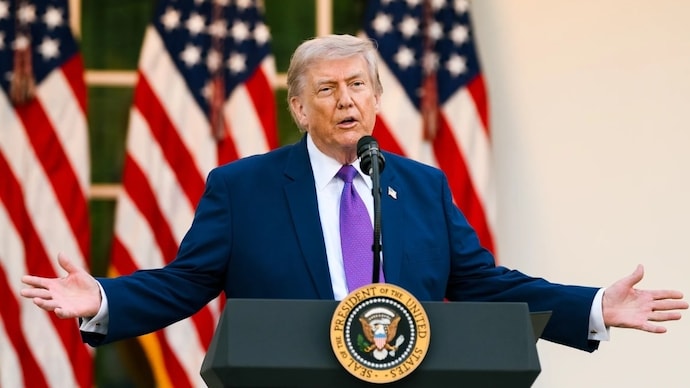
US President Donald Trump on Monday declared that Iran has agreed never to acquire a nuclear weapon, as Washington and Tehran move forward with an agreement aimed at ending more than 100 days of conflict and opening negotiations on a peace settlement.
In a post on Truth Social, Trump wrote: "Iran has agreed to never have a Nuclear Weapon! Also, the story that the US is paying Iran 300 million Dollars is Fake News, put out by the Dumocrats!!!"
The post came a day after the United States and Iran signed a preliminary agreement aimed at ending the war and establishing a framework for negotiations on Tehran's nuclear programme and sanctions relief, though the details of the agreement remain unclear and negotiations on a permanent truce are still underway.
Trump's post also sought to dismiss reports that the United States was offering financial incentives to Iran as part of a broader settlement. However, the figure in recent media reports about the negotiations is not USD 300 million, but USD 300 billion.
TRUMP AND VANCE CLAIM BREAKTHROUGH
Trump's assertion was quickly echoed by Vice President JD Vance, who said preventing Iran from obtaining a nuclear weapon had been a central objective of the administration throughout the conflict. "The President has been clear from day one: Iran will never have a nuclear weapon," Vance wrote on X.
He also portrayed the emerging agreement as a major diplomatic success. "Once again, President Trump's efforts to establish peace have paid off for the American people, despite countless attempts to thwart it by people who hate America and President Trump," Vance said.
Earlier on Monday, Trump announced that a preliminary agreement to end the war had been signed by Washington and Tehran. Speaking after arriving in France for the G7 summit, he said Vance would attend a formal signing ceremony in Geneva later this week.
Iranian President Masoud Pezeshkian described the US-Iran memorandum of understanding as an "important step" toward ending the fighting but cautioned that a final agreement establishing a lasting truce has yet to be negotiated.
THE USD 300 BILLION QUESTION
There have, however, been competing accounts of what that USD 300 billion would actually mean. According to sources cited by Iran's Mehr News Agency, Tehran's negotiating team has demanded that the United States and its allies present reconstruction plans worth at least USD 300 billion as part of the peace process.
Iranian media reports say the demand is linked to a broader package that includes the release of USD 24 billion in frozen Iranian assets during a 60-day negotiation period, with half of the amount made available upfront. The package is also said to include the suspension of sanctions on Iranian oil and petrochemical exports and full access to Iranian financial resources held abroad.
Iranian outlets have portrayed the proposal as compensation for war-related damage and a key condition for a durable peace. Iranian officials have repeatedly argued that the country must receive meaningful economic relief, with some estimates placing the damage caused by the conflict as high as USD 1 trillion.
Western reporting, however, describes the same USD 300 billion figure differently. Reports in US media reports have characterised it as an international investment and reconstruction programme that Washington would help facilitate, potentially involving private-sector capital rather than direct government reparations.
WHAT THE DRAFT MOU CONTAINS
While the political debate over the economic package continues, details of the proposed nuclear framework remain limited. Vance told CNN that the signed memorandum is only about one-and-a-half pages long and remains "a very general document", with further details expected to be released in the coming days.
According to Vance, the framework includes a significant sanctions-relief package for Iran. He also said inspectors from the International Atomic Energy Agency (IAEA) would "definitely" return to Iran and that the agreement includes cooperation aimed at eliminating Iran's stockpile of highly enriched uranium.
US officials have said Iran would need to meet key American demands before receiving the full benefits of any final agreement, including a commitment never to build a nuclear weapon and ending support for regional militant groups such as Hezbollah.
US President Donald Trump on Monday declared that Iran has agreed never to acquire a nuclear weapon, as Washington and Tehran move forward with an agreement aimed at ending more than 100 days of conflict and opening negotiations on a peace settlement.
In a post on Truth Social, Trump wrote: "Iran has agreed to never have a Nuclear Weapon! Also, the story that the US is paying Iran 300 million Dollars is Fake News, put out by the Dumocrats!!!"
The post came a day after the United States and Iran signed a preliminary agreement aimed at ending the war and establishing a framework for negotiations on Tehran's nuclear programme and sanctions relief, though the details of the agreement remain unclear and negotiations on a permanent truce are still underway.
Trump's post also sought to dismiss reports that the United States was offering financial incentives to Iran as part of a broader settlement. However, the figure in recent media reports about the negotiations is not USD 300 million, but USD 300 billion.
TRUMP AND VANCE CLAIM BREAKTHROUGH
Trump's assertion was quickly echoed by Vice President JD Vance, who said preventing Iran from obtaining a nuclear weapon had been a central objective of the administration throughout the conflict. "The President has been clear from day one: Iran will never have a nuclear weapon," Vance wrote on X.
He also portrayed the emerging agreement as a major diplomatic success. "Once again, President Trump's efforts to establish peace have paid off for the American people, despite countless attempts to thwart it by people who hate America and President Trump," Vance said.
Earlier on Monday, Trump announced that a preliminary agreement to end the war had been signed by Washington and Tehran. Speaking after arriving in France for the G7 summit, he said Vance would attend a formal signing ceremony in Geneva later this week.
Iranian President Masoud Pezeshkian described the US-Iran memorandum of understanding as an "important step" toward ending the fighting but cautioned that a final agreement establishing a lasting truce has yet to be negotiated.
THE USD 300 BILLION QUESTION
There have, however, been competing accounts of what that USD 300 billion would actually mean. According to sources cited by Iran's Mehr News Agency, Tehran's negotiating team has demanded that the United States and its allies present reconstruction plans worth at least USD 300 billion as part of the peace process.
Iranian media reports say the demand is linked to a broader package that includes the release of USD 24 billion in frozen Iranian assets during a 60-day negotiation period, with half of the amount made available upfront. The package is also said to include the suspension of sanctions on Iranian oil and petrochemical exports and full access to Iranian financial resources held abroad.
Iranian outlets have portrayed the proposal as compensation for war-related damage and a key condition for a durable peace. Iranian officials have repeatedly argued that the country must receive meaningful economic relief, with some estimates placing the damage caused by the conflict as high as USD 1 trillion.
Western reporting, however, describes the same USD 300 billion figure differently. Reports in US media reports have characterised it as an international investment and reconstruction programme that Washington would help facilitate, potentially involving private-sector capital rather than direct government reparations.
WHAT THE DRAFT MOU CONTAINS
While the political debate over the economic package continues, details of the proposed nuclear framework remain limited. Vance told CNN that the signed memorandum is only about one-and-a-half pages long and remains "a very general document", with further details expected to be released in the coming days.
According to Vance, the framework includes a significant sanctions-relief package for Iran. He also said inspectors from the International Atomic Energy Agency (IAEA) would "definitely" return to Iran and that the agreement includes cooperation aimed at eliminating Iran's stockpile of highly enriched uranium.
US officials have said Iran would need to meet key American demands before receiving the full benefits of any final agreement, including a commitment never to build a nuclear weapon and ending support for regional militant groups such as Hezbollah.

