Trump says $12 billion in frozen Iran funds to buy US crops, Tehran disagrees
Trump said $12 billion in frozen Iranian funds would be used to buy American agricultural products under the proposed peace deal. Iran had earlier maintained that it alone would decide how the released assets are spent, revealing a key divide in the ongoing negotiations.
The United States has said it has drawn up a spending plan for billions of dollars' worth of previously frozen Iranian assets as negotiations continue on a final deal to end the war in the Gulf. President Donald Trump said on Thursday that Iran's overseas funds, frozen under US sanctions, would now be used to purchase American agricultural products such as wheat, soybeans and corn, which would then be supplied to Iran.
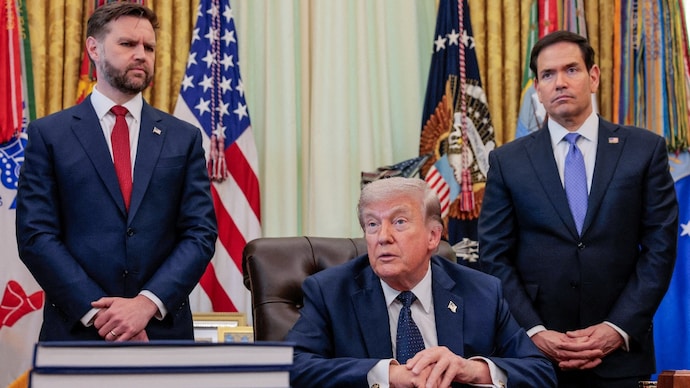
"Opening markets to American exports all over the world, we're opening up markets for farmers. And we have another one, a new market coming up, and that's called the lovely country of Iran. It's a beautiful place," Trump said at the White House in the presence of farmers while signing an agriculture-related executive order.
"Would anybody like to go there? The Islamic Republic of Iran -- they're having a hard time with food, and we're going to be taking some of their money, and we'll spend it on buying wheat, soybeans, and corn -- a lot of it. And that process is going to be starting pretty soon. It's going to be pretty big, too. I think it's going to be very big," he added.
If carried out, the plan could channel $12 billion into the heavily restricted trade relationship between the US and Iran, which is now largely limited to humanitarian goods.
Once close trading partners, the two countries have become arch rivals over the past five decades, and the latest proposal has raised the question whether trade ties with Tehran can be revived. For now, however, Washington and Tehran do not appear to agree on what has been settled.
Tehran has so far rejected the US proposal, saying the released Iranian funds would be used to purchase essential goods for its citizens, not on terms dictated by Washington.
The first round of peace talks was held in Switzerland on Monday after Trump signed the US-Iran memorandum of understanding at Versailles last week. The agreement envisages the release of $12 billion in frozen Iranian funds, subject to certain conditions.
US Vice President JD Vance said that if the assets were unfrozen, Iran would use them to "make American farmers richer and feed the Iranian people."
The next day, Trump wrote on Truth Social: “The Money and/or Sanctions that the U.S. Treasury is releasing goes into escrow, controlled by the U.S.A., and will be used for the purchase of food and medical supplies, exclusively from the United States, including Corn, Wheat, and Soybeans from our great American Farmers. These are things that are desperately needed by Iran.” He added: “This is a humanitarian crisis, and I feel it is necessary to help, NOW, before it is too late. Talks are going well!”
In response, Iranian Foreign Ministry spokesperson Esmaeil Baghaei said the assets "will be released and will be used with absolute freedom by Iran to purchase whatever goods or commodities are needed by the nation." He added that any agricultural purchases would be based on "price and quality", not on terms "dictated by Washington".
"It is interesting that the philosophy and goal of the war, which was the destruction of Iranian civilisation and the collapse of Iran, has now become enriching American farmers," Baghaei added.
Iran's ambassador to Geneva, Ali Bahreini, also dismissed the US claims, saying, "Iran is the only country that decides what to do with those assets."
Trump's latest announcement has added to the uncertainty over how Iran's frozen funds will ultimately be used, creating another potential flashpoint in the broader peace negotiations.
The United States has said it has drawn up a spending plan for billions of dollars' worth of previously frozen Iranian assets as negotiations continue on a final deal to end the war in the Gulf. President Donald Trump said on Thursday that Iran's overseas funds, frozen under US sanctions, would now be used to purchase American agricultural products such as wheat, soybeans and corn, which would then be supplied to Iran.
"Opening markets to American exports all over the world, we're opening up markets for farmers. And we have another one, a new market coming up, and that's called the lovely country of Iran. It's a beautiful place," Trump said at the White House in the presence of farmers while signing an agriculture-related executive order.
"Would anybody like to go there? The Islamic Republic of Iran -- they're having a hard time with food, and we're going to be taking some of their money, and we'll spend it on buying wheat, soybeans, and corn -- a lot of it. And that process is going to be starting pretty soon. It's going to be pretty big, too. I think it's going to be very big," he added.
If carried out, the plan could channel $12 billion into the heavily restricted trade relationship between the US and Iran, which is now largely limited to humanitarian goods.
Once close trading partners, the two countries have become arch rivals over the past five decades, and the latest proposal has raised the question whether trade ties with Tehran can be revived. For now, however, Washington and Tehran do not appear to agree on what has been settled.
Tehran has so far rejected the US proposal, saying the released Iranian funds would be used to purchase essential goods for its citizens, not on terms dictated by Washington.
The first round of peace talks was held in Switzerland on Monday after Trump signed the US-Iran memorandum of understanding at Versailles last week. The agreement envisages the release of $12 billion in frozen Iranian funds, subject to certain conditions.
US Vice President JD Vance said that if the assets were unfrozen, Iran would use them to "make American farmers richer and feed the Iranian people."
The next day, Trump wrote on Truth Social: “The Money and/or Sanctions that the U.S. Treasury is releasing goes into escrow, controlled by the U.S.A., and will be used for the purchase of food and medical supplies, exclusively from the United States, including Corn, Wheat, and Soybeans from our great American Farmers. These are things that are desperately needed by Iran.” He added: “This is a humanitarian crisis, and I feel it is necessary to help, NOW, before it is too late. Talks are going well!”
In response, Iranian Foreign Ministry spokesperson Esmaeil Baghaei said the assets "will be released and will be used with absolute freedom by Iran to purchase whatever goods or commodities are needed by the nation." He added that any agricultural purchases would be based on "price and quality", not on terms "dictated by Washington".
"It is interesting that the philosophy and goal of the war, which was the destruction of Iranian civilisation and the collapse of Iran, has now become enriching American farmers," Baghaei added.
Iran's ambassador to Geneva, Ali Bahreini, also dismissed the US claims, saying, "Iran is the only country that decides what to do with those assets."
Trump's latest announcement has added to the uncertainty over how Iran's frozen funds will ultimately be used, creating another potential flashpoint in the broader peace negotiations.

