US, Israel, Lebanon sign trilateral framework agreement after 4 days of talks in DC
The agreement was announced by US Secretary of State Marco Rubio after negotiations mediated by the Trump administration. Israeli and Lebanese officials said the framework lays out a path toward a future peace agreement while outlining a series of immediate confidence-building measures.
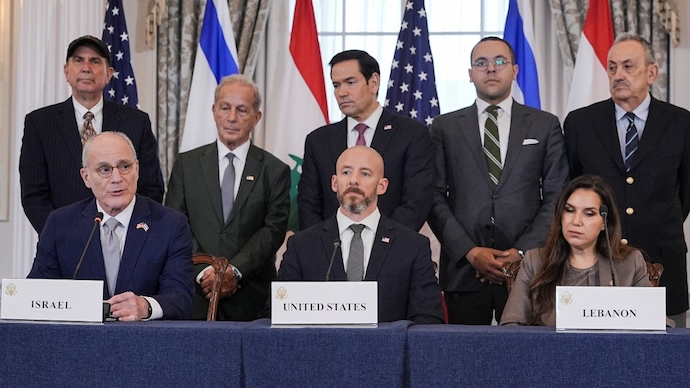
The United States, Israel and Lebanon on Friday signed a trilateral framework agreement following four days of negotiations in Washington, marking a diplomatic breakthrough aimed at easing tensions with Hezbollah along southern Lebanon border.
The agreement was announced by US Secretary of State Marco Rubio after negotiations mediated by the Trump administration. Israeli and Lebanese officials said the framework lays out a path toward a future peace agreement while outlining a series of immediate confidence-building measures.
Israeli Ambassador to the US Yechiel Leiter described the agreement as "performance-based", suggesting that progress under the framework will depend on the implementation of commitments by both sides.
FRAMEWORK SETS OUT INITIAL STEPS
According to Axios, the agreement includes two pilot projects under which the Israeli military will withdraw from limited areas it currently controls in southern Lebanon. The Lebanese Armed Forces will then deploy to those areas.
US military officers will work alongside the Lebanese army to monitor the deployments and verify that Hezbollah fighters are not present in the designated zones, according to Israeli and US officials.
The two pilot areas are located on opposite sides of the Litani River, with one north of the river and the other to its south.
Although Israeli officials said the withdrawal would be limited in scope, it would mark the first Israeli pullback since the military expanded its presence in parts of southern Lebanon during the recent conflict involving Iran.
RUBIO HAILS AGREEMENT
Speaking during the signing ceremony at the State Department, Rubio welcomed the agreement but cautioned that significant challenges remain.
"It is a good day," Rubio said, while adding that "there is a lot of work ahead."
The agreement was formally signed by the Israeli and Lebanese ambassadors to Washington alongside State Department Counsellor Dan Holler.
TALKS FOLLOW DAYS OF NEGOTIATIONS
The breakthrough came after four days of intensive negotiations between Israeli, Lebanese and US officials in Washington.
According to a US official, Rubio personally intervened in the final stage of the talks. On Thursday, he held separate calls with Israeli Prime Minister Benjamin Netanyahu and Lebanese President Joseph Aoun in an effort to bridge remaining differences.
Rubio also joined the negotiating teams on Friday morning before the agreement was signed.
IMPLEMENTATION REMAINS A CHALLENGE
While the agreement is being viewed as an important diplomatic step, its implementation could prove difficult given Hezbollah's continued military presence and political influence in Lebanon. The framework does not resolve the broader issues between Israel and Hezbollah but instead establishes a mechanism for gradual confidence-building and security coordination.
The agreement comes as a fragile ceasefire between Israel and Hezbollah has largely held since last Saturday. Despite the truce, Israel has continued to carry out strikes that it says targeted immediate threats posed by Hezbollah operatives and infrastructure.
The United States, Israel and Lebanon on Friday signed a trilateral framework agreement following four days of negotiations in Washington, marking a diplomatic breakthrough aimed at easing tensions with Hezbollah along southern Lebanon border.
The agreement was announced by US Secretary of State Marco Rubio after negotiations mediated by the Trump administration. Israeli and Lebanese officials said the framework lays out a path toward a future peace agreement while outlining a series of immediate confidence-building measures.
Israeli Ambassador to the US Yechiel Leiter described the agreement as "performance-based", suggesting that progress under the framework will depend on the implementation of commitments by both sides.
FRAMEWORK SETS OUT INITIAL STEPS
According to Axios, the agreement includes two pilot projects under which the Israeli military will withdraw from limited areas it currently controls in southern Lebanon. The Lebanese Armed Forces will then deploy to those areas.
US military officers will work alongside the Lebanese army to monitor the deployments and verify that Hezbollah fighters are not present in the designated zones, according to Israeli and US officials.
The two pilot areas are located on opposite sides of the Litani River, with one north of the river and the other to its south.
Although Israeli officials said the withdrawal would be limited in scope, it would mark the first Israeli pullback since the military expanded its presence in parts of southern Lebanon during the recent conflict involving Iran.
RUBIO HAILS AGREEMENT
Speaking during the signing ceremony at the State Department, Rubio welcomed the agreement but cautioned that significant challenges remain.
"It is a good day," Rubio said, while adding that "there is a lot of work ahead."
The agreement was formally signed by the Israeli and Lebanese ambassadors to Washington alongside State Department Counsellor Dan Holler.
TALKS FOLLOW DAYS OF NEGOTIATIONS
The breakthrough came after four days of intensive negotiations between Israeli, Lebanese and US officials in Washington.
According to a US official, Rubio personally intervened in the final stage of the talks. On Thursday, he held separate calls with Israeli Prime Minister Benjamin Netanyahu and Lebanese President Joseph Aoun in an effort to bridge remaining differences.
Rubio also joined the negotiating teams on Friday morning before the agreement was signed.
IMPLEMENTATION REMAINS A CHALLENGE
While the agreement is being viewed as an important diplomatic step, its implementation could prove difficult given Hezbollah's continued military presence and political influence in Lebanon. The framework does not resolve the broader issues between Israel and Hezbollah but instead establishes a mechanism for gradual confidence-building and security coordination.
The agreement comes as a fragile ceasefire between Israel and Hezbollah has largely held since last Saturday. Despite the truce, Israel has continued to carry out strikes that it says targeted immediate threats posed by Hezbollah operatives and infrastructure.

