Why US-Saudi nuclear pact has Pakistan hopeful, and Israel wary
The US-Saudi nuclear deal approved by American President Donald Trump could allow Riyadh to domestically enrich uranium without several key safeguards Washington has traditionally demanded. The deal has alarmed Israel, and revived questions over whether Saudi Arabia will draw on the nuclear expertise of its long-time strategic partner Pakistan should it decide to go for the bomb.
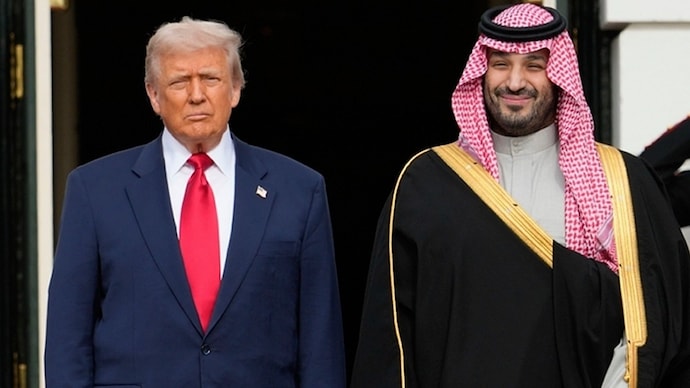
The US and Saudi Arabia on Wednesday reached a landmark civil nuclear agreement, approved by American President Donald Trump, that would allow Riyadh to enrich uranium on its own soil, and potentially open the doors for the Kingdom to develop its own nuclear weapons. The agreement has left Israel wary of a future nuclear-armed Saudi Arabia, while reviving speculation that Pakistan, Riyadh's long-time strategic partner, could benefit from deeper nuclear cooperation if the kingdom chose to pursue a bomb.
A civil nuclear agreement with Saudi Arabia had long been a priority for Washington. The Joe Biden administration had sought to tie such a deal to Saudi recognition of Israel as part of a wider regional pact. After years of deadlock, that objective appears closer to reality following Trump's approval of the landmark agreement last week.
That being said, the deal, however, is reported to impose fewer non-proliferation restrictions than previous US proposals. According to a report by Reuters, it does require the Saudis to accept the "gold standard", which bars uranium enrichment and reprocessing of spent nuclear fuel.
The Associate Press reported that the deal does not mandate the adoption of the International Atomic Energy Agency's (IAEA) Additional Protocol, which allows for more intrusive inspections and verification measures.
Defence expert Sandeep Unnithan said the arrangement could significantly expand Saudi Arabia's nuclear options. "What the Saudi-US deal does is give Saudi Arabia the right to enrich uranium without the safeguards to prevent nuclear weapons development. This is a big step because it leaves open the possibility of an unsupervised Saudi Arabian nuclear weapons programme," Unnithan told India Today Digital.
While the deal still has some ways to go, including passing through US Congressional approval, it has already set off alarm bells in Israel, long opposed to any such agreement with the Saudis. At the same time, however, it may also be an opportunity for Islamabad, which has maintained strategic ties with Riyadh for decades.
It's important to note that Saudi Arabia and Pakistan signed a new mutual defence treaty in 2025, which reportedly placed Riyadh under Islamabad's nuclear umbrella.
WHAT IS US-SAUDI NUCLEAR DEAL APPROVED BY TRUMP? WHY HAS IT MADE ISRAEL WARY?
Before we examine the US-Saudi nuclear deal from Pakistan's perspective, let's first have a look at the agreement itself, and why it is a source of concern for Israel.
US President Donald Trump approved a landmark civil nuclear cooperation agreement with Saudi Arabia that could allow American companies to help develop the kingdom's civilian nuclear energy programme. According to The Wall Street Journal, the agreement could also permit Saudi Arabia to enrich uranium on its own soil, a capability that can be used to produce fuel for nuclear reactors but also fissile material for nuclear weapons.
The agreement, expected to last 30 years and be worth tens of billions of dollars, is centred on the 123 Agreement, the legal framework under the US Atomic Energy Act that governs civilian nuclear cooperation between Washington and foreign countries. Reuters reported that the Trump administration plans to submit the pact to the US Congress for review.
The reason this particular deal has drawn attention is that it reportedly does not include some of the stricter non-proliferation safeguards Washington has traditionally sought in nuclear agreements signed with other countries. According to Reuters, the pact does not contain the so-called "Gold Standard" commitments that require partner countries to permanently forgo uranium enrichment and the reprocessing of spent nuclear fuel. The term originated from the 2009 US-UAE nuclear agreement, under which Abu Dhabi agreed not to pursue these capabilities.
The agreement also reportedly does not require Saudi Arabia to adopt the International Atomic Energy Agency's (IAEA) Additional Protocol, an enhanced inspection regime that gives the UN nuclear watchdog broader powers, including access to undeclared sites. US broadcaster CNN reported that any safeguards and monitoring arrangements would instead be negotiated bilaterally between Washington and Riyadh.
The possibility of Saudi Arabia acquiring domestic enrichment capabilities has raised concerns over whether the kingdom could eventually pursue a nuclear weapons programme. Saudi Crown Prince Mohammed bin Salman told CBS News in 2018 that Riyadh did not want nuclear weapons, but added that if Iran developed a nuclear bomb, "we will follow suit as soon as possible."
The agreement has also intensified concerns in Israel, where any nuclear capability of the Saudis is viewed through the lens of regional security. Saudi Arabia and Israel have never established formal diplomatic relations, with Riyadh repeatedly stating that normalisation depends on the creation of an independent Palestinian state with East Jerusalem as its capital. US-mediated talks on normalisation began in 2023 but stalled following Hamas's attack on Israel on October 7, 2023.
Defence expert Sandeep Unnithan told India Today Digital that the agreement creates a strategic dilemma for Israel. "While future Saudi nukes would be aimed at Iran [as MBS stated back in 2018 if Tehran goes nuclear], it also puts Israel within striking distance of Saudi nukes. It is a double dilemma for Jerusalem. The Saudis may recognise Israel, but could just get nuclear weapons in the future," he said.
The concern has grown because, according to a 2025 report by Reuters, the Trump administration had delinked the nuclear agreement to Saudi-Israeli normalisation. This is unlike the previous Biden administration, which sought to link civil nuclear cooperation with Saudi recognition of Israel and a wider US defence pact.
Israeli lawmakers have criticised the agreement, warning that a civilian nuclear programme could eventually be diverted towards military purposes.
Heritage Minister Amichay Eliyahu said Israel could not assume Saudi Arabia would remain friendly indefinitely. "We will do as much as we can, in the international arena, and in our foreign policy, to halt the possibility that in the Middle East a certain country — because we can’t rely on it for the long term — has a nuclear weapon," Israeli public broadcaster Kan quoted him as saying.
Similarly, former defence minister Avigdor Liberman argued in a post on X that "every military nuclear programme starts as a civilian programme."
Former Israeli PM Ehud Barak said Saudi enrichment could have been acceptable only if it was part of a normalisation agreement with strict US oversight, according to The Times of Israel.
Uranium enrichment alone does not automatically give a country a nuclear arsenal. A state must also develop a workable warhead, integrate it with a delivery system and possess the technical expertise to validate the design. That being said, one of Saudi Arabia's long-time strategic partners — Pakistan — has both the infrastructure and the technical knowledge to bridge this gap.
THE US-SAUDI NUCLEAR DEAL FROM PAKISTAN'S PRISM
Even though Saudi Arabia has never pursued its own independent nuclear weapons programme, that has nevertheless not stopped it from supporting a similar programme in another country, that being, its long-time strategic partner, Pakistan.
Pakistan's nuclear weapons programme, which was developed mostly in-house with the help of Chinese-supplied blueprints and technology "thefts", also received extensive support from several Arab powers, most notably Saudi Arabia. While neither Riyadh nor Islamabad has ever acknowledged such cooperation, reports of a secret Saudi-Pakistani nuclear understanding have persisted for decades.
According to defence expert Sandeep Unnithan, Saudi Arabia is believed to have struck a covert arrangement with Pakistan during Zia-ul-Haq's rule in the 1980s, when Islamabad's nuclear programme was rapidly advancing.
"Saudi Arabia is believed to have made a pact with Pakistan in the 1980s, during the Zia years, under which it helped fund Pakistan's nuclear weapons programme in exchange for access to a limited number of warheads in the event of a crisis—possibly six or eight weapons," Unnithan told India Today Digital.
Around the same time, Saudi Arabia acquired around two dozen Chinese-made DF-3 (Dongfeng-3) intermediate-range ballistic missiles. The missile, widely regarded as capable of carrying nuclear warheads, triggered alarm in Washington because of its limited conventional accuracy and perceived role as a strategic nuclear delivery system.
According to defence expert Sandeep Unnithan, the purchase strained US-Saudi relations before Riyadh assured Washington that the missiles would not be armed with weapons of mass destruction.
"Saudi Arabia purchased around two dozen Chinese Dongfeng-3 (DF-3) missiles in the mid-1980s. They were so inaccurate that they were widely believed to have been intended primarily as nuclear delivery systems. The sale triggered a crisis in US-Saudi relations, and the Saudis later pledged not to fit them with weapons of mass destruction before acceding to the Nuclear Non-Proliferation Treaty (NPT) in 1988," Unnithan told India Today Digital.
In a 2013 investigation, the BBC, citing sources in NATO and the Western intelligence community, reported that Saudi Arabia had helped finance Pakistan's nuclear weapons programme under a long-standing understanding that Riyadh could seek access to ready-made warheads in the event of a major regional crisis. Neither Saudi Arabia nor Pakistan has ever acknowledged such an arrangement. However, in 2025, both sides signed a new mutual defence treaty, which reportedly placed Riyadh under Islamabad's nuclear umbrella.
The new US-Saudi agreement to set up enrichment facilities in-house without previously established safeguards, means that Riyadh can potentially enrich uranium to weapons grade levels. And according to Unnithan, this is where Islamabad can step in with the required technical know-how to use the fissile material into a bomb.
"The prospect of closer nuclear collaboration, and/or the exchange of enriched uranium with Pakistan cannot be ruled out, though I imagine such material would be under intense scrutiny," Unnithan told India Today Digital, adding that, "Pakistan desperately needs cash and has the human resources to make a Saudi bomb a reality".
Unnithan further stated that while not easy, such an action is not unprecedented due to the fact that, "Pakistan is the only country in the world to have sold nuclear equipment and blueprints on the black market to Libya, North Korea, Syria, Iran and Iraq. "
For now, however, such a scenario remains a distant possibility. The agreement must first survive congressional scrutiny, with American lawmakers expected to question the absence of the traditional "gold standard" safeguards that other countries like the UAE have abided by. Even then, any move by Saudi Arabia to weaponise its civilian nuclear programme, or transfer sensitive material or technology abroad would likely trigger intense international monitoring, sanctions and diplomatic fallout.
The US and Saudi Arabia on Wednesday reached a landmark civil nuclear agreement, approved by American President Donald Trump, that would allow Riyadh to enrich uranium on its own soil, and potentially open the doors for the Kingdom to develop its own nuclear weapons. The agreement has left Israel wary of a future nuclear-armed Saudi Arabia, while reviving speculation that Pakistan, Riyadh's long-time strategic partner, could benefit from deeper nuclear cooperation if the kingdom chose to pursue a bomb.
A civil nuclear agreement with Saudi Arabia had long been a priority for Washington. The Joe Biden administration had sought to tie such a deal to Saudi recognition of Israel as part of a wider regional pact. After years of deadlock, that objective appears closer to reality following Trump's approval of the landmark agreement last week.
That being said, the deal, however, is reported to impose fewer non-proliferation restrictions than previous US proposals. According to a report by Reuters, it does require the Saudis to accept the "gold standard", which bars uranium enrichment and reprocessing of spent nuclear fuel.
The Associate Press reported that the deal does not mandate the adoption of the International Atomic Energy Agency's (IAEA) Additional Protocol, which allows for more intrusive inspections and verification measures.
Defence expert Sandeep Unnithan said the arrangement could significantly expand Saudi Arabia's nuclear options. "What the Saudi-US deal does is give Saudi Arabia the right to enrich uranium without the safeguards to prevent nuclear weapons development. This is a big step because it leaves open the possibility of an unsupervised Saudi Arabian nuclear weapons programme," Unnithan told India Today Digital.
While the deal still has some ways to go, including passing through US Congressional approval, it has already set off alarm bells in Israel, long opposed to any such agreement with the Saudis. At the same time, however, it may also be an opportunity for Islamabad, which has maintained strategic ties with Riyadh for decades.
It's important to note that Saudi Arabia and Pakistan signed a new mutual defence treaty in 2025, which reportedly placed Riyadh under Islamabad's nuclear umbrella.
WHAT IS US-SAUDI NUCLEAR DEAL APPROVED BY TRUMP? WHY HAS IT MADE ISRAEL WARY?
Before we examine the US-Saudi nuclear deal from Pakistan's perspective, let's first have a look at the agreement itself, and why it is a source of concern for Israel.
US President Donald Trump approved a landmark civil nuclear cooperation agreement with Saudi Arabia that could allow American companies to help develop the kingdom's civilian nuclear energy programme. According to The Wall Street Journal, the agreement could also permit Saudi Arabia to enrich uranium on its own soil, a capability that can be used to produce fuel for nuclear reactors but also fissile material for nuclear weapons.
The agreement, expected to last 30 years and be worth tens of billions of dollars, is centred on the 123 Agreement, the legal framework under the US Atomic Energy Act that governs civilian nuclear cooperation between Washington and foreign countries. Reuters reported that the Trump administration plans to submit the pact to the US Congress for review.
The reason this particular deal has drawn attention is that it reportedly does not include some of the stricter non-proliferation safeguards Washington has traditionally sought in nuclear agreements signed with other countries. According to Reuters, the pact does not contain the so-called "Gold Standard" commitments that require partner countries to permanently forgo uranium enrichment and the reprocessing of spent nuclear fuel. The term originated from the 2009 US-UAE nuclear agreement, under which Abu Dhabi agreed not to pursue these capabilities.
The agreement also reportedly does not require Saudi Arabia to adopt the International Atomic Energy Agency's (IAEA) Additional Protocol, an enhanced inspection regime that gives the UN nuclear watchdog broader powers, including access to undeclared sites. US broadcaster CNN reported that any safeguards and monitoring arrangements would instead be negotiated bilaterally between Washington and Riyadh.
The possibility of Saudi Arabia acquiring domestic enrichment capabilities has raised concerns over whether the kingdom could eventually pursue a nuclear weapons programme. Saudi Crown Prince Mohammed bin Salman told CBS News in 2018 that Riyadh did not want nuclear weapons, but added that if Iran developed a nuclear bomb, "we will follow suit as soon as possible."
The agreement has also intensified concerns in Israel, where any nuclear capability of the Saudis is viewed through the lens of regional security. Saudi Arabia and Israel have never established formal diplomatic relations, with Riyadh repeatedly stating that normalisation depends on the creation of an independent Palestinian state with East Jerusalem as its capital. US-mediated talks on normalisation began in 2023 but stalled following Hamas's attack on Israel on October 7, 2023.
Defence expert Sandeep Unnithan told India Today Digital that the agreement creates a strategic dilemma for Israel. "While future Saudi nukes would be aimed at Iran [as MBS stated back in 2018 if Tehran goes nuclear], it also puts Israel within striking distance of Saudi nukes. It is a double dilemma for Jerusalem. The Saudis may recognise Israel, but could just get nuclear weapons in the future," he said.
The concern has grown because, according to a 2025 report by Reuters, the Trump administration had delinked the nuclear agreement to Saudi-Israeli normalisation. This is unlike the previous Biden administration, which sought to link civil nuclear cooperation with Saudi recognition of Israel and a wider US defence pact.
Israeli lawmakers have criticised the agreement, warning that a civilian nuclear programme could eventually be diverted towards military purposes.
Heritage Minister Amichay Eliyahu said Israel could not assume Saudi Arabia would remain friendly indefinitely. "We will do as much as we can, in the international arena, and in our foreign policy, to halt the possibility that in the Middle East a certain country — because we can’t rely on it for the long term — has a nuclear weapon," Israeli public broadcaster Kan quoted him as saying.
Similarly, former defence minister Avigdor Liberman argued in a post on X that "every military nuclear programme starts as a civilian programme."
Former Israeli PM Ehud Barak said Saudi enrichment could have been acceptable only if it was part of a normalisation agreement with strict US oversight, according to The Times of Israel.
Uranium enrichment alone does not automatically give a country a nuclear arsenal. A state must also develop a workable warhead, integrate it with a delivery system and possess the technical expertise to validate the design. That being said, one of Saudi Arabia's long-time strategic partners — Pakistan — has both the infrastructure and the technical knowledge to bridge this gap.
THE US-SAUDI NUCLEAR DEAL FROM PAKISTAN'S PRISM
Even though Saudi Arabia has never pursued its own independent nuclear weapons programme, that has nevertheless not stopped it from supporting a similar programme in another country, that being, its long-time strategic partner, Pakistan.
Pakistan's nuclear weapons programme, which was developed mostly in-house with the help of Chinese-supplied blueprints and technology "thefts", also received extensive support from several Arab powers, most notably Saudi Arabia. While neither Riyadh nor Islamabad has ever acknowledged such cooperation, reports of a secret Saudi-Pakistani nuclear understanding have persisted for decades.
According to defence expert Sandeep Unnithan, Saudi Arabia is believed to have struck a covert arrangement with Pakistan during Zia-ul-Haq's rule in the 1980s, when Islamabad's nuclear programme was rapidly advancing.
"Saudi Arabia is believed to have made a pact with Pakistan in the 1980s, during the Zia years, under which it helped fund Pakistan's nuclear weapons programme in exchange for access to a limited number of warheads in the event of a crisis—possibly six or eight weapons," Unnithan told India Today Digital.
Around the same time, Saudi Arabia acquired around two dozen Chinese-made DF-3 (Dongfeng-3) intermediate-range ballistic missiles. The missile, widely regarded as capable of carrying nuclear warheads, triggered alarm in Washington because of its limited conventional accuracy and perceived role as a strategic nuclear delivery system.
According to defence expert Sandeep Unnithan, the purchase strained US-Saudi relations before Riyadh assured Washington that the missiles would not be armed with weapons of mass destruction.
"Saudi Arabia purchased around two dozen Chinese Dongfeng-3 (DF-3) missiles in the mid-1980s. They were so inaccurate that they were widely believed to have been intended primarily as nuclear delivery systems. The sale triggered a crisis in US-Saudi relations, and the Saudis later pledged not to fit them with weapons of mass destruction before acceding to the Nuclear Non-Proliferation Treaty (NPT) in 1988," Unnithan told India Today Digital.
In a 2013 investigation, the BBC, citing sources in NATO and the Western intelligence community, reported that Saudi Arabia had helped finance Pakistan's nuclear weapons programme under a long-standing understanding that Riyadh could seek access to ready-made warheads in the event of a major regional crisis. Neither Saudi Arabia nor Pakistan has ever acknowledged such an arrangement. However, in 2025, both sides signed a new mutual defence treaty, which reportedly placed Riyadh under Islamabad's nuclear umbrella.
The new US-Saudi agreement to set up enrichment facilities in-house without previously established safeguards, means that Riyadh can potentially enrich uranium to weapons grade levels. And according to Unnithan, this is where Islamabad can step in with the required technical know-how to use the fissile material into a bomb.
"The prospect of closer nuclear collaboration, and/or the exchange of enriched uranium with Pakistan cannot be ruled out, though I imagine such material would be under intense scrutiny," Unnithan told India Today Digital, adding that, "Pakistan desperately needs cash and has the human resources to make a Saudi bomb a reality".
Unnithan further stated that while not easy, such an action is not unprecedented due to the fact that, "Pakistan is the only country in the world to have sold nuclear equipment and blueprints on the black market to Libya, North Korea, Syria, Iran and Iraq. "
For now, however, such a scenario remains a distant possibility. The agreement must first survive congressional scrutiny, with American lawmakers expected to question the absence of the traditional "gold standard" safeguards that other countries like the UAE have abided by. Even then, any move by Saudi Arabia to weaponise its civilian nuclear programme, or transfer sensitive material or technology abroad would likely trigger intense international monitoring, sanctions and diplomatic fallout.
The US and Saudi Arabia on Wednesday reached a landmark civil nuclear agreement, approved by American President Donald Trump, that would allow Riyadh to enrich uranium on its own soil, and potentially open the doors for the Kingdom to develop its own nuclear weapons. The agreement has left Israel wary of a future nuclear-armed Saudi Arabia, while reviving speculation that Pakistan, Riyadh's long-time strategic partner, could benefit from deeper nuclear cooperation if the kingdom chose to pursue a bomb.
A civil nuclear agreement with Saudi Arabia had long been a priority for Washington. The Joe Biden administration had sought to tie such a deal to Saudi recognition of Israel as part of a wider regional pact. After years of deadlock, that objective appears closer to reality following Trump's approval of the landmark agreement last week.
That being said, the deal, however, is reported to impose fewer non-proliferation restrictions than previous US proposals. According to a report by Reuters, it does require the Saudis to accept the "gold standard", which bars uranium enrichment and reprocessing of spent nuclear fuel.
The Associate Press reported that the deal does not mandate the adoption of the International Atomic Energy Agency's (IAEA) Additional Protocol, which allows for more intrusive inspections and verification measures.
Defence expert Sandeep Unnithan said the arrangement could significantly expand Saudi Arabia's nuclear options. "What the Saudi-US deal does is give Saudi Arabia the right to enrich uranium without the safeguards to prevent nuclear weapons development. This is a big step because it leaves open the possibility of an unsupervised Saudi Arabian nuclear weapons programme," Unnithan told India Today Digital.
While the deal still has some ways to go, including passing through US Congressional approval, it has already set off alarm bells in Israel, long opposed to any such agreement with the Saudis. At the same time, however, it may also be an opportunity for Islamabad, which has maintained strategic ties with Riyadh for decades.
It's important to note that Saudi Arabia and Pakistan signed a new mutual defence treaty in 2025, which reportedly placed Riyadh under Islamabad's nuclear umbrella.
WHAT IS US-SAUDI NUCLEAR DEAL APPROVED BY TRUMP? WHY HAS IT MADE ISRAEL WARY?
Before we examine the US-Saudi nuclear deal from Pakistan's perspective, let's first have a look at the agreement itself, and why it is a source of concern for Israel.
US President Donald Trump approved a landmark civil nuclear cooperation agreement with Saudi Arabia that could allow American companies to help develop the kingdom's civilian nuclear energy programme. According to The Wall Street Journal, the agreement could also permit Saudi Arabia to enrich uranium on its own soil, a capability that can be used to produce fuel for nuclear reactors but also fissile material for nuclear weapons.
The agreement, expected to last 30 years and be worth tens of billions of dollars, is centred on the 123 Agreement, the legal framework under the US Atomic Energy Act that governs civilian nuclear cooperation between Washington and foreign countries. Reuters reported that the Trump administration plans to submit the pact to the US Congress for review.
The reason this particular deal has drawn attention is that it reportedly does not include some of the stricter non-proliferation safeguards Washington has traditionally sought in nuclear agreements signed with other countries. According to Reuters, the pact does not contain the so-called "Gold Standard" commitments that require partner countries to permanently forgo uranium enrichment and the reprocessing of spent nuclear fuel. The term originated from the 2009 US-UAE nuclear agreement, under which Abu Dhabi agreed not to pursue these capabilities.
The agreement also reportedly does not require Saudi Arabia to adopt the International Atomic Energy Agency's (IAEA) Additional Protocol, an enhanced inspection regime that gives the UN nuclear watchdog broader powers, including access to undeclared sites. US broadcaster CNN reported that any safeguards and monitoring arrangements would instead be negotiated bilaterally between Washington and Riyadh.
The possibility of Saudi Arabia acquiring domestic enrichment capabilities has raised concerns over whether the kingdom could eventually pursue a nuclear weapons programme. Saudi Crown Prince Mohammed bin Salman told CBS News in 2018 that Riyadh did not want nuclear weapons, but added that if Iran developed a nuclear bomb, "we will follow suit as soon as possible."
The agreement has also intensified concerns in Israel, where any nuclear capability of the Saudis is viewed through the lens of regional security. Saudi Arabia and Israel have never established formal diplomatic relations, with Riyadh repeatedly stating that normalisation depends on the creation of an independent Palestinian state with East Jerusalem as its capital. US-mediated talks on normalisation began in 2023 but stalled following Hamas's attack on Israel on October 7, 2023.
Defence expert Sandeep Unnithan told India Today Digital that the agreement creates a strategic dilemma for Israel. "While future Saudi nukes would be aimed at Iran [as MBS stated back in 2018 if Tehran goes nuclear], it also puts Israel within striking distance of Saudi nukes. It is a double dilemma for Jerusalem. The Saudis may recognise Israel, but could just get nuclear weapons in the future," he said.
The concern has grown because, according to a 2025 report by Reuters, the Trump administration had delinked the nuclear agreement to Saudi-Israeli normalisation. This is unlike the previous Biden administration, which sought to link civil nuclear cooperation with Saudi recognition of Israel and a wider US defence pact.
Israeli lawmakers have criticised the agreement, warning that a civilian nuclear programme could eventually be diverted towards military purposes.
Heritage Minister Amichay Eliyahu said Israel could not assume Saudi Arabia would remain friendly indefinitely. "We will do as much as we can, in the international arena, and in our foreign policy, to halt the possibility that in the Middle East a certain country — because we can’t rely on it for the long term — has a nuclear weapon," Israeli public broadcaster Kan quoted him as saying.
Similarly, former defence minister Avigdor Liberman argued in a post on X that "every military nuclear programme starts as a civilian programme."
Former Israeli PM Ehud Barak said Saudi enrichment could have been acceptable only if it was part of a normalisation agreement with strict US oversight, according to The Times of Israel.
Uranium enrichment alone does not automatically give a country a nuclear arsenal. A state must also develop a workable warhead, integrate it with a delivery system and possess the technical expertise to validate the design. That being said, one of Saudi Arabia's long-time strategic partners — Pakistan — has both the infrastructure and the technical knowledge to bridge this gap.
THE US-SAUDI NUCLEAR DEAL FROM PAKISTAN'S PRISM
Even though Saudi Arabia has never pursued its own independent nuclear weapons programme, that has nevertheless not stopped it from supporting a similar programme in another country, that being, its long-time strategic partner, Pakistan.
Pakistan's nuclear weapons programme, which was developed mostly in-house with the help of Chinese-supplied blueprints and technology "thefts", also received extensive support from several Arab powers, most notably Saudi Arabia. While neither Riyadh nor Islamabad has ever acknowledged such cooperation, reports of a secret Saudi-Pakistani nuclear understanding have persisted for decades.
According to defence expert Sandeep Unnithan, Saudi Arabia is believed to have struck a covert arrangement with Pakistan during Zia-ul-Haq's rule in the 1980s, when Islamabad's nuclear programme was rapidly advancing.
"Saudi Arabia is believed to have made a pact with Pakistan in the 1980s, during the Zia years, under which it helped fund Pakistan's nuclear weapons programme in exchange for access to a limited number of warheads in the event of a crisis—possibly six or eight weapons," Unnithan told India Today Digital.
Around the same time, Saudi Arabia acquired around two dozen Chinese-made DF-3 (Dongfeng-3) intermediate-range ballistic missiles. The missile, widely regarded as capable of carrying nuclear warheads, triggered alarm in Washington because of its limited conventional accuracy and perceived role as a strategic nuclear delivery system.
According to defence expert Sandeep Unnithan, the purchase strained US-Saudi relations before Riyadh assured Washington that the missiles would not be armed with weapons of mass destruction.
"Saudi Arabia purchased around two dozen Chinese Dongfeng-3 (DF-3) missiles in the mid-1980s. They were so inaccurate that they were widely believed to have been intended primarily as nuclear delivery systems. The sale triggered a crisis in US-Saudi relations, and the Saudis later pledged not to fit them with weapons of mass destruction before acceding to the Nuclear Non-Proliferation Treaty (NPT) in 1988," Unnithan told India Today Digital.
In a 2013 investigation, the BBC, citing sources in NATO and the Western intelligence community, reported that Saudi Arabia had helped finance Pakistan's nuclear weapons programme under a long-standing understanding that Riyadh could seek access to ready-made warheads in the event of a major regional crisis. Neither Saudi Arabia nor Pakistan has ever acknowledged such an arrangement. However, in 2025, both sides signed a new mutual defence treaty, which reportedly placed Riyadh under Islamabad's nuclear umbrella.
The new US-Saudi agreement to set up enrichment facilities in-house without previously established safeguards, means that Riyadh can potentially enrich uranium to weapons grade levels. And according to Unnithan, this is where Islamabad can step in with the required technical know-how to use the fissile material into a bomb.
"The prospect of closer nuclear collaboration, and/or the exchange of enriched uranium with Pakistan cannot be ruled out, though I imagine such material would be under intense scrutiny," Unnithan told India Today Digital, adding that, "Pakistan desperately needs cash and has the human resources to make a Saudi bomb a reality".
Unnithan further stated that while not easy, such an action is not unprecedented due to the fact that, "Pakistan is the only country in the world to have sold nuclear equipment and blueprints on the black market to Libya, North Korea, Syria, Iran and Iraq. "
For now, however, such a scenario remains a distant possibility. The agreement must first survive congressional scrutiny, with American lawmakers expected to question the absence of the traditional "gold standard" safeguards that other countries like the UAE have abided by. Even then, any move by Saudi Arabia to weaponise its civilian nuclear programme, or transfer sensitive material or technology abroad would likely trigger intense international monitoring, sanctions and diplomatic fallout.

