
The threats Elephants in India face, and how to save them

Read an excerpt from 'Mammals of India' by A.J.T. Johnsingh and P.O. Nameer, the first comprehensive guide documenting more than 450 mammals found across the subcontinent
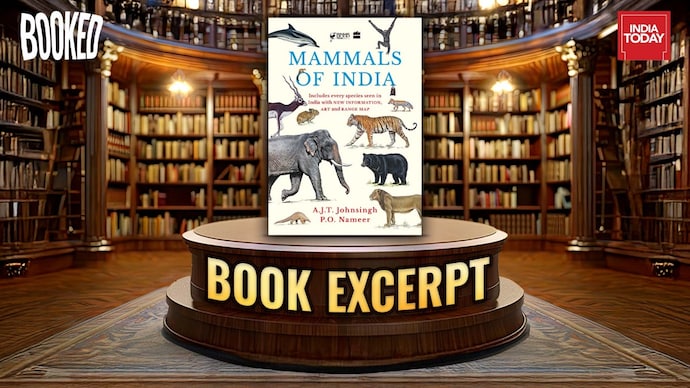

India is home to rich biodiversity, and that includes a variety of mammals too. However, their connection with the landscape and the human beings is not well documented. ‘Mammals of India’ (published by HarperCollins India in association with Bombay Natural History Society) is a comprehensive guide that tries to fill this gap, documenting more than 450 currently recognised species of Indian mammals. The authors are Dr. (late) A.J.T. Johnsingh, a vertebrate ecologist from Tamil Nadu, and Dr. P.O. Nameer is a Professor of Wildlife Science with the Centre for Wildlife Studies and the Dean of the College of Climate Change and Environmental Sciences, Kerala Agricultural University. The mammoth volume includes distribution maps, rich illustrations, updated information on the taxonomy, population density and conservation status of the mammals.
Here is an excerpt from the book:
Threats to the Asian elephant are habitat loss, habitat fragmentation and degradation, human-elephant conflict (HEC) and poaching for ivory and meat. In spite of the Forest (Conservation) Act, 1980, the country is losing forest cover: according to the India State of Forest Report (2019), India lost about 330 sq. km. of forests in the two years since 2017. Now, more than forest loss, the greatest threat to elephants and other large mammals comes from the proliferation of inedible plants, most of which are exotic. The lower Nilgiris, e.g., which are reported to be home to one single population of at least 5,000 elephants, are full of inedible plants such as Croton sparsiflorus, Lantana camara, Opuntia dillenii, Parthenium hysterophorus, Prosopis juliflora, Senna (Cassia) spectabilis, Sida cordifolia and Xanthium strumarium. In addition, the regeneration of important forage plants such as Albizia amara, Bauhinia racemosa, Careya arborea, Grewia tiliifolia and Ziziphus xylopyrus is exceedingly poor.
An adult elephant is virtually immune from predation, except by humans. There is a record, though, of two tigers killing a bull tusker. It is common to see elephants in Indian jungles forming a protective circle or semicircle in which the cows place themselves with the calves between them or towards the centre—this is anti-predator behaviour. Dholes and leopards, although they are not a threat, are chased by elephants. Elephants trumpet and chase even wild pigs and sambar if they come to the same waterhole, but this may be play behaviour.
Elephant deaths are caused by both natural and human factors. Some of the more common causes of natural death include various diseases and parasitic infections. Starvation of old elephants due to the wearing out of the last set of molars, accidental falls on steep slopes and deaths from fights between bulls where adult bull numbers are significant are also common. Kills along railway tracks in north Bengal, Assam and Kerala also take a toll on the population. Since 1987, around 300 elephants have been killed on railway tracks in India.
One of the greatest threats to elephant conservation in India is the increasing incidence of HEC. Bist rightly opines that HEC is the most serious form of human-wildlife conflict in India. About 248 districts in 23 states/union territories have reported cases of HEC in recent years. Human casualties are the most visible form of HEC. During the period 201314 to 201718, elephants were involved in the deaths of 425565 persons (an average of 494 persons) per year. Authentic records of injured persons are not available, but it can be safely assumed that at least 400 persons are injured by elephants annually, many of them suffering permanent disabilities. The situation is exceedingly serious in north Bengal where, in 201316, it was found that the region had 712 per cent of HEC, although the landscape had only 1.8 per cent of the elephant population in the country. An assessment for the whole of India would indicate that about 10,000 sq. km. of cropland and at least 500,000 farmers in the country are vulnerable to depredation by elephants.
Elephants also suffer on account of HEC in various ways. In February 2019, according to information presented by the Ministry of Environment, Forest and Climate Change in Parliament, 311 elephants died in the country from 1 April 2015 to 31 December 2018 due to reasons attributable to humans: 59 by poaching, 26 by poisoning and 226 by electrocution. Most of these retaliatory killings are linked with HEC. The zone afflicted by HEC in India has expanded from 132 districts in 17 states/union territories in the year 2000 to 248 districts in 23 states/union territories in 2018. Elephants have expanded their range within Jharkhand, Odisha, West Bengal, Karnataka and Andhra Pradesh, and have reached new states, namely Chhattisgarh, Madhya Pradesh, Maharashtra, Bihar, Haryana and Himachal Pradesh.
The African elephant too faces many threats, but poaching appears to be the immediate threat. Their population in 1979 was 1.34 million; today it has declined to 415,000 due to poaching, as both sexes have tusks. Elephants are also killed for meat. This has led to the extermination of family groups. However, this does not happen with Asian elephants as females do not have tusks. Yet, poaching for ivory has led to skewed sex ratios in many parts of India. In Periyar TR, e.g., one of the heavily poached elephant habitats in south India, the sex ratio of bulls to females was 1:100 some years ago. It is not clear whether there has been a positive change in this scenario. Conservation measures are good within Periyar TR (925 sq. km.) but it is part of the much larger Periyar landscape (approx. 3,000 sq. km.) and it can’t be guaranteed that protection is good all over the landscape. North India (Uttarakhand) too has been adversely affected by the poaching of male elephants—now the male-to-female sex ratio hovers around 1:45; it was 1:2 three decades ago.
Conservation
Maybe the best recommendation for elephant conservation comes from the Report of the Karnataka Elephant Task Force written by eminent scientists including M.D. Madhusudan, Raman Sukumar and Ajay Desai. It recommends the classification of elephant areas into three management zones:
The ‘Elephant Conservation Zone (ECZ)’ should comprise prime elephant habitats, where the interests of elephants should be given the most priority. The emphasis in this zone should be on protecting, consolidating and improving elephant habitats.
The ‘Human-Elephant Co-existence Zone (HECZ)’ should comprise areas requiring equal attention to the welfare of elephants and humans, with emphasis on awareness-building and other measures for enhancing the tolerance level of people.
The ‘Elephant Removal Zone (ERZ)’ should comprise areas where the interests of people should get priority over those of elephants. Drastic measures, such as capture, mass translocation and reproductive control of problem elephants, should be resorted to.