
GST Council meet highlights: GST Council reforms to kick in from April 2027

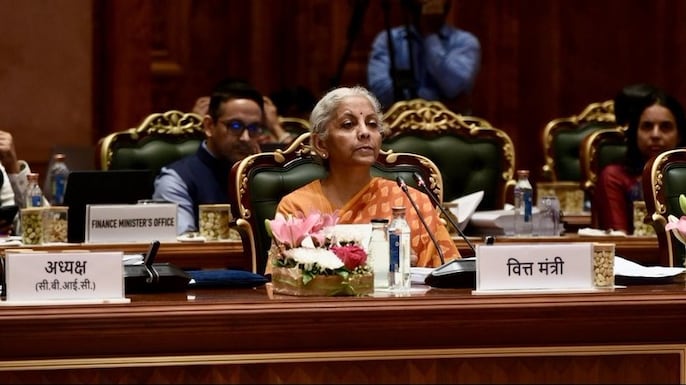
GST Council meeting: The 57th GST Council meeting, chaired by Union Finance Minister Nirmala Sitharaman, is being held in New Delhi on October 8. The meeting comes more than a year after the major GST rate rationalisation exercise undertaken at the 56th GST Council meeting in September 2025.
This time, the focus is expected to be on simplifying GST compliance and improving the functioning of the tax system, with key proposals relating to GST officers' arrest powers, prosecution thresholds, input tax credit (ITC), faster refunds, GST registration, return filing, biometric Aadhaar authentication, penalties and dispute resolution.
The Council may also consider measures that could ease compliance for businesses and MSMEs, protect genuine taxpayers from losing ITC because of supplier defaults and reduce working-capital blockages caused by delayed refunds.
Follow India Today for LIVE updates from the GST Council meeting, including key discussions, decisions, recommendations, announcements and expert reactions, and understand what the proposed GST changes could mean for businesses, taxpayers and the wider economy.
All updates to this live blog have ended.
All updates to this live blog have ended.
GST reforms may ease compliance, boost efficiency for realty sector: Expert
Avneesh Sood, Director, Eros Group, said the GST Council’s proposals to simplify registration, speed up eligible refunds and reduce compliance disruptions could improve the business environment for real estate. He said smoother processes could help firms manage working capital and minimise supply chain disruptions. "Measures supporting the movement of construction materials could reduce avoidable disruptions across supply chains," he said.
However, he noted that clear eligibility rules, timelines and consistent implementation will be key to delivering the intended benefits.
No MDR discussion at GST Council meet, clarifies Sitharaman
Union Finance Minister Nirmala Sitharaman clarified that the issue of Merchant Discount Rate (MDR) was not discussed during the meeting. She said no deliberations related to MDR took place as part of the Council’s agenda.
Health, life insurance ITC can ease MSME burden, says expert
Sajja Praveen Chowdary, Director and CEO – Policybazaar for Business, welcomed the approval of Input Tax Credit (ITC) on employer-provided health and life insurance policies, saying it could reduce the cost burden for companies, particularly MSMEs.
"The 18% input tax credit on employee health and life insurance can make group insurance more affordable for smaller businesses, which often rely on such benefits to attract and retain talent. The savings could either be channelled towards business growth and expansion or used to enhance employee benefits," he said.
GST reforms shift focus to taxpayer trust, faster refunds
Onkar Sharma, Partner at Khaitan & Co, said the 57th GST Council meeting marks a shift from rate-setting to improving GST administration and building taxpayer trust. He said removing the power of arrest and raising the prosecution threshold from Rs 1 crore to Rs 5 crore should reduce enforcement concerns, especially for MSMEs.
He also said that refund reforms, including faster acknowledgement and risk-based sanctioning of 80% of refunds within three working days. Extending inverted duty structure refunds to input services from November 1 could also ease working capital pressure for businesses.
Faceless GST administration planned
Nirmala Sitharaman said the faceless approach in income tax has been well received by taxpayers. Drawing on this experience, the government plans to extend the reform to Central GST (CGST) administration, with a framework to be finalised and put up for public consultation before next year’s Budget.
Karthik Mani, Partner & Leader – Indirect Tax: South, Tax & Regulatory Advisory, BDO India, said, "The proposed introduction of faceless administration for CGST jurisdictional taxpayers by FY 2027-28 could emerge as one of the most significant reforms announced by the Council. By minimising direct interaction between taxpayers and tax authorities, the initiative has the potential to enhance transparency, reduce subjectivity in assessments, ensure greater consistency in the issuance of notices, and strengthen taxpayer confidence in the administration of GST."
GST Council's key recommendations: No notices below Rs 10,000, state-specific checks for goods
The GST Council has recommended a series of enforcement and compliance changes, including removing GST arrest powers, raising the prosecution threshold to Rs 5 crore and reducing the general penalty to Rs 10,000 from Rs 25,000, Finance Minister Nirmala Sitharaman said.
The Council has also recommended that no notices be issued for monetary amounts of Rs 10,000 or below.
To ensure smoother movement of goods, inspection, detention or seizure will be allowed only by an officer from the supplier state or the destination state.
The Council has also removed the minimum punishment for GST offences, leaving the final punishment — fine, imprisonment or both — to judicial discretion. For late filing, mistakes or delayed tax payments, taxpayers will face recovery, interest and a proportionate penalty, without additional punitive action.
No MDR-related discussions took place at GST Council meeting: FM
There were no discussions on merchant discount rate (MDR) at the 57th GST Council meeting, Finance Minister Nirmala Sitharaman said.
The meeting focused on a range of enforcement and procedural reforms, including GST compliance, registration, input tax credit, refunds and prosecution-related provisions.
GST Council approves simpler registration for small e-commerce sellers; reforms to kick in from April 2027
The GST Council has approved a simplified registration mechanism for small sellers operating through e-commerce platforms, allowing them to sell without having to establish a place of business in every state, Finance Minister Nirmala Sitharaman said.
The measure is part of the GST Council’s broader process reforms aimed at easing compliance for small businesses and e-commerce sellers.
Sitharaman said all the process reforms approved at the meeting will be implemented from April 1, 2027.
No GST rate changes; Council scraps tax officers' arrest powers
The 57th GST Council meeting concluded without any changes to the existing GST rate structure, with the Finance Ministry saying the rate structure is now settled.
The Council also approved major enforcement reforms, including scrapping the arrest powers of GST tax officers and raising the threshold for prosecution to Rs 5 crore from the earlier Rs 1 crore, the Finance Ministry said.
The decisions mark a shift in focus towards simplifying GST compliance and easing enforcement-related concerns for businesses.
GST Council meeting concludes
The 57th GST Council meeting, chaired by Union Finance Minister Nirmala Sitharaman, concluded in New Delhi on Thursday after the Council approved a series of enforcement and procedural reforms, reported Chetan Bhutani, as per govt sources.
The meeting was attended by Chief Ministers of Delhi, Goa, Haryana, Jammu & Kashmir, Karnataka, Kerala, Maharashtra and Meghalaya, along with Deputy Chief Ministers of Manipur and Telangana. Finance Ministers and senior representatives from states and Union Territories also participated.
Revenue Secretary, the CBIC Chairman and members, and senior officials from the Finance Ministry were also present at the meeting.
The Council approved measures including curbs on GST officers' arrest powers in specified cases, raising the prosecution threshold from Rs 1 crore to Rs 5 crore and other compliance reforms aimed at providing relief to MSMEs and e-commerce businesses.
Simpler GST compliance can unlock working capital, support business growth
A simpler and more predictable GST regime can reduce compliance friction, unlock working capital and give businesses greater confidence to invest and expand, said Karthick Venkatakrishnan, Managing Director, Growth & Strategy, EisnerAmper India.
He said the next phase of GST should focus on making compliance more seamless, technology-driven and growth-oriented as Indian businesses expand into new markets and global value chains.
Sources: GST Council approves major enforcement, compliance reforms
The GST Council has approved a series of enforcement and procedural reforms aimed at easing compliance for businesses, particularly MSMEs and e-commerce players, according to government sources, reported Chetan Bhutani.
The Council has approved the removal of arrest powers for GST tax officers in specified cases and raised the threshold for launching prosecution from Rs 1 crore to Rs 5 crore.
The reforms are expected to provide greater compliance relief to businesses and reduce the scope for criminal proceedings in cases that do not involve serious tax evasion.
Government sources said the decisions form part of a broader set of comprehensive enforcement and procedural reforms approved by the Council.
Simpler GST, faster ITC settlement could support real estate projects
A simpler GST structure, quicker settlement of eligible input tax credits and clearer processes for ongoing projects could improve cash flows and execution timelines in the real estate sector, said Jason Samuel, MD, House of Swamiraj.
Samuel said greater transparency in the tax component would help homebuyers better assess the overall cost of a property and make informed purchase decisions.
He added that reducing procedural complexities and bringing greater consistency to compliance could help developers plan new projects and investments more efficiently.
“Overall, we expect the reforms to strengthen confidence in the housing market and provide a more supportive foundation for sustainable growth,” Samuel said.
GST Council approves major structural reform: Report
The GST Council has approved major structural reforms, including removing arrest powers from officials, cutting GST on unregistered rider delivery services from 18% to 5%, and setting a Rs 10,000 floor for show-cause notices, reported ET Now, citing sources.
GST clarity on ITC can help hotels manage costs and support competitive pricing: ibis India
Greater clarity on input tax credit (ITC) and a more predictable GST framework could help hotels manage operating costs more efficiently, said Animesh Kumar, Commercial Head, ibis & ibis Styles India.
Kumar said the impact is particularly relevant for the hospitality sector, where the tax structure influences operating costs, pricing and investment decisions.
He said a simpler and more consistent GST framework could allow hotels to pass on some cost efficiencies through more competitive pricing, particularly in the mid-scale segment, which continues to see demand from domestic and business travellers.
Greater tax clarity could also give hotel operators more confidence to invest in rooms, food and beverage offerings, technology and guest experience, Kumar said.
“As hospitality continues to play a key role in supporting tourism and employment, policy measures that improve ease of doing business will be important for sustaining the sector’s momentum,” he said.
Nirmala Sitharaman likely to address media at 4:30 pm
Finance Minister Nirmala Sitharaman is expected to hold a press briefing around 4:30 pm today after chairing the 57th meeting of the GST Council in New Delhi.
The meeting was attended by the Chief Ministers of Delhi, Goa, Haryana, Jammu and Kashmir, Karnataka, Kerala, Maharashtra and Meghalaya, along with the Deputy Chief Ministers of Manipur and Telangana.
Finance Ministers and senior officials from various states and Union Territories also participated in the meeting, along with the Revenue Secretary, the Chairman and members of the Central Board of Indirect Taxes and Customs (CBIC), and senior officials from the Ministry of Finance.
GST reforms should protect genuine taxpayers, simplify compliance and reduce disputes
The GST Council’s next phase of reforms should focus on easing compliance and reducing disputes rather than major structural changes, said Ritesh Kanodia, Partner, Aurtus Legal.
Kanodia said a key industry demand is protection for genuine taxpayers who face denial of input tax credit due to supplier defaults. He said businesses that have received goods or services, paid the supplier and hold valid tax invoices should not be penalised for a supplier’s non-compliance.
He also called for rationalisation of blocked credits under Section 17(5), simpler GST registration, faster refunds and a practical mechanism to resolve invoice-matching issues involving GSTR-1, GSTR-3B and GSTR-2B.
A PAN-India registration framework and a centralised GST audit mechanism could also be considered, Kanodia said, while noting that the latter may initially be limited to taxpayers under the Central tax administration.
“Even targeted reforms that reduce disputes, improve credit certainty, and simplify compliance would be a significant positive outcome for businesses,” he said.
GST clarity crucial for luxury hospitality sector as hotels expand beyond room stays
A predictable and well-defined GST framework is important for the hospitality sector as hotels and resorts increasingly expand beyond accommodation into dining, celebrations, weddings, wellness and MICE offerings, said Pardeep Siwach, General Manager, Mayfair Spring Valley Resort, Guwahati.
Siwach said policy clarity is particularly important for the luxury hospitality segment, given its long-term investments in infrastructure, experiences and destination-led offerings.
A stable GST regime could give hospitality businesses greater confidence to expand these offerings while helping emerging leisure destinations attract a wider mix of domestic and international travellers, he said.
“As India’s travel economy continues to broaden, a supportive and predictable tax environment will be an important enabler for hotels to build stronger destinations and deliver increasingly differentiated experiences,” Siwach said.
GST framework needs greater clarity on ITC, construction taxes and development rights
India’s real estate sector needs a GST framework that balances housing affordability with the financial viability of development projects, said Ankit Aggarwal, Director, Devika Group.
Aggarwal said greater clarity and consistency in the taxation of real estate and construction activities could improve cost efficiency and transparency for developers.
He highlighted the need to review the input tax credit framework, particularly for mixed-use developments and projects executed in multiple phases. Under the prevailing structure, developers of residential projects generally cannot claim ITC, making taxes on construction inputs an embedded project cost, he said.
He also called for simpler compliance and refund procedures and greater certainty on the GST treatment of development rights, joint development agreements and related transactions.
“A predictable and practical tax regime that reduces avoidable costs, strengthens developer confidence and allows the benefits of efficiency to reach homebuyers” would support sustainable growth in the real estate sector, Aggarwal said.