
Aloo Chips during fast? What you should eat instead

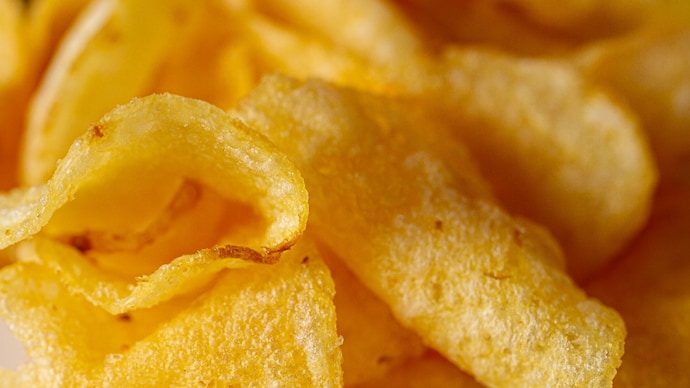
Potatoes are allowed in your Navratri fast. That doesn't make a fried packet of them a good idea.
 Last UpdatedOct 13, 2026 20:00 IST
 Published by
It’s 4 pm on day three of the vrat. You’re hungry, a little tired, and there’s a packet of sendha namak aloo chips on the shelf with “vrat special” printed on it. It feels like the perfect fix. Potatoes are allowed, so how bad can it be?
Quite a lot, it turns out, especially on an almost-empty stomach. Here’s what dietitians say, and how often you can reasonably reach for that packet during Navratri and after it.
WHY CHIPS ARE THE NAVRATRI TRAP?
During the fast, potatoes, sabudana and rock salt are all on the permitted list. Root vegetables like potato, sweet potato and pumpkin are allowed, and sendha namak is the only salt permitted. So fried potato snacks slip through the rules without anyone noticing.
wionews
But “allowed in the vrat” is a religious label, not a health label. It tells you what you may eat, not what’s good for you.
Nutritionist Kiran Kukreja has also flagged that some deep-fried fasting snacks are cooked in low-quality oils, which can be harmful.
THE POTATO ITSELFT IS INNOCENT
A plain potato isn’t junk. As Dt. Divya Jain, Senior Dietician at CK Birla Hospitals, Jaipur, puts it: “Potatoes have carbohydrates, potassium, and a little vitamin C. They begin with how they are prepared.”
The trouble starts after slicing. Thin slices get deep-fried and heavily salted. The result, says Jain, is a snack that is “energy dense, often high in fat and sodium,” and gives you “relatively little fibre or protein to keep us full.”
That last point is the real Navratri problem. When you’re eating small meals, you need food that keeps you full and steady. Chips do the opposite.
Dt. Diyuti Suri, Senior Dietician, Nutrition & Dietetics at the same hospital, says portion size can cancel out every other good choice: even chips made with less oil add up in calories when you eat straight from the packet.
BAKED OR AIR-FRIED VRAT CHIPS? WHAT IS BETTER?
Sometimes, but not automatically. Air-frying uses hot air and much less oil, and baking can cut added fat. But Suri warns that “baked” or “air-fried” on a label doesn’t mean healthy. Packaged baked chips can still be high in fat, calories and sodium. And no cooking method fully removes acrylamide.
Sweet potato chips, a popular vrat swap, aren’t a free pass either. A small Portuguese pilot study found that sweet potato, vegetable, tuber, lentil and corn chips had acrylamide levels similar to or higher than regular potato chips. It was preliminary, with few samples, but it shows that “alternative” doesn’t always mean “safer.”
Homemade is the better bet. Suri says air-fried or baked chips made at home with little oil and salt are generally better than deep-fried ones. Jain adds that homemade wedges aren’t healthier by default if they’re heavily salted or eaten in huge amounts.
WHAT TO EAT INSTEAD OF ALOO CHIPS THIS NAVRATRI
Roasted makhana
If it’s the salty crunch you miss, roasted makhana is the closest thing. Dry-roast it with a spoon of ghee and finish with a pinch of sendha namak. You get the same satisfying bite without a drop of deep-frying, and it’s a vrat staple, so no rules are broken.
Boiled aloo chaat
If it’s the potato you’re craving, boil it and toss it into a chaat with curd, lemon juice and a little rock salt. You skip the frying completely, and the curd adds protein that plain chips never give you. This matters because the research doesn’t say the potato is the villain. A 2022 review says the link between chips and weight gain likely comes from the added fat and calories, not plain potato.
Baked or air-fried sweet potato
Slice sweet potato into thin rounds or wedges, brush with a little oil, and bake or air-fry until golden. This needs far less oil than deep-frying. Cook to golden, not dark brown, since darker, more heavily cooked starchy foods tend to form more acrylamide. Make these at home rather than buying packaged versions. A small Portuguese pilot study found that sweet potato chips had acrylamide levels similar to or higher than regular potato chips, so “sweet potato” on a packet doesn’t automatically mean safer.
Nuts and fruit
A fruit chaat with a pinch of rock salt adds fibre and natural sweetness. This fits what the research found: in studies of long-term weight gain, higher chip intake was linked to more weight gain, while fruit, nuts, vegetables and yogurt were linked to less. A handful is the key word, though. Nuts and ghee are calorie-dense, so portion still matters.
Buttermilk or coconut water
Salty snacks make you thirstier, and many people on a vrat are already drinking too little water. A glass of buttermilk, coconut water or plain water in the evening helps with both hydration and hunger, and it takes the edge off the urge to snack. It’s a small habit, but it’s the one most people skip.

Introvert with a hint of sarcasm.
Vaishnavi has been chasing stories the way most people chase coffee, which means daily, relentlessly, and with an occasional dash of drama. From national infrastructure projects to festive rituals, she writes about everything. Apart from writing, she adores community animals and feeding them gives her a boost of endorphins.
She even bagged the 'Best Article on Animal Welfare' award from the Newspaper Association of India (NAI) which proves that her soft corner for four-legged friends also makes for hard-hitting journalism. She’s equally at home covering politics and pets, development and animal welfare, because why should journalism come in one flavour? Nature is her peace and food is her first love. She is also a follower of biographies.
When she isn’t writing, she’s usually plotting her next article in her head while sipping her cold coffee, binging on spiritual podcasts while driving, or hunting for the perfect metaphor, preferably one that doesn’t involve foods, though food show up often enough at work. She lives by one motto: Be Kind to All Kinds!
READ MORE