
The mask comes off: Nicotine is the enemy that India has to name
In this article, ICMR-NICPR experts, argue that India must focus on nicotine, the substance driving addiction and millions of tobacco-related illnesses.
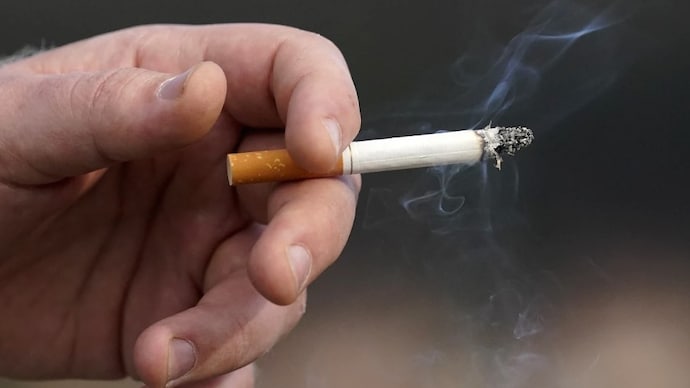

This year’s World No Tobacco Day (WNTD) theme, “Unmasking the appeal: countering nicotine and tobacco addiction”, is not merely a slogan. It is a diagnosis of the malady. For decades, the tobacco industry has hidden its most powerful weapon in plain sight, i.e. hiding nicotine as a substance of concern while tobacco combustion products and carcinogens in them were made to take center stage.
This framing was not accidental. The mask must finally come off, and nowhere is that unmasking more urgent than in India. India is home to approximately 267 million tobacco users, and tobacco kills more than 13 lakh people annually. The single largest cause of these tobacco-related deaths is not due to cancer, but as a result of cardiovascular disease.
Half of all tobacco-attributable deaths (approximately 6.5 lakhs annually) in India stem from CVDs, which are due to the effects of nicotine. Nicotine triggers adrenaline surges/ arrhythmias, constricts blood vessels, promotes endothelial dysfunction, enhances platelet aggregation and atherosclerosis.
These effects of nicotine are not confined to smokers alone: the tens of millions of smokeless tobacco users in India absorb nicotine through the oral mucosa in sustained, high doses with no combustion whatsoever.
Importantly, 26% of tobacco-attributable CVD deaths occur in the 30–44 age group, robbing the country of lives and livelihood of families at the peak of economic contribution.
India’s tobacco landscape is among the world’s most complex — cigarettes, bidis, khaini, gutkha, zarda, hookah, and dozens of regional variants, each with its own industry and political economy.
But beneath this diversity lies a single common thread and that is nicotine. Nicotine is the active substance in tobacco which initiates and perpetuates addiction. In the Ramayana, Ravana could not be vanquished by attacking his many heads or arms; his life force resided in his “nabhi” (navel).
The tobacco epidemic is no different. We have spent decades striking at visible manifestations while nicotine itself has remained untouched and deliberately obscured. Unmasking this appeal requires India to aim, finally, at the nabhi – nicotine.
THE GLOBAL SHIFT TOWARDS NICOTINE CONTROL
The global policy landscape has shifted to make this ambition possible. At the Conference of Parties (COP11) of the World Health Organization Framework Convention on Tobacco Control (WHO FCTC) in Geneva in November 2025, the international community formally endorsed sixteen Forward-Looking Measures under Article 2.1, including birthdate-based sales restrictions, creating a nicotine-free generation, ban on flavouring agents, and the eventual phasing out of commercial sale of tobacco products.
The United Kingdom has already enacted such a generational ban, prohibiting tobacco and vape sales to anyone born on or after 01 January 2009. The Maldives also bring comparable legislation into force in November 2025.
India’s legislative record on tobacco and electronic cigarette control is one of the most progressive legislations in the world. The Prohibition of Electronic Cigarettes Act (PECA), the Cigarettes and Other Tobacco Products Act (COTPA), the National Tobacco Control Programme, and India’s FCTC commitments put together give the government all the tools it needs.
LAWS EXIST, ENFORCEMENT DOES NOT
However, their stringent application and enforcement is the need of the hour. These need to be brought from files into the quotidian real world. A systematic review published in 2025 found a pooled vaping prevalence of 14% in India despite the 2019 ban — levels far higher than pre-ban levels. Weak and inconsistent enforcement was identified as the primary reason for the rising use of vapes.
Many Indian cricketers, actors, and models promote the scourge of “Nicotinism” through surrogate advertisements of nicotine and tobacco products. Films and social media normalise nicotine use, encouraging young audiences to buy these products prohibited by the law. The legal framework to act is already in place.
CLOSING LOOPHOLES AND CRACKING DOWN
Indian law classifies nicotine as a drug under the Drugs and Cosmetics Act, 1940, and several states — including Haryana, Karnataka, and Punjab have notified extracted nicotine as a Class A poison under the Poisons Act of 1919, restricting its sale, possession and distribution.
We must close legal loopholes, hold platforms and celebrities accountable, and equip enforcement agencies to dismantle the grey markets that have made the existing ban a paper tiger. The Juvenile Justice Act can also be invoked where applicable.
Any policy of this ambition and scale must be matched by honest commitment towards the people already addicted. The Global Adult Tobacco Survey (2017–18) found actual quit ratios of only 16.8% among former daily smokers and 5.8% among former daily smokeless tobacco users, a reflection of a system which fails those who want to quit tobacco.
Non-nicotine pharmacological options deserve greater attention and preference – varenicline and bupropion addresses craving and withdrawal through non-nicotinic mechanisms; and cytisine — a plant-derived alkaloid with a long impressive record for tobacco cessation in Eastern Europe, offers comparable efficacy to varenicline at a fraction of the cost.
Utilising this effective drug for tobacco cessation through Ayushman Bharat platforms and primary healthcare centers merits serious consideration.
TIME TO REVISIT NICOTINE REPLACEMENT THERAPY
Tobacco/Nicotine cessation with Nicotine Replacement Therapy (NRT) needs to be revisited. The paradox of using nicotine for treating a disorder which is perpetuated by nicotine itself, becomes more glaring when inexpensive, more effective non-nicotine pharmacological agents with better safety profiles, including Cytisine, are easily available.
These are tried and tested agents for their efficacy. The issue of revisiting NRT has acquired another urgency also in light of a deep conflict of interest as many of the world’s major tobacco companies have reinvented themselves as “health and wellness” companies by acquiring pharmaceutical firms that manufacture tobacco cessation products, including NRTs.
These tobacco companies simultaneously lobby against tobacco control measures. The FCTC’s Article 5.3 obligations apply as much to the cessation market as to advertising or product regulation.
A NICOTINE-FREE GENERATION
The WNTD 2026 theme is ultimately a call to catch the bull by its horns by addressing what nicotine does to the developing adolescent brain, its causative role in nearly half of all tobacco-related deaths, the industry’s calculated use of flavours and marketing to recruit young nicotine users, and the conflict of interest in an industry that profits both from nicotine addiction and its attempted cessation.
India needs to nail down nicotine — loudly and clearly, as the substance initiating, perpetuating and sustaining the nicotine/tobacco epidemic followed by appropriate and effective legal measures. These legal measures need to be updated to encompass synthetic nicotine and nicotine-like substances (Nicotinoids) also, as the existing laws are not applicable to these novel products.
India has the urgency, the epidemiological burden, legislation, the COP11 mandate, and the moral authority to lead more boldly than any other country. The vision of a Viksit Bharat by 2047 necessitates having a generation free not just from tobacco, but also from nicotine and all its “avataars”, which are carefully masked by the smokescreen created by the tobacco industry under the garb of harm reduction and/or tobacco cessation.