


Biju Patnaik: The fighter pilot who defied several empires
BJP MP Nishikant Dubey has ignited a political storm by alleging that former Odisha Chief Minister Biju Patnaik was a "link" between then-Prime Minister Jawaharlal Nehru, the US government, and the CIA. Dubey claimed that the 1962 India-China war was fought with "American money," with Biju Patnaik facilitating this alleged collaboration, and that the Charbatia air base in Odisha hosted US-operated U-2 spy planes and effectively housed the US military from 1963 to 1979.
The remarks triggered sharp backlash: BJD MP Sasmit Patra resigned from the Parliamentary Standing Committee on Communications and IT, calling the allegations "disparaging, false, and concocted," while Naveen Patnaik, Biju’s son, dismissed Dubey’s claim as "outrageous" and suggested he "needs the attention of a mental doctor," underlining that Nehru had given his father an office next to his own in Delhi to coordinate defense strategy during the 1962 war.
But what do records say? Who was the real Biju Patnaik? This is his real story.
THE PILOT WHO DEFIED HITLER
It was the winter of 1942 over Stalingrad. The altimeter read four thousand feet and the Dakota was shaking.
From the dizzying height, visible through frozen clouds, was the most destroyed city on earth: Stalingrad. A six-mile strip of rubble along the western bank of the Volga where a quarter million men of the Wehrmacht's Sixth Army were slowly dying.
In Berlin, Adolf Hitler was in panic.
Surrounded by three Soviet fronts, his men were running out of ammunition, medicine, food, and will to fight.
The battle was shaped by fierce close-quarters combat and bone-chilling aerial raids. It was the single largest and costliest urban battle in military history.
THE MAN IN THE COCKPIT
The Dakota pierced the clouds to emerge over Stalingrad. The man at the controls was twenty-six years old. He was not German. He was not Russian. He was from Cuttack. His name was Bijayananda Patnaik.
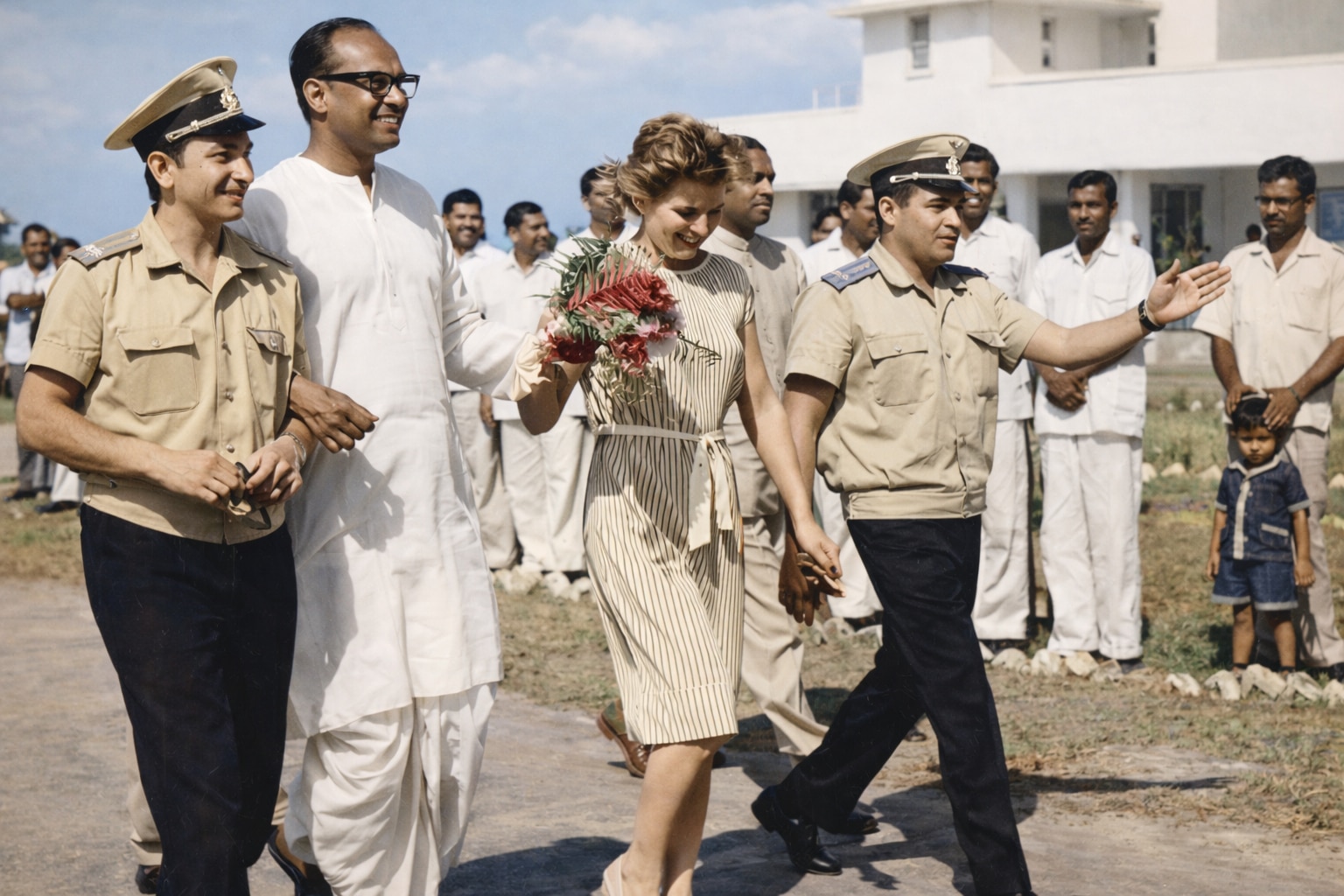
He had been here before. This was not his first approach into the battle zone. According to the scholarly record compiled by Himansu S Patnaik, the young pilot flew 27 sorties to Stalingrad to supply reinforcements to the Nazi-blockaded Soviet troops. (Biju Patnaik and Making of Modern India; KISS University Press).
The skies over Stalingrad in the winter of 1942 were the most dangerous airspace on the planet. The Luftwaffe was flying sorties from bases at Tatsinskaya and Morozovskaya to the German pocket. Soviet fighters were hunting those same corridors. Anti-aircraft batteries from both sides turned the sky into a killing zone. Strong frost, Soviet artillery fire and constant fog complicated everything. Most pilots weren't ready to serve in such conditions and see that frightful and desperate situation. The Luftwaffe itself lost 488 transport aircraft in the Stalingrad airlift, including 266 Ju 52s, with over a thousand pilots and aircrew killed or captured.
Biju Patnaik came back several times from this hell fire.
The Dakota banned, identified the drop zone through the smoke, and made its run. Weapons and supplies tumbled from the cargo bay into the hands of the Red Army below. Then the aircraft climbed back out of the hell over the Volga, turned east, and flew home.
The Soviet Union awarded him the Jubilee Medal for the Great Patriotic War. Fifty years later, the Russian Ambassador to India would read aloud at a formal ceremony in New Delhi: "Among the heroes we pay tribute to is your (Naveen Patnaik’s) late father, Biju Patnaik ji, a towering personality and a valiant pilot who participated in the Stalingrad Operation, supplying weapons to the besieged Red Army."
But in 1942, Stalingrad was only half the story. The other half was happening inside the same aircraft, over India.
THE PILOT WHO BETRAYED THE BRITISH
In 1942, Biju Patnaik was playing a dangerous game. He was flying combat supply missions to Stalingrad as an officer of the Royal Indian Air Force. He was simultaneously, by the record of the KISS paper, Lord Wavell's personal pilot. Lord Archibald Wavell was the Viceroy of India, Commander-in-Chief of the Allied forces in the Indian theatre of the war. Biju flew Wavell from Delhi to Calcutta, from Calcutta to Simla, from Simla to Rawalpindi, across the vast geography of the Raj.
In the front of the aircraft sat the Viceroy of India. In the back, on certain flights, sat the men the Viceroy would have hanged.
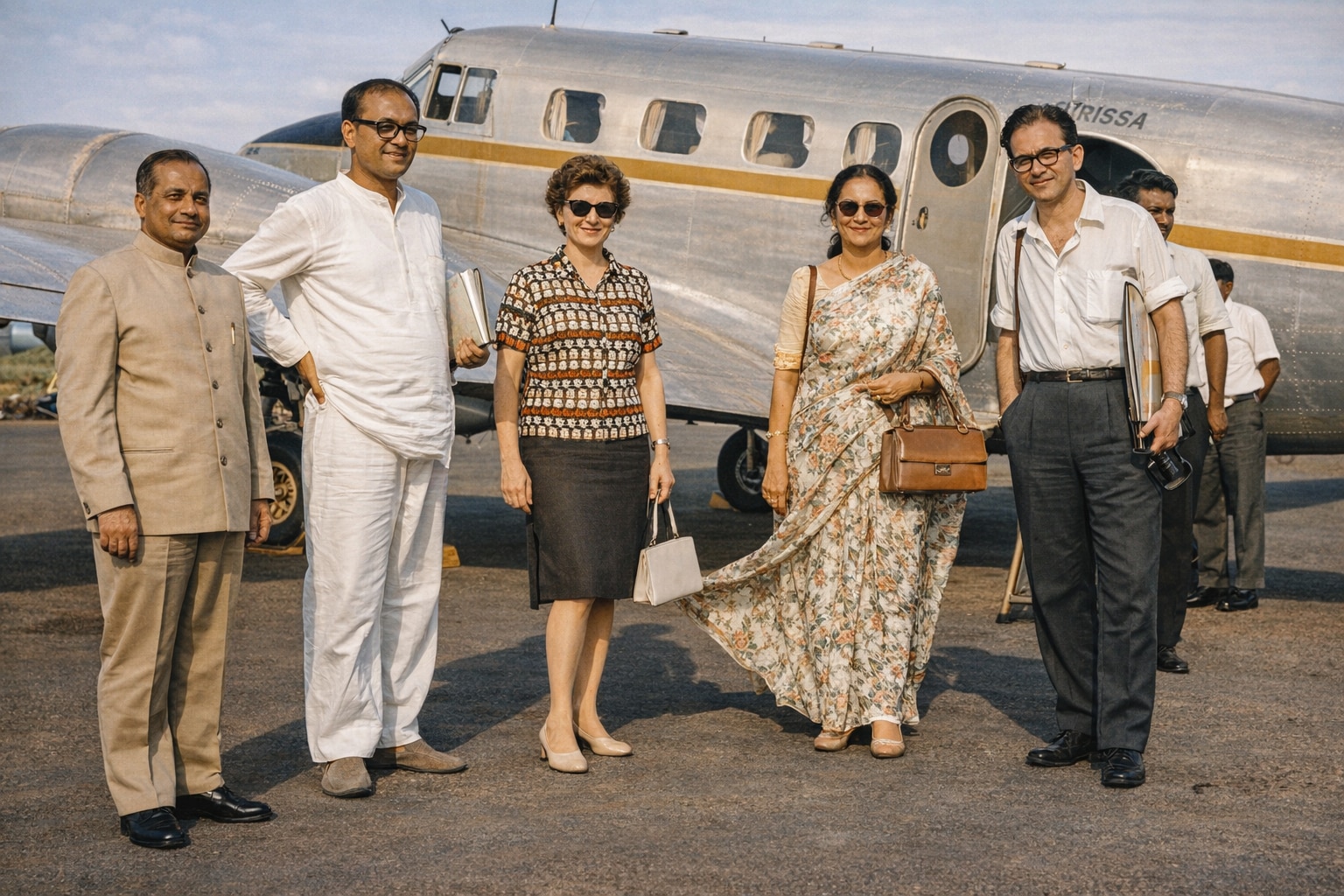
According to Dr Pabak Kanungo, Gandhian scholar and noted historian: "While flying over Indian soldiers under the British Command, he dropped bags of Gandhi's 'Quit India' leaflets to them. While flying the British to safety from Yangon, he also air-dropped leaflets supporting the cause of Netaji's Indian National Army."
He gave freedom fighters shelter and helped them escape by ferrying them to safe locations and to areas where they spread nationalist feelings among the people. Jayaprakash Narayan was underground, moving between safehouses across India. Ram Manohar Lohia was being hunted. Aruna Asaf Ali, the woman who had raised the Congress flag at Gowalia Tank Maidan during the Quit India Movement, was on the run. The Intelligence Bureau of the British Indian government tracked her movements with the painstaking diligence of men who knew how dangerous she was.
Biju Patnaik flew them. The IB document of 1945, made public by Prime Minister Narendra Modi on Biju's 104th birth anniversary, records one instance with bureaucratic precision: the note states that Patnaik "misused" his position as pilot by "surreptitiously flying Lohia (then underground) from Delhi to Calcutta."
The British figured it out eventually. Biju recalled it himself later: “When the British authorities found out, they nearly got me shot for subversive activities. That was the time I was put behind bars during the Quit India Movement.” He was arrested on January 13, 1943, and sentenced to two years imprisonment in Firozpur Fort Jail.
Consider the arc of his flight. A man who had been flying supply missions through Luftwaffe fire to keep Soviet troops alive at Stalingrad, a pilot flying for the Allied cause, for the survival of a country not his own, in conditions that were killing German and Soviet pilots by the hundreds, was now in a British jail in Punjab. He had served two empires faithfully and betrayed one of them deliberately, for a third cause: the freedom of his own country.
And, he was not even 30-years old.
THE PILOT WHO WANTED TO PRINT CURRENCY
In jail, his body weakened but his mind did not stop. His daughter Gita Mehta wrote in her memoir essay Mo Bapa: “While in jail, my father was thinking of ways to oust the British from India. Then he decided to become owner of a textile mill, because these units required the same colour and chemicals as are used to make currency notes.” He planned to print counterfeit British Indian currency and flood the market to destabilise British economic control. The scheme was visionary, criminal, and entirely characteristic.
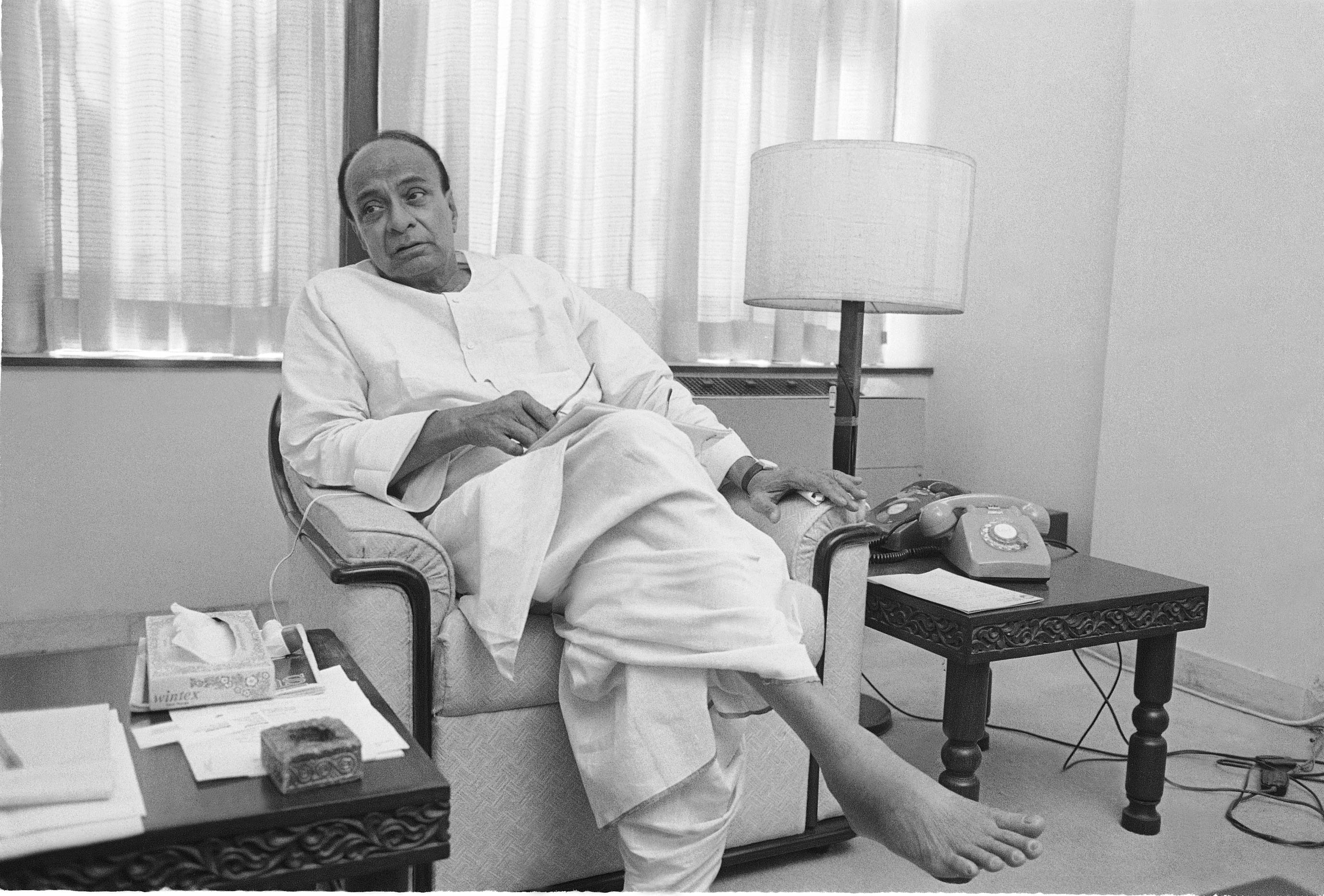
How wife Gyan Patnaik, the first Indian woman to receive a commercial pilot's licence, had her own kind of courage. She would visit carrying secret messages hidden in the shoes of their young children who came along with her.
He was released in 1945, and immediately went back to the sky.
1947: MISSION IMPOSSIBLE
On August 17, 1945, two days after Japan surrendered, Indonesia declared independence. The Dutch, who had colonised the archipelago for three hundred years, had other plans.
In July 1947, the Dutch launched Operation Product, a full military assault to re-establish colonial rule. The KISS paper records the opening move precisely: “By first light, approximately 5 AM local time, two Mustang planes of the Dutch bombarded the airfield of Maguwo on Java Island.” President Sukarno was under house arrest. The Dutch had sealed every sea and air route in and out of the archipelago.
Jawaharlal Nehru viewed Indonesian independence as inseparable from the entire Asian liberation struggle. He had India's own independence ceremony coming in less than a month. He picked up the telephone and called Biju Patnaik.
Biju took a Dakota, took his wife Gyan, 14 days after the birth of their son, and flew toward Singapore. The Dutch were waiting. They sent a message: turn back or we will shoot you down.
His reply has been in Indonesian national memory ever since: “Resurgent India does not recognise Dutch colonial sovereignty over the Indonesian people. If my aircraft is shot down, every Dutch plane flying across the Indian skies will be shot down in retaliation.”
He force-landed his Dakota on a Java paddy field feinting the Dutch, waited before taking off, and flew out Indonesian Vice-President Md Hatta and Prime Minister Sutan Sjahrir and landed in Delhi!
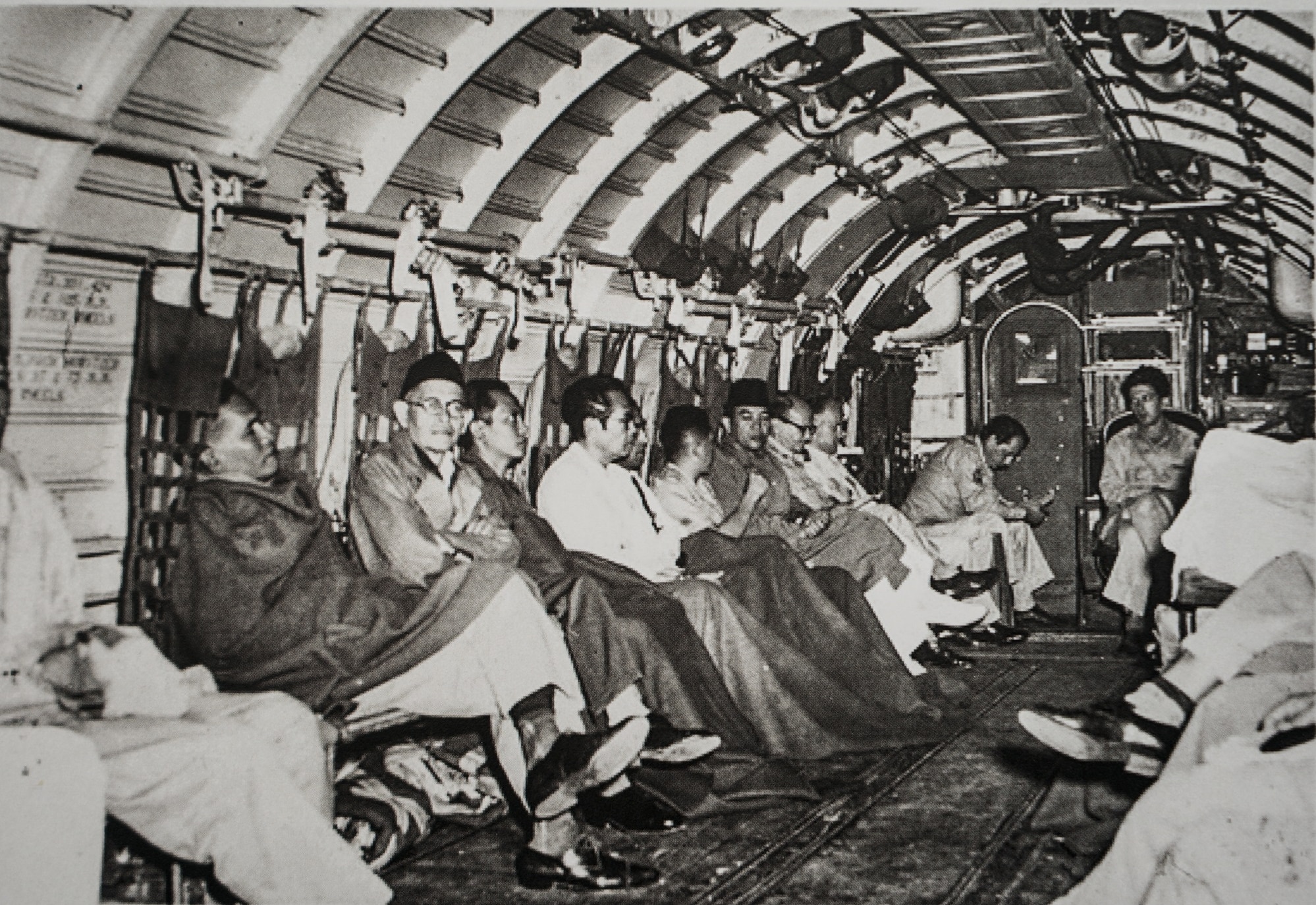
On July 24, 1947, Sjahrir and Hatta held a press conference in Delhi. Nehru backed them publicly. India and Australia brought a resolution to the United Nations Security Council condemning Dutch aggression. Indonesia's independence was secured. The Dutch began their withdrawal.
Sukarno, grateful beyond any formal protocol, asked Biju and Gyan to name his newborn daughter. They chose Megawati (Daughter of the Clouds). She became Indonesia's first female President.
In 1995, a grateful Indonesian government of General Suharto rewarded that feat by bestowing on him Indonesia's highest honour, Bintang Jasa Utama, in Jakarta. “I'm happy to have been of some use and it's nice of them to have remembered me,” said Biju. (The Hero in Winter, India Today, 15 Sept. 1995)
The Indonesian Embassy in New Delhi today has a room dedicated to Bijayananda Patnaik, its walls covered in his photographs and the correspondence of heads of state.
When he died in 1997, Indonesia declared seven days of state mourning.
KASHMIR: THE AIRSTRIP AT DAWN
Three months after Indonesia. Three months after India's own independence. October 27, 1947, before sunrise.
Pakistani tribal lashkars, tens of thousands of them, backed by regular army officers under Operation Gulmarg, had moved through Muzaffarabad, Uri, and Baramulla. They were nine kilometres from the Srinagar airstrip. The roads were blocked. The Mahura power station had been destroyed. Maharaja Hari Singh Dogra had fled to Jammu. Srinagar was dark and the raiders were close enough to hear.
The Instrument of Accession had been signed the previous day. Kashmir was legally Indian territory. But legality is worth nothing if no one can reach it. Even the Srinagar airstrip was in danger of being imminently occupied by the raiders, in which case even that only possibility of airlifting troops would close.
Nehru called Biju. The KISS paper documents that Nehru had already installed Biju as a formal Defence Advisor with his own room in the ministry. He was inside the system, and he was trusted absolutely.
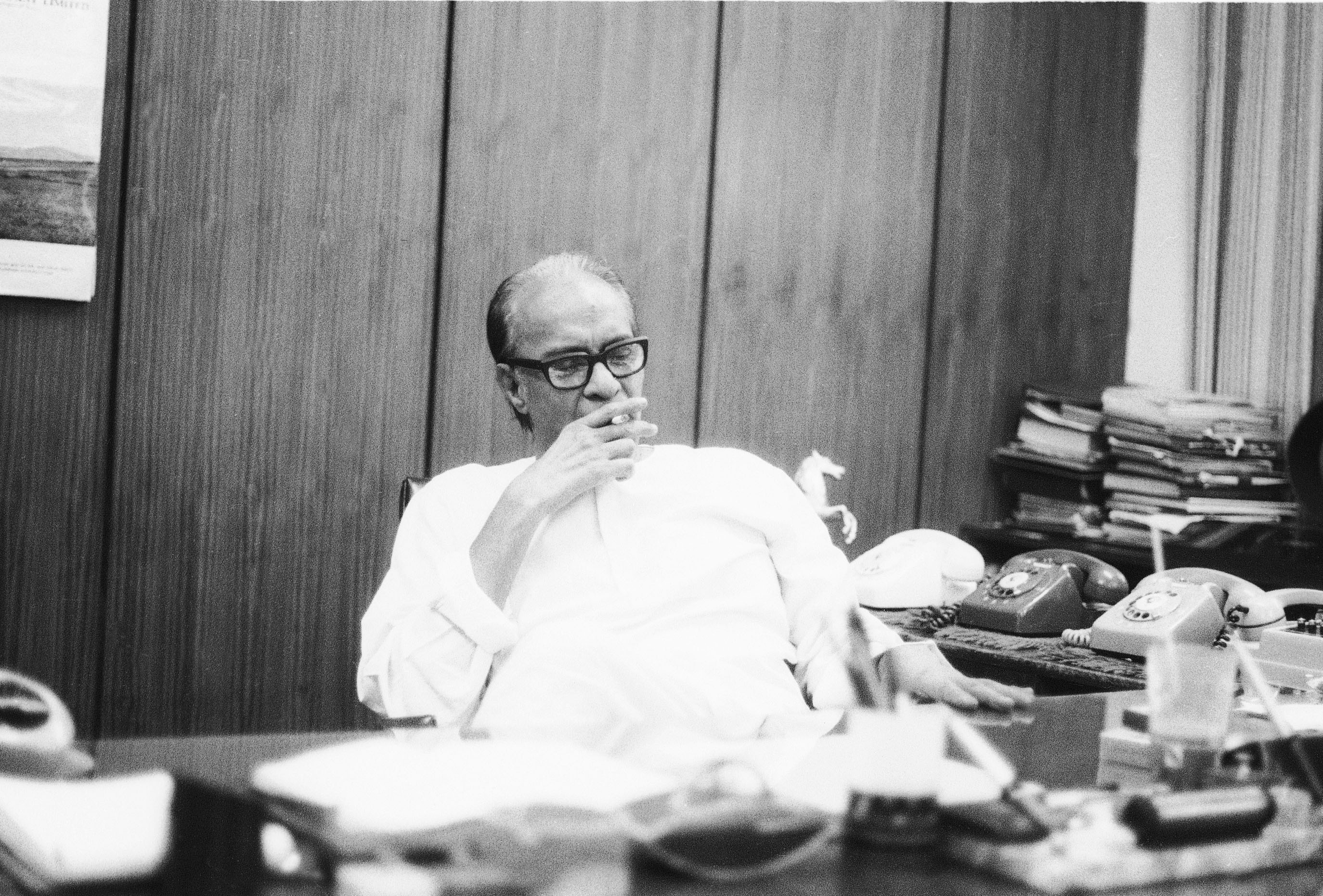
Indian Dakotas flew over the Pir Panjal range and came down toward Srinagar at first light. Seventeen soldiers of the 1st Sikh Regiment under Lt Col Dewan Ranjit Rai stepped onto Kashmiri soil. They were the first Indian troops in Kashmir. Rai was killed in battle the next day. But those seventeen men, and the hundreds who followed on subsequent sorties, held the airstrip, held Srinagar, held the valley. Among the pilots who flew into Srinagar was Biju Patnaik.
Then Biju did something that mattered as much as the flight itself. The IAF had a handful of aircraft. Biju had sixteen Dakotas in his Kalinga Airlines fleet. All of them now pressed into service, flying soldiers, guns and supplies over the Pir Panjal day after day through the winter when every road in the valley was closed.
Biju had won. Not with a gun but with a throttle.
POLITICS: THE FINAL FRONTIER
Biju entered the Odisha Legislative Assembly for the first time in 1946, elected unopposed from North Cuttack. He was thirty years old.Â
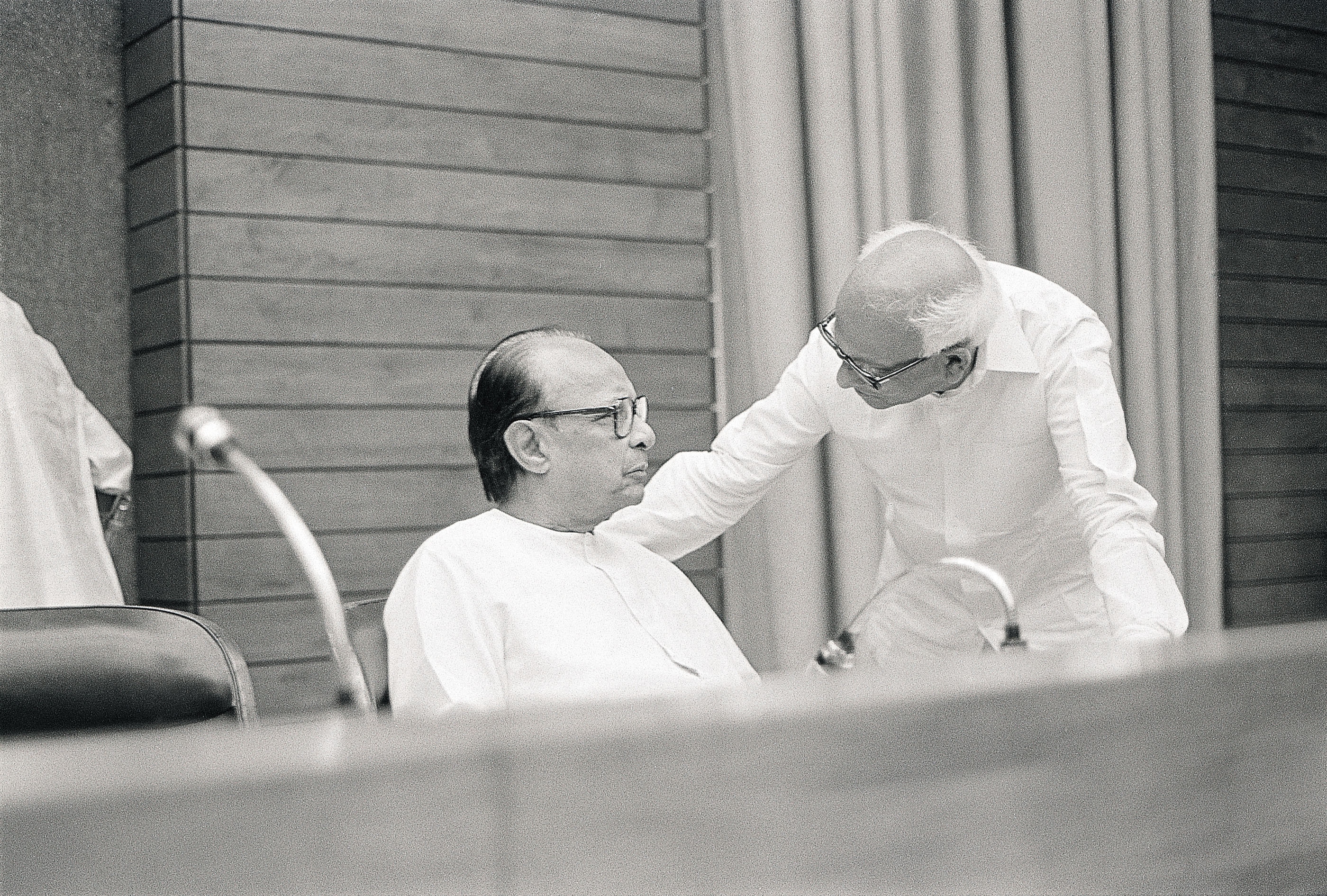
He became Chief Minister of Odisha in 1961, aged 45, the youngest in the state's history. He built Paradip Port, the Rourkela Steel Plant, the HAL factory at Sunabeda, Balimela Hydro, the airport at Bhubaneswar.
The Kalinga Sandh (the Bull of Kalinga) had a remarkable run of five decades in public life. He worked with Nehru and, later, with Indira Gandhi ("Out of affection for her father," he said). The two, however, fell out when Biju could not tolerate what he calls her “autocratic” ways. The parting caused him immense political hardship. (India Today).
When he died on April 17, 1997, three flags were draped over his body: India's, Indonesia's and Russia's. His tailor in Cuttack, Subash Padhi, who stitched his white kurtas for twenty-four years, was asked to describe the man he had measured hundreds of times. He said: “Biju Patnaik was a very tall man. He had a 56-inch chest, a 27-inch shoulder, a 22-inch neck, and a 14-inch wrist. I've never seen such a gigantic figure.”
The measurement fitted the man.

Please rotate your device
We don't support landscape mode yet. Please go back to portrait mode for the best experience