
INDIA bloc's united front amid SIR row, announces 'Save Democracy' march from Oct 2

The INDIA bloc is set to intensify its fight against the BJP and SIR, outlining six demands including a march to the Election Commission, rallies, a bid to meet President Droupadi Murmu over concerns about institutions, faster Supreme Court hearings on SIR cases and action against CEC Gyanesh Kumar.
 Last UpdatedSep 30, 2026 15:22 IST
 Published byWritten ByShipra Parashar
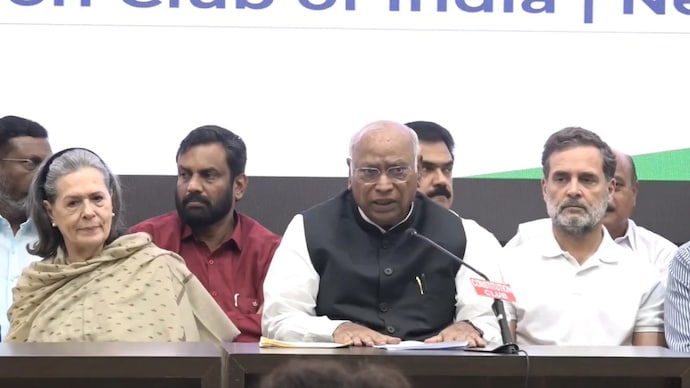
The INDIA bloc on Wednesday sought to put up a united front in its fight against the BJP and the Election Commission, with Congress president Mallikarjun Kharge, Leader of Opposition Rahul Gandhi and Mamata Banerjee stressing that the Opposition must stand together, while Gandhi said its leaders were “collective defenders” of India’s Constitution who would bring “serious changes” to the country.
The show of unity came at a joint press briefing after the INDIA bloc meeting in Delhi, where Opposition parties announced a week-long ‘Save Democracy’ campaign from October 2 to 8 amid the row over the Special Intensive Revision (SIR) of electoral rolls and their demands for Gyanesh Kumar's resignation in the light of recent reports of dissent in EC.
During the event, Congress president Mallikarjun Kharge announced protests at district headquarters from October 2 to 8. On October 6, all Opposition MPs will march to the Election Commission, he said.
The Opposition will then take its concerns to the President, with leaders seeking an appointment with Droupadi Murmu in the second week of October to raise what Kharge described as the manner in which institutions are being “taken over”.
“All the parties spoke about fighting this battle unitedly,” Kharge said at a joint press briefing after the meeting.
The Congress president said the Opposition would seek the expedition of all cases related to SIR and other alleged electoral malpractices in the Supreme Court. He also announced plans for five major rallies in October and November to raise the “vote chori” issue across the country.
Kharge also alleged that two or three individuals within the Election Commission were being used as “pawns”, and accused Prime Minister Narendra Modi and Union Home Minister Amit Shah of manipulating them “like puppets”.
After Kharge laid out the Opposition’s protest programme, Gandhi said the INDIA bloc leaders were personally committed to taking forward the fight against what he described as the destruction of Indian democracy.
“It is the personal commitment of all INDIA leaders that we are going to ensure that the people who have destroyed Indian democracy are punished,” Gandhi said, stressing that the fight was bigger than any individual political leader.
“It doesn’t matter how senior they are, who they are; Indian democracy is bigger than every single person in this country,” he said.
Gandhi also said Opposition leaders felt they had been successful in communicating their allegations of “elections being stolen” to people, pointing to what he described as a growing sense of resistance, particularly among young people.
“There was also a feeling in the room that the opposition has been quite successful in putting a cross to the people of India that elections are stolen, that Narendra Modi and Amit Shah have destroyed democracy,” he said, adding that there was “a new sense of resistance” among young people who believe that “what is going on in India is wrong and needs to be stopped”.
Mamata, meanwhile, stepped up her attack on the Election Commission and demanded Gyanesh Kumar’s immediate resignation and warned that the agitation would be escalated if he did not step down.
“INDIA alliance is united and stands together against this ‘big scam’ of ‘vote chori’,” Mamata All India Trinamool Congress chief Mamata Banerjee said after the meeting.
The comments come in the wake of The Indian Express report last week, which said Election Commissioners Sukhbir Singh Sandhu and Vivek Joshi had formally recorded their objections 14 times over 10 months to decisions and orders concerning the SIR process under Gyanesh Kumar.
According to the report, the objections related to several key aspects of the exercise, including the rapid centralisation of the ECINet electoral roll database platform, unilateral changes to the new voter registration Form 6 and decisions on the deletion of names from voter lists during the SIR process.