
Centre clears Rs 40,000 crore to build 8 next-gen stealth ships for Indian Navy

The CCS has cleared a project to build eight next-generation corvettes for the Indian Navy. The indigenous warship programme will strengthen maritime capabilities and support domestic defence manufacturing.
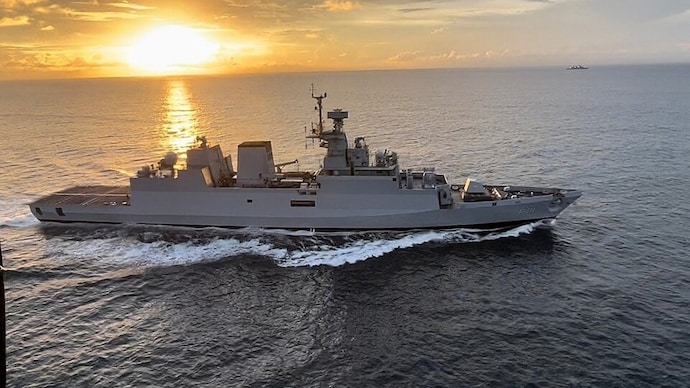


The Centre has approved a project worth over Rs 40,000 crore to build eight Next-Generation Corvettes (NGCs) for the Indian Navy. Sources said it is the first mega defence project to have received clearance at the highest level in recent times. The warships will be constructed by two state-owned shipyards, Garden Reach Shipbuilders and Engineers (GRSE) in Kolkata and Goa Shipyard Limited (GSL).
The Cabinet Committee on Security (CCS), chaired by Prime Minister Narendra Modi, cleared the project on Wednesday. The contract for the eight warships is expected to be signed with the two shipyards in the next few days.
The project is expected to strengthen the Navy's surface fleet while giving a significant push to indigenous warship manufacturing.
WHAT MAKES THE NEXT-GENERATION CORVETTES SPECIAL
Let's understand what corvettes are. These are basically small, fast, heavily armed warships used mainly for coastal defence, surveillance and patrol. They are smaller than frigates and destroyers but can carry a range of weapons and sensors.
The eight Next-Generation Corvettes to be built for the Indian Navy will be 2,000-tonne high-speed surface combatants, with a speed of around 30 knots. They will feature an entirely new stealth design developed in-house by the Indian Navy, using advanced shipbuilding technologies.
Designed as highly adaptable, multi-role platforms, the warships will be capable of carrying out a range of maritime security missions, including anti-surface, anti-submarine and anti-air warfare.
The stealth features, advanced weapons and sensors, and high manoeuvrability are expected to enhance the Navy's operational capabilities.
OVER 70% INDIGENOUS CONTENT
The project will have more than 70 per cent indigenous content, in line with the government's Atmanirbhar Bharat initiative and its push to strengthen domestic defence manufacturing.
The construction of all eight warships in India will also further the government's SAGAR (Security and Growth for All in the Region) vision.
The Rs 40,000-crore-plus order will be shared between GRSE in Kolkata and Goa Shipyard Limited in Goa. It is expected to provide the two shipyards with long-term order book visibility and generate thousands of direct and indirect employment opportunities across the MSME ecosystem.
FIRST CORVETTE EXPECTED BY 2030
The construction of the first corvette is expected to begin within a year. The first vessel is targeted for delivery by 2030.
The project comes as the Indian Navy continues to modernise its fleet to address growing maritime security challenges in the Indian Ocean Region, particularly amid an increased Chinese presence.
The latest clearance adds to the Navy's ongoing warship-building programme, which includes Nilgiri-class frigates, next-generation destroyers and fleet support ships.

Born in Pauri district of Uttarakhand, Manjeet Negi did his early schooling from his village school near Rishikesh and then moved to the town for secondary education. Later, he did his graduation from Hemavati Nandan Bahuguna University. In the year 2000, he did his journalism diploma from Kurukshetra University and started his career with Doordarshan News and started reporting on defence forces from the 2001 Bhuj earthquake. In his career as a defence correspondent, Negi has had the opportunity to report exclusives from world's highest battlefield Siachen Glacier in the north to the Andamans in the South and from the Rann of Kutch in the west to the Arunachal Pradesh border with China in the East.
A regular news-breaker on matters of national security and military affairs, Negi considers the coverage of he Kedarnath tragedy of 2013 as the highest point of his career. During the grave disaster at Kedarnath in June 2013, Manjeet Negi was the first and only TV reporter who walked for 55 Kms on the hilly track to reach the Kedarnath shrine. Spending his first night in the complex amidst several hundred dead bodies around him, Negi says he saw Lord Kedar in his dream. After the Kedarnath disaster, the writer got another opportunity to cover another disaster in the Nepal earthquake in 2015 for the Aaj Tak channel. During the reporting of that disaster for about 10 days, the writer got an opportunity to witness and report the large scale relief and rescue operations undertaken by the Indian Army and the Indian Air Force.
Besides reporting, he is also a skilled mountaineer. With Nehru Institute of Mountaineering and Garhwal Regiment, he has undertaken mountaineering expedition to Satopanth via Gomukh. Accompanying the Mount Manaslu mountaineering expedition of a Garhwal Regiment unit, he also reported about the expedition. He has also scaled the Dronagiri mountain near Joshimath in Uttarakhand. Manjeet Negi has also been honoured with a special award by the Union Home Minister, Shri Rajnath Singh for his reporting of Kedarnath disaster. He was awarded the best reporter award for his coverage of Nepal earthquake by India Today Group. At present, the writer has been working as Editor with Aajtak Channel of India Today Group.
READ MORE