
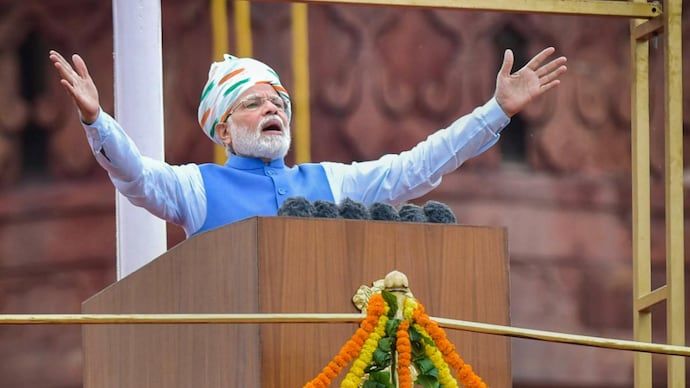
10 key takeaways of PM Modi's Independence Day speech

The prime minister lay emphasis on nari shakti, the end of the 'ghulami' culture and spoke fiercely against corruption as he addressed the nation from the Red Fort.
 Last UpdatedAug 15, 2022 17:25 IST
 Published by
Leading the country in celebrating 75 years of India’s independence, Prime Minister Narendra Modi laid out the resolve to build a stronger and aspirational India with a pledge to make India a developed country in 25 years for the centenary celebrations.
The prime minister lay emphasis on nari shakti, the end of the ‘ghulami’ culture and spoke fiercely against corruption as he addressed the nation from the Red Fort.
READ | What really is a developed country? What India needs in coming decades?
Here are the 10 key takeaways from PM Modi's Independence Day address:
1) Focus on ‘amrit kaal’, a coming of age moment for India at 75
2) Emphasis on yuva shakti and building an aspirational India, driven by the power of technology
3) Nari Shakti: Empowering women as a key element in nation building
4) ‘Panch pran’ or five pledges to build a stronger India in the next 25 years, with a focus on citizens’ duties and not just fundamental rights
5) Ending the culture of ‘ghulami’, building unity with integrity, respecting diversity, and preserving heritage - the building blocks of an Aatmanirbhar Bharat
6) Fierce attack on corruption and seeking the people’s support in the fight against corruption. The message was aimed at his political opponents who have been accused of corruption
7) Attack on ‘parivarvaad’ or nepotism in a clear attempt to target the family politics in the Congress and other regional parties
8) Setting a template for India as a developed nation over the next 25 years
9) Staying away from giving a report card on the economy or job creation or announcing any new and mega schemes or commenting on the unmet promises, like doubling the incomes of farmers
10) Paying tribute to freedom fighters and nation builders and saluting the spirit of adivasi freedom fighters
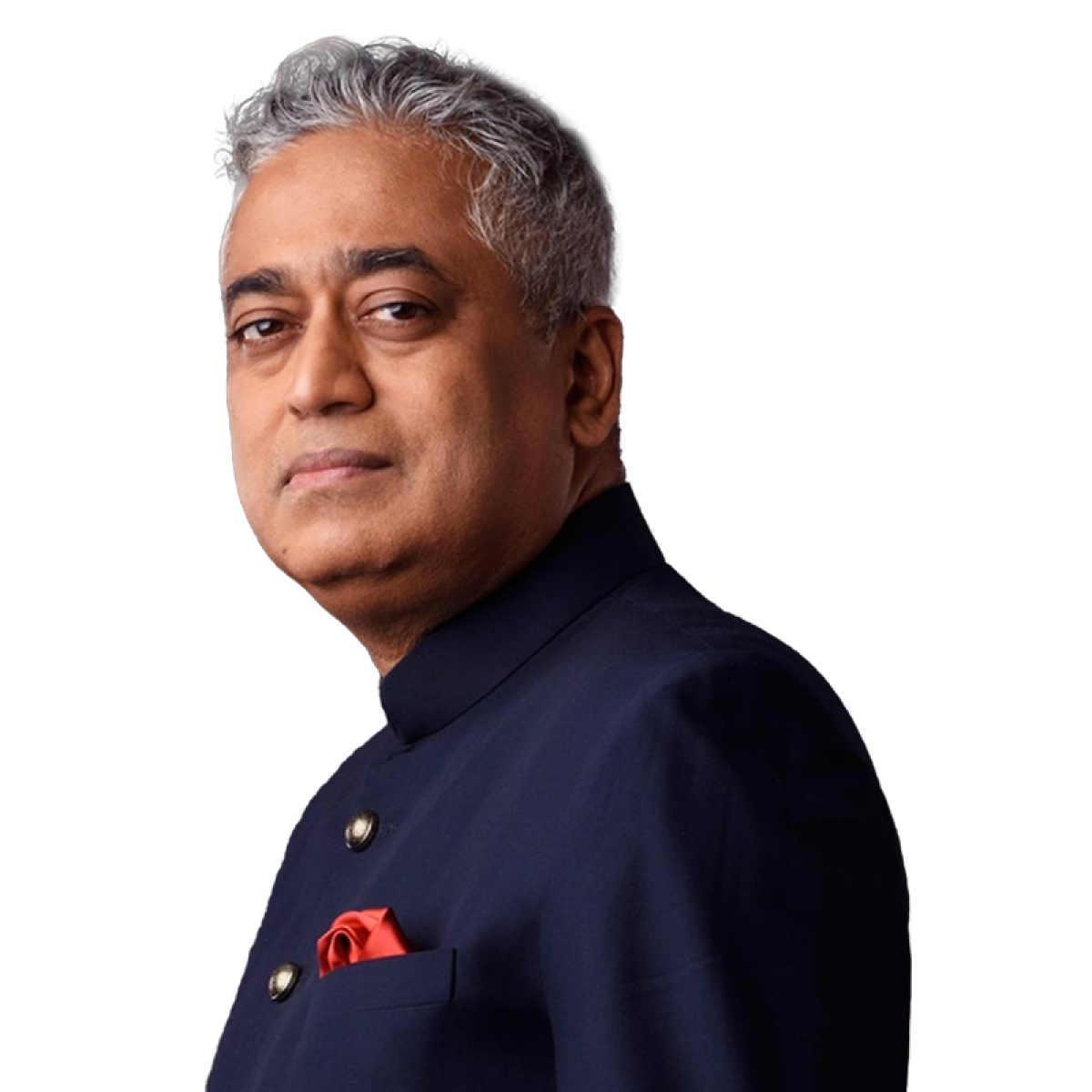
Rajdeep Sardesai is a senior journalist and author of the best-selling book, '2014: The Election that Changed India'. With 26 years of journalistic experience in print and TV, Sardesai was managing editor of the NDTV network before he set up the IBN 18 network with channels like CNN IBN as founder editor. He began his career with the Times of India and was the city editor of its Mumbai edition at the age of 26. He is presently a consulting editor with the India Today Group and anchors a prime time show on India Today.
Specialising in national politics, Sardesai has won numerous awards for journalistic excellence including the prestigious Padma Shri for Journalism in 2008, the International Broadcasters Award for coverage of the 2002 Gujarat riots, and the Ramnath Goenka Excellence in Journalism Award for 2007. He has also won the Asian Television Awards 2014 for Best News Presenter in Asia for the coverage of the 2014 general elections. He has been News Anchor of the Year at the Indian Television Academy for eight of the last ten years and his programme Big Fight won the Asian TV award for best talk show twice in a row. He has been the President of the Editors Guild of India and was also chosen as a Global Leader for Tomorrow by the World Economic Forum in 2000. Sardesai writes a fortnightly column across several newspapers, including the Hindustan Times.
An Oxford blue at cricket, he completed his Masters and LLB from Oxford University after graduating in economics from St. Xavier's College in Mumbai.
Show's link: News Today
READ MORE