
Newly-proposed rocket forces may get 1,500 km range ballistic missiles

The decision to create a rocket force is aimed at strengthening India's medium-range striking capability, a feature already possessed by neighbouring countries Pakistan and China.
 Last UpdatedNov 5, 2023 21:44 IST
 Published by
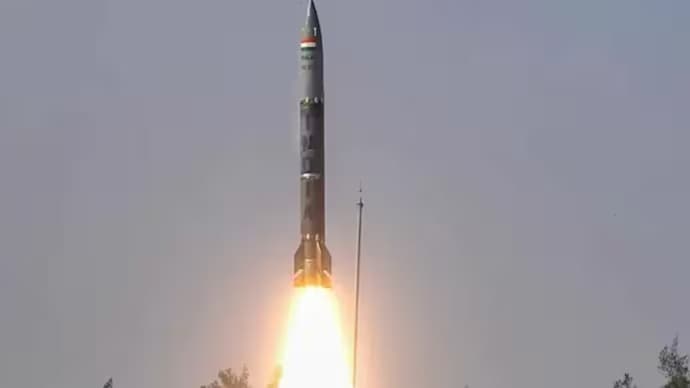
The Indian defence forces are considering the induction of ballistic missiles with ranges around 1,500 km as part of their newly proposed rocket force. This development comes in the wake of the Defence Ministry's recent clearance for the acquisition of Pralay ballistic missiles.Â
The forces may select from the existing fleet of ballistic missiles in the strategic forces for conventional use, top government sources told India Today TV.
The decision to create a rocket force is aimed at strengthening India's medium-range striking capability, a feature already possessed by neighbouring countries Pakistan and China.
As per the authorities, the Pralay missiles, which are currently being mass-produced, are expected to be ready for operational service soon.
These missiles, powered by a solid-propellant rocket motor and equipped with other novel technologies, have a range of 150 to 500 kilometres. The rocket force project would provide a significant boost to the armed forces' efforts to develop a strategic rocket force, as advocated by the late Chief of Defence Staff, General Bipin Rawat.
His vision was recently echoed by Navy chief Admiral R Hari Kumar, who stated that General Rawat had been working on the creation of a rocket force to counter border threats.
The missile guidance system includes state-of-the-art navigation and integrated avionics.
"Pralay is a quasi-ballistic surface-to-surface missile. The advanced missile has been developed in a way to be able to defeat interceptor missiles. It has the ability to change its path after covering a certain range midair," sources said.

Born in Pauri district of Uttarakhand, Manjeet Negi did his early schooling from his village school near Rishikesh and then moved to the town for secondary education. Later, he did his graduation from Hemavati Nandan Bahuguna University. In the year 2000, he did his journalism diploma from Kurukshetra University and started his career with Doordarshan News and started reporting on defence forces from the 2001 Bhuj earthquake. In his career as a defence correspondent, Negi has had the opportunity to report exclusives from world's highest battlefield Siachen Glacier in the north to the Andamans in the South and from the Rann of Kutch in the west to the Arunachal Pradesh border with China in the East.
A regular news-breaker on matters of national security and military affairs, Negi considers the coverage of he Kedarnath tragedy of 2013 as the highest point of his career. During the grave disaster at Kedarnath in June 2013, Manjeet Negi was the first and only TV reporter who walked for 55 Kms on the hilly track to reach the Kedarnath shrine. Spending his first night in the complex amidst several hundred dead bodies around him, Negi says he saw Lord Kedar in his dream. After the Kedarnath disaster, the writer got another opportunity to cover another disaster in the Nepal earthquake in 2015 for the Aaj Tak channel. During the reporting of that disaster for about 10 days, the writer got an opportunity to witness and report the large scale relief and rescue operations undertaken by the Indian Army and the Indian Air Force.
Besides reporting, he is also a skilled mountaineer. With Nehru Institute of Mountaineering and Garhwal Regiment, he has undertaken mountaineering expedition to Satopanth via Gomukh. Accompanying the Mount Manaslu mountaineering expedition of a Garhwal Regiment unit, he also reported about the expedition. He has also scaled the Dronagiri mountain near Joshimath in Uttarakhand. Manjeet Negi has also been honoured with a special award by the Union Home Minister, Shri Rajnath Singh for his reporting of Kedarnath disaster. He was awarded the best reporter award for his coverage of Nepal earthquake by India Today Group. At present, the writer has been working as Editor with Aajtak Channel of India Today Group.
READ MORE