
Pakistan deploys air defence, artillery units near Rajasthan border: Sources

These exercises started on April 29 and are seeing the participation of the Saab airborne early warning and control systems aircraft.
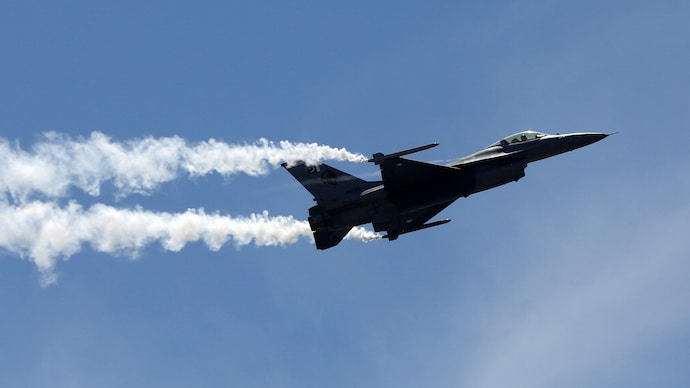


Amid heightened fears of Indian military retaliation in response to the Pahalgam terror attack, which left 26 people dead, Pakistan is leaving no stone unturned in keeping up with the required level of air defence deployment to be prepared for any eventuality.
The Pakistan Air Force is carrying out three exercises at a time, including the Fiza-e-Badr, Lalkar-e-Momin and Zarb-e-Haidari, which includes all the major fighter aircraft fleets including the F-16, J-10 and JF-17, sources told India Today.
These exercises started on April 29 and are seeing the participation of the Saab airborne early warning and control systems aircraft.
The Pakistan Army Strike Corps elements are also carrying out training in their areas of responsibility, they said.
Pakistani forces have been put on a high alert after Prime Minister Narendra Modi allowed the Indian Armed forces the operational freedom to act in retaliation to the April 22 attack, orchestrated by Pakistani-backed terrorists.
On the other hand, the Pakistani military has also deployed the Airport Security Force for protection of ground assets and peripheral security of the air bases.
The SH-15 howitzers from China continue to be inducted into the Pakistan Army and the units are being deployed in forward locations.
The Pakistani military continued building up on the border with India by deploying air defence and artillery units to forward locations. Sophisticated radar systems and air defence weapons systems have been deployed near the Longewala sector in Rajasthan's Barmer, sources told India Today.
Pakistan has also started mobilising its Army along its border with India and has kept its Navy on standby as tensions between the two countries continue to rise, sources said.
The heightened movement of Pakistani forces assumes significance after their Information Minister Attaullah Tarar claimed that the country had received "credible intelligence", indicating India may carry out a military strike within the next 24 to 36 hours.
The Pakistani army is also moving its radar systems to forward locations in the Sialkot sector to detect possible Indian airstrikes. Electronic warfare detachments of the Pakistani army are also being deployed to forward locations to detect Indian movements opposite the Ferozepur sector.
PAHALGAM ATTACK AFTERMATH
Diplomatic reltations between India and Pakistan have nosedived and tensions have been high after the Pahalgam terrorist attack, which was claimed by The Resistance Force (TRF), an offshoot of the banned Pakistani terrorist group, Lashkar-e-Taiba (LeT).
In response, India has taken a set of measures, including suspending the Indus Waters Treaty, banning Pakistani nationals in India, downsizing staff at diplomatic missions, and closing its airspace for Pakistani flights, among others.
Pakistan, on its part, has called off the 1971 Shimla pact, and closed down its airspace for Indian flights. Pakistan has denied any involvement in the Pahalgam attack, calling for a third-party investigation into the incident.

Born in Pauri district of Uttarakhand, Manjeet Negi did his early schooling from his village school near Rishikesh and then moved to the town for secondary education. Later, he did his graduation from Hemavati Nandan Bahuguna University. In the year 2000, he did his journalism diploma from Kurukshetra University and started his career with Doordarshan News and started reporting on defence forces from the 2001 Bhuj earthquake. In his career as a defence correspondent, Negi has had the opportunity to report exclusives from world's highest battlefield Siachen Glacier in the north to the Andamans in the South and from the Rann of Kutch in the west to the Arunachal Pradesh border with China in the East.
A regular news-breaker on matters of national security and military affairs, Negi considers the coverage of he Kedarnath tragedy of 2013 as the highest point of his career. During the grave disaster at Kedarnath in June 2013, Manjeet Negi was the first and only TV reporter who walked for 55 Kms on the hilly track to reach the Kedarnath shrine. Spending his first night in the complex amidst several hundred dead bodies around him, Negi says he saw Lord Kedar in his dream. After the Kedarnath disaster, the writer got another opportunity to cover another disaster in the Nepal earthquake in 2015 for the Aaj Tak channel. During the reporting of that disaster for about 10 days, the writer got an opportunity to witness and report the large scale relief and rescue operations undertaken by the Indian Army and the Indian Air Force.
Besides reporting, he is also a skilled mountaineer. With Nehru Institute of Mountaineering and Garhwal Regiment, he has undertaken mountaineering expedition to Satopanth via Gomukh. Accompanying the Mount Manaslu mountaineering expedition of a Garhwal Regiment unit, he also reported about the expedition. He has also scaled the Dronagiri mountain near Joshimath in Uttarakhand. Manjeet Negi has also been honoured with a special award by the Union Home Minister, Shri Rajnath Singh for his reporting of Kedarnath disaster. He was awarded the best reporter award for his coverage of Nepal earthquake by India Today Group. At present, the writer has been working as Editor with Aajtak Channel of India Today Group.
READ MORE