
Parliamentary panel pushes for fast-track funding for next-gen defence systems

A Parliamentary Committee has called for faster funding and development of emerging defence technologies, citing the need for dedicated resources, testing facilities and clear timelines for projects ranging from glide missiles to sixth-generation aircraft.
 Last UpdatedAug 8, 2026 07:32 IST
 Published byEdited byNitish K Singh
India will soon step up its push for next-generation weapons and military platforms, with a Parliamentary Committee recommending a dedicated budget head for research into “critical and latest technologies”, including hypersonic missiles, sixth-generation fighter jets and supersonic glide weapons.
The recommendation was made to ensure that funding for these projects is not delayed and that their development is taken up on a priority basis.
In its report, the Committee noted that the Defence Research and Development Organisation (DRDO) is working on next-generation military technologies amid rapid advances in defence systems worldwide.
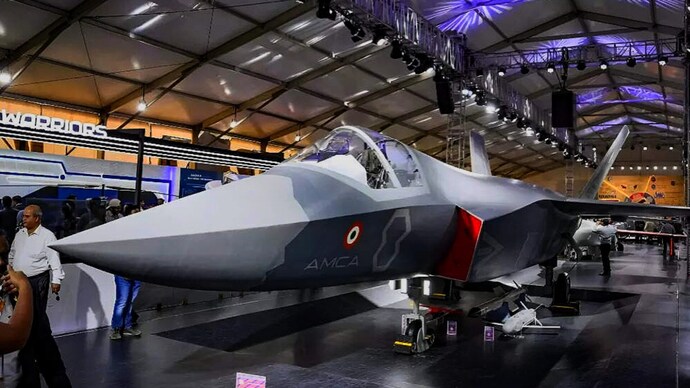
The panel said Advanced Medium Combat Aircraft (AMCA) is being developed as a fifth-generation fighter, while work is also being planned for sixth-generation fighter aircraft. These aircraft are expected to be network-centric and integrated with other military platforms and ground-based systems.
A key focus area identified by the Committee is the development of Supersonic Glide Missile systems, which combine supersonic or hypersonic speeds with the ability to glide and manoeuvre after launch.
According to the report, these characteristics make such weapons extremely difficult to detect and intercept.
The panel recommended adequate funding, time-bound development milestones and testing infrastructure for research into glide missile technology. It said indigenous development in the field would be important for the nation's preparedness as warfare increasingly relies on networked systems.
The Committee said a dedicated allocation for critical and emerging technologies would help avoid funding bottlenecks and ensure timely implementation of strategic defence projects.
The report also noted that developing capabilities in these areas would support future platforms, including next-generation combat aircraft and unmanned systems.
Meanwhile, the Ministry of Defence told the Committee that DRDO’s work on hypersonic technologies is progressing.
The ministry said hypersonic weapons and missiles travel at speeds of Mach 5 or more and at low altitudes. “They are also highly manoeuvrable making them nearly impossible to intercept with current defence systems,” the ministry said.
The government further said such weapons can reduce an adversary’s decision-making and reaction time, allow attacks from unexpected directions and use high kinetic energy to penetrate hardened targets.

Born in Pauri district of Uttarakhand, Manjeet Negi did his early schooling from his village school near Rishikesh and then moved to the town for secondary education. Later, he did his graduation from Hemavati Nandan Bahuguna University. In the year 2000, he did his journalism diploma from Kurukshetra University and started his career with Doordarshan News and started reporting on defence forces from the 2001 Bhuj earthquake. In his career as a defence correspondent, Negi has had the opportunity to report exclusives from world's highest battlefield Siachen Glacier in the north to the Andamans in the South and from the Rann of Kutch in the west to the Arunachal Pradesh border with China in the East.
A regular news-breaker on matters of national security and military affairs, Negi considers the coverage of he Kedarnath tragedy of 2013 as the highest point of his career. During the grave disaster at Kedarnath in June 2013, Manjeet Negi was the first and only TV reporter who walked for 55 Kms on the hilly track to reach the Kedarnath shrine. Spending his first night in the complex amidst several hundred dead bodies around him, Negi says he saw Lord Kedar in his dream. After the Kedarnath disaster, the writer got another opportunity to cover another disaster in the Nepal earthquake in 2015 for the Aaj Tak channel. During the reporting of that disaster for about 10 days, the writer got an opportunity to witness and report the large scale relief and rescue operations undertaken by the Indian Army and the Indian Air Force.
Besides reporting, he is also a skilled mountaineer. With Nehru Institute of Mountaineering and Garhwal Regiment, he has undertaken mountaineering expedition to Satopanth via Gomukh. Accompanying the Mount Manaslu mountaineering expedition of a Garhwal Regiment unit, he also reported about the expedition. He has also scaled the Dronagiri mountain near Joshimath in Uttarakhand. Manjeet Negi has also been honoured with a special award by the Union Home Minister, Shri Rajnath Singh for his reporting of Kedarnath disaster. He was awarded the best reporter award for his coverage of Nepal earthquake by India Today Group. At present, the writer has been working as Editor with Aajtak Channel of India Today Group.
READ MORE