
Atmanirbhar or imported? Coast Guard chief on AI usage to combat new-age threats

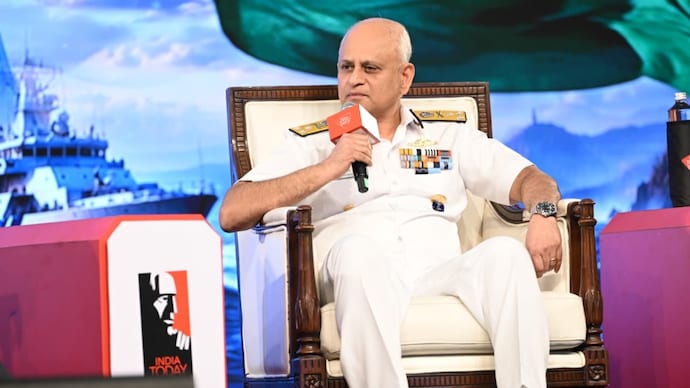
Indian Coast Guard Director General S Paramesh spoke about AI usage in combating new-age threats, what has changed in maritime operations since 26/11 and his 2035 vision, with more involvement of women being among them, at India Today's Conclave South.
 Last UpdatedSep 29, 2026 14:30 IST
  Published byWritten BySharangee Dutta
The landscape of India's maritime security has changed vastly in the past decades, with more synergy and cohesion among various departments and artificial intelligence enabling the Coast Guard to tackle new-age threats such as unmanned drones. Speaking at the India Today's Conclave South, S Paramesh, Director General of the Indian Coast Guard, explained how India is using a mix of indigenous as well as imported technology in securing the country's blue frontiers.
"We are both innovating and (using) imported technology to help us carry out the important aspects of maritime and coastal security," the Coast Guard DG said at the event.
Adding to the point, he said that Indian Defence Public Sector Undertakings (DPSU) and equipment manufacturers have come up with "credible software solutions for our maritime security".
Even so, Paramesh stressed that AI will never omit the significance of in-person tasks. Calling it "boots on ground", the Coast Guard chief said that besides embracing technology, physical boarding of every available contact is a must.
"Because it is only then can we prove or disprove the antecedents of the people on board that ship, fishing boat, or that craft. You might have the best technology, but unless you physically check, you can't be very sure as to, you know, who that person is inside," he said at the Conclave South.
2035 VISION
Speaking about some of the key goals for 2035, Paramesh said that the Coast Guard wants to have bigger ships with more tonnage, enhancement of the crew's comfort, allowing vessels to sustain longer sea hours, and further technological advancement so that real-time data can flow from oceans to maritime operating centres and straight to control units.
He also said that women's participation must be increased, and it would be a "happy moment" for the Coast Guard as well as the entire nation to have a woman Director General in the future.
WHAT HAS CHANGED SINCE 26/11
The 2008 Mumbai attacks have several precursors that revealed how attackers or smugglers were using sea routes to enter India, S Paramesh said at the Conclave South.
"There were the 1993 Mumbai blasts where the used explosives were smuggled through the sea routes. The biggest issue confronting us in those days was that every agency was working in silos. There was an absolute lack of coordination. There was no synergy. We didn't even know who was the other person in the other agency whom we needed to speak to," the Coast Guard DG explained.
He further said that once the massacre happened, the government got "everybody together" and set off a slew of activities and important initiatives to plug the gaps and ensure every agency is "well-equipped, has got the assets, has got the workforce, and their wish list is addressed to an extent that they are able to fulfil their mandated charters".
"I can say with absolute conviction now that the majority of the issues which existed before 26/11 have been addressed, and we are on a very good footing with respect to maritime and coastal security.
COORDINATION WITH FRIENDLY NEIGHBOURS
S Paramesh also spoke about India's maritime ties with neighbours in the Indian Ocean.
He said that the Indian Coast Guard is looked upon by "friendly foreign countries" as a provider for training, on-the-job expertise and on all matters connected to their respective charters.
He added that multiple MoUs and other deals with friendly neighbours as well as foreign nations help gain better insight into methodologies used in maritime security, how others react in different scenarios and learn from one another.
Paramesh gave an example of an Indian ship sailing out to participate in the Quad-at-sea observer mission where seafarers and observers from the US, Australia and Japan will be present.