Platforms must understand India's context while moderating content, MeitY says

Speaking at the Business Today India@100 event, S Krishnan said government intervention accounts for only a small part of the overall content takedown activity, even as concerns grow over how social media platforms decide what users can post and what should be removed.
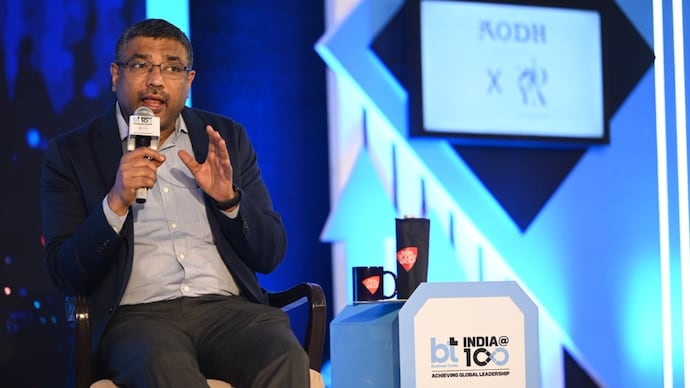

More than 99% of content removed from social media platforms is taken down under the companies' own community guidelines rather than through government-ordered blocking, S Krishnan, Secretary at the Ministry of Electronics and Information Technology (MeitY), said on Friday.
Speaking at the Business Today India@100 event, Krishnan said government intervention accounts for only a small part of the overall content takedown activity, even as concerns grow over how social media platforms decide what users can post and what should be removed.
“99%, or more than 99% of the takedowns, actually happen on the basis of the community guidelines of the various social media companies themselves,” he said.
The distinction is significant because government intervention is often seen as the main reason behind content being removed online. Krishnan said the vast majority of takedown decisions are instead made by platforms under their own rules.
GOVERNMENT BLOCKING POWERS
Krishnan said the government's powers to block online content under Section 69A of the Information Technology Act are limited to specific circumstances.
According to him, the provision is used on grounds including the security of the state, defence of India, public order and friendly relations with foreign countries.
“It is very, very sparingly used, with a great deal of restraint. It's not my view that this is obscene. I have to establish that it falls within one of these grounds,” Krishnan said.
He said the government cannot order content to be blocked merely because an official finds it objectionable. The content must meet the legal threshold under the grounds specified in the law.
WHAT HAPPENS WHEN CONTENT IS FLAGGED?
Krishnan said an authorised government agency or official can send a notice to a social media platform when content is believed to violate Indian law.
The government can also inform a platform that the person who posted the content could face criminal charges. Platforms themselves could face legal consequences if they fail to act in accordance with applicable laws, he said.
Krishnan also referred to Section 79 of the IT Act, which provides intermediaries with safe-harbour protection from liability for third-party content, subject to conditions laid down under the law.
In such cases, platforms may have to remove the content or risk legal consequences.
PLATFORM RULES DO MOST OF THE WORK
Krishnan's comments put the spotlight on the role of social media companies in content moderation.
Platforms such as Facebook and Instagram operate their own community guidelines and moderation systems, which, according to Krishnan, account for the overwhelming majority of content removals.
He said global platforms also need to understand the cultural and linguistic context of the countries in which they operate, particularly while dealing with content involving violence, sexual abuse and other forms of harm.
“Social media platforms need to be alert to the cultural and linguistic context of respective states,” he said.
Krishnan gave the example of content where the harmful nature of an act may not be apparent from a purely visual assessment.
“They can't say, ‘We didn't see frontal nudity in this particular content, and therefore, we didn't take it down,’ without realising that it is an act of sexual assault or violence,” he said.
He added that concerns over the impact and regulation of social media are not unique to India, with “every major democracy in the world” grappling with similar challenges.