Centre's new stubble burning rules anti-farmer: AAP Punjab leader

Punjab leader Baltej Pannu has attacked the Centre's proposed 2026 stubble-burning rules as anti-farmer. He says penalties and red entries ignore Punjab's progress and the need for incentives.
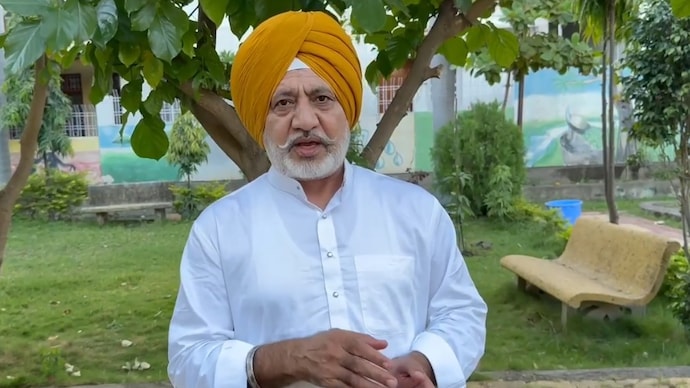

AAP Punjab leader Baltej Pannu on Monday alleged that the BJP-led Centre's proposed 2026 rules on stubble burning showed an "anti-farmer approach". He said the draft framework was aimed at imposing financial penalties on farmers and tightening the "red entry" mechanism linked to land records.
Pannu said the Centre was again choosing the path of "punishment" instead of working in partnership with farmers. He argued that Punjab had already made progress in reducing farm fires and said the focus should be on solutions, incentives and markets for paddy straw rather than penalties.
According to Pannu, the proposed framework provides for environmental compensation of Rs 5,000 for farmers with less than two acres of land, Rs 10,000 for those holding two to less than five acres, and Rs 30,000 for landholdings above five acres. He also claimed that the draft proposes a "red entry" against the land record for 15 months, with the possibility of an extension in specified circumstances. A red entry in revenue records bars farmers from getting loans against their farmland or selling it.
"The proposed rules impose penalties running into thousands of rupees and strengthen the red-entry mechanism, putting additional pressure on farmers. A government that claims to work for farmers should be providing solutions, incentives and assured markets for paddy straw instead of threatening them with penalties," Pannu said.
He said the Centre should take note of the progress already made in Punjab instead of treating the state's farmers as the problem. Citing official data, Pannu said Punjab recorded 5,114 farm-fire incidents during the 2025 paddy harvesting season, a 53 per cent reduction from 2024 and a 93 per cent reduction from 2021.
"Punjab's farmer is an aware and progressive farmer. He understands that burning residue damages the environment and soil. The results are already visible. Farm fires have fallen sharply, and the movement towards scientific management of paddy straw is growing stronger every year," he said.
Pannu said the emergence of companies and industries procuring paddy straw was opening new economic avenues for farmers and helping turn crop residue into a resource. He also said the Centre's own crop residue management framework recognised the importance of ex-situ utilisation through biomass power and biofuel supply chains.
Targeting the BJP governments in neighbouring states, Pannu said, "If the BJP-led Centre is genuinely concerned about stubble burning, it should also ask what is happening in Haryana and Uttar Pradesh." He said Punjab had already shown a substantial reduction in farm fires and that the focus should be on practical solutions across states instead of repeatedly blaming Punjab's farmers.
Pannu said Punjab would continue working towards the complete elimination of stubble burning through scientific residue management, machinery, market linkages and greater use of paddy straw. Stubble burning in Punjab and Haryana is often blamed for a rise in air pollution in Delhi-NCR, as many farmers burn crop residue after the paddy harvest in October and November to quickly clear fields for the short wheat sowing window.