Trump caps 17% tariffs on India if trade deal is reached, 25% otherwise

India is among 14 countries covered by the US Trade Representative's latest tariff proposal. New Delhi has yet to finalise a trade agreement with the Trump administration, making the lower tariff ceiling conditional on a deal that Washington is seeking to secure.
 Last UpdatedNov 25, 2026 22:00 IST
 Published byWritten BySatyam Singh
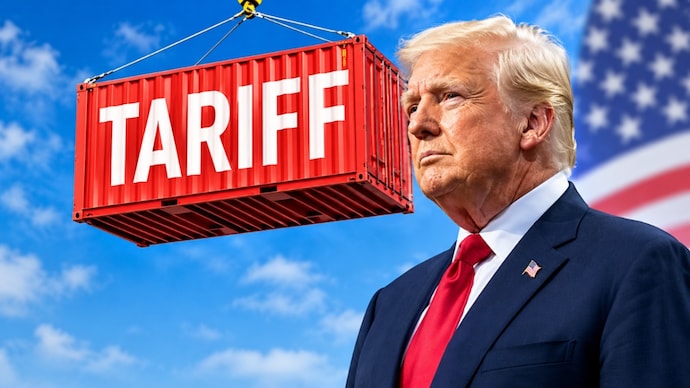
The Donald Trump administration has unleashed another tariff salvo against India and 13 other countries, putting a 25 per cent duty threat back on the table for New Delhi if it fails to clinch a trade deal with Washington. Under the latest proposal, Indian goods would face a lower tariff ceiling of 17 per cent if an agreement is finalised, but the higher rate would kick in if negotiations fall through.
The latest proposal, announced by the US Trade Representative (USTR) on Wednesday, puts India among 14 major trading partners facing fresh tariff measures under President Donald Trump's latest protectionist push.
The proposed duties will not kick in immediately. The USTR has scheduled a public hearing for January 25 before moving towards implementation.
17% TARIFFS COMES WITH A CATCH
The two-tier arrangement puts New Delhi in a difficult position. India has yet to finalise a trade agreement with the Trump administration. The lower tariff ceiling is therefore tied directly to a diplomatic outcome that Washington wants to secure. Rather than offering India a straightforward reduction in duties, the Trump administration has made the concession conditional on a deal.
Other trading partners have also been offered different tariff ceilings under the proposal. Cambodia, Indonesia, Malaysia, Thailand and Bangladesh would face capped rates of 18 per cent.
Japan, South Korea, Taiwan, the European Union and Switzerland would face proposed rates of 15 per cent, including existing Most Favoured Nation duties. Singapore would receive a capped rate of 10 per cent.
China faces a proposed ceiling of 20 per cent, while Vietnam would face the same rate if it reaches an agreement with Washington. If negotiations fail, Vietnam's rate could climb to 35 per cent.
WHY THE US IS RAISING PRESSURE ON INDIA
Washington has accused India of following trade and industrial policies that it believes put American businesses at a disadvantage. The US has flagged India's industrial expansion strategy, weak labour protections, financial restrictions and barriers to market access, while also accusing New Delhi of failing to tackle global excess capacity.
The Trump administration argues that these practices hurt US manufacturers, exporters, jobs and investment. It has also raised concerns about America's dependence on inputs from non-market economies, particularly in sectors such as pharmaceuticals, medical devices, steel, solar energy and information technology.
The latest tariff proposal comes against the backdrop of prolonged trade negotiations between New Delhi and Washington. The two sides agreed on a framework for a trade deal in February, following which the punitive tariff imposed on most Indian goods in August 2025 was reduced from 50 per cent to 18 per cent.
The tariff landscape changed again after the US Supreme Court struck down Trump's use of emergency powers to impose sweeping duties on trading partners worldwide. This led to the introduction of a 10 per cent baseline tariff. However, despite several rounds of negotiations and the February framework, India and the US have yet to seal a final trade agreement. Indian officials have maintained that discussions with Washington are still underway.
WHAT LIES BEHIND THE US PROBE
The latest tariff offensive follows an eight-month US investigation under Section 301 of the Trade Act of 1974, which allows Washington to investigate alleged unfair foreign trade practices.
The Trump administration's main argument is that several countries are producing more manufactured goods than their domestic and international markets can absorb. US Trade Representative Jamieson Greer said the proposed tariffs were intended to counter "industrial strategies built on targeting manufacturing, wage and labor suppression, financial and other support, non-market economy inputs, and other market-distorting practices" that undermine the US manufacturing base.
India has now been placed alongside major manufacturing economies, including China, Japan and South Korea, as well as the European Union. The investigation is particularly significant because Washington's definition of excess capacity gives it another basis to challenge the industrial policies of its trading partners. China, which faces the highest proposed capped rate among the countries covered by the latest plan, has rejected the allegations.
CHINA FACES 40% TARIFF RISK IF TRUCE COLLAPSES
Beijing has repeatedly denied that its industrial production amounts to unfair overcapacity, accusing Washington of using the argument to justify protectionist measures.
Under the US plan, China's capped tariff rate would be 20 per cent, in line with the trade truce between Washington and Beijing that expires on January 10. However, if the agreement unravels, the rate could rise to 40 per cent.
The proposed duties would also be added to tariffs imposed on Chinese goods during Trump's first presidency, which amount to roughly 25 per cent.
The USTR said the new measures would not apply to around USD 30 billion worth of Chinese imports being considered for tariff reductions through a bilateral mechanism known as the Board of Trade.
TRUMP'S TARIFF GAMBIT RUNS INTO HEADWINDS
The latest tariff offensive comes despite electoral setbacks for Republican Party in the US midterm elections. The US president has shown little inclination to abandon his protectionist trade agenda, even as the economic consequences of tariffs become a growing concern.
The duties have contributed to higher prices for American consumers, adding to criticism of Trump's trade policies. A Reuters/Ipsos opinion poll conducted after the Republicans' midterm losses found that 62 per cent of respondents supported efforts to repeal the tariffs. Trump, however, has vowed to restore duties struck down by the US Supreme Court in February, signalling that his administration intends to keep looking for ways to impose trade barriers.
The latest announcement also unsettled financial markets. Major US stock indexes opened more than 1 per cent lower on Wednesday amid a renewed sell-off in technology stocks, while the tech-heavy Nasdaq Composite dropped more than 3 per cent.