


India's Best Colleges 2026
ADVERTISEMENT
Engineering (Government) | Gaining traction | National Institute of Technology (NIT) Delhi
From AI and data science to undergraduate research and innovation, NIT Delhi is charting a growth story that belies its young age
-

- Sonali Acharjee
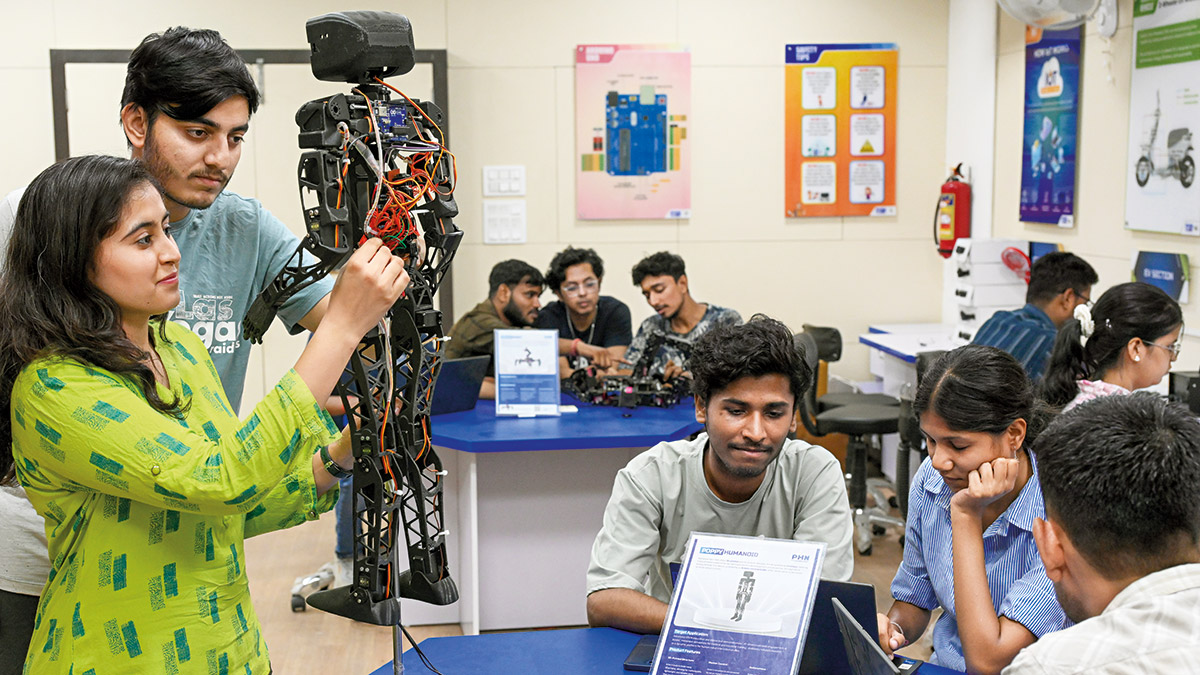
When students and parents think of engineering education in the national capital, attention often gravitates towards older and more established institutions. Yet over the past decade and a half, the National Institute of Technology (NIT) Delhi has quietly emerged as a credible and increasingly prominent name in its own right.
Established in 2010, NIT Delhi is among the youngest members of India’s prestigious NIT network of over 30 centrally funded autonomous technical institutes. Its rise is notable precisely because, in a relatively short span, it has built what many institutions take decades to achieve—strong academic credentials, modern infrastructure, a growing faculty base, expanding research capabilities and industry visibility. The rankings underscore this trajectory: NIT Delhi has moved up from No. 20 in 2022 to No. 14 in 2026, emerging as the most improved college in its category.


Recognised as an Institute of National Importance and operating from its 51-acre permanent campus in north Delhi, part of its appeal lies in its location. Being in the national capital gives students access not only to technology companies and startups but also to leading research institutions, government bodies and policymakers that increasingly influence India’s innovation ecosystem. This proximity creates opportunities for collaboration, internships and exposure that extend beyond the classroom.
The institute is investing steadily in emerging areas such as artificial intelligence and advanced computing while placing greater emphasis on undergraduate research and innovation. It offers eight undergraduate engineering programmes spanning both established branches and new-age specialisations, from Electronics & Communication Engineering to AI & Data Science, with a total intake of 450 students for 2026-27.
NIT Delhi’s relatively compact student community is another advantage. Compared to some of the country’s larger engineering campuses, it offers greater opportunities for interaction with faculty, participation in academic and extracurricular clubs and societies, and the chance to take on leadership roles. As Prof. Ajay K. Sharma, the institute director, notes, NIT Delhi aims to produce graduates who are not only skilled technologists but also responsible citizens capable of competing on a global stage.
ADVERTISEMENT