
Harmanpreet Kaur | The game changer

Steering India to Glory, Harmanpreet Kaur's turbo-charged journey: From Moga to captaining the Indian women's cricket team, to global icon.

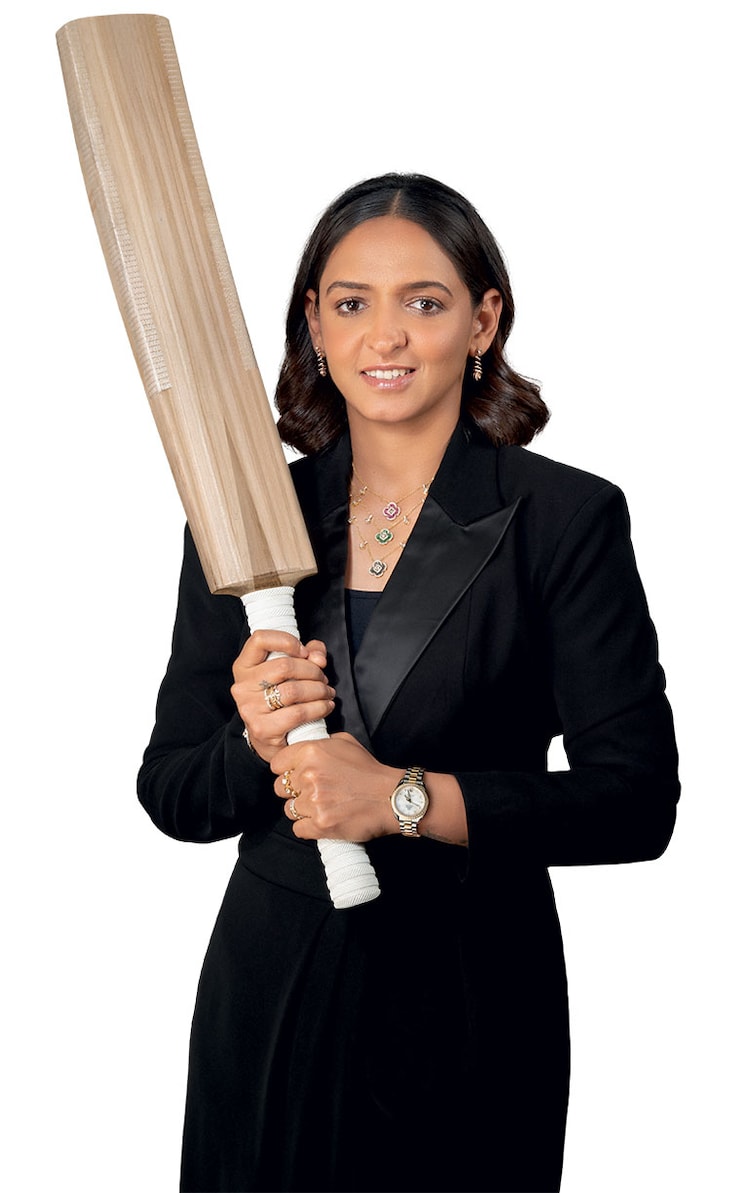
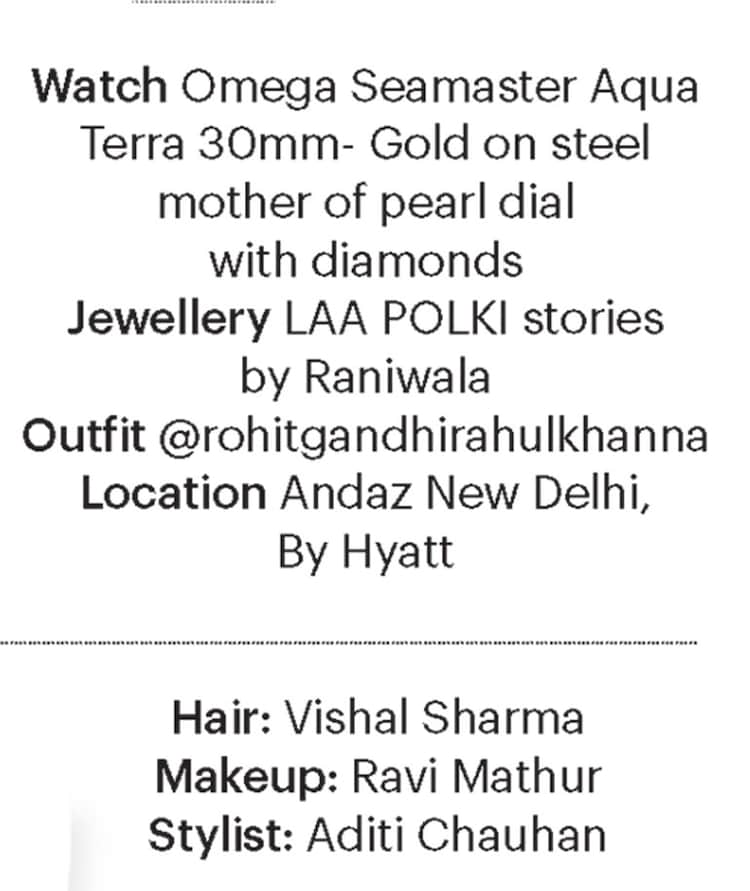
WATCH OMEGA SEAMASTER AQUA TERRA 30MM-FULL, GOLD GREEN DIAL WITH DIAMONDS JEWELLERY LAA POLKY STORIES BY RANIWALA, OUTFIT @amitaggarwalofficial HEELS @ellegantiofficial, LOCATION ANDAZ NEW DELHI, BY HYATT
ISSUE DATE: Apr 20, 2026 | Oct 6, 2026 18:04 IST Last UpdatedOct 6, 2026 18:04 IST
 Published by
Last UpdatedOct 6, 2026 18:04 IST Published byShyam Balasubramanian
Apr 10, 2026 19:39 ISTThese days Harmanpreet Kaur’s new bestie is the camera. It’s there when she is shooting magazine covers; when she is endorsing her growing list of brands; when she is recounting her journey at corporate events, and even at airports. From being alien to the world of make-up, she now understands the artist’s cue to ‘pout’. Just don’t ask her to use the eyelash curler on her own. It’s Kaur’s fifth consecutive day facing the bestie and she is in her zone. “I am not complaining,” she says. “We need to do it to promote the sport.” That sport is women’s cricket and Harmanpreet Kaur has been devoted to it for three decades now.
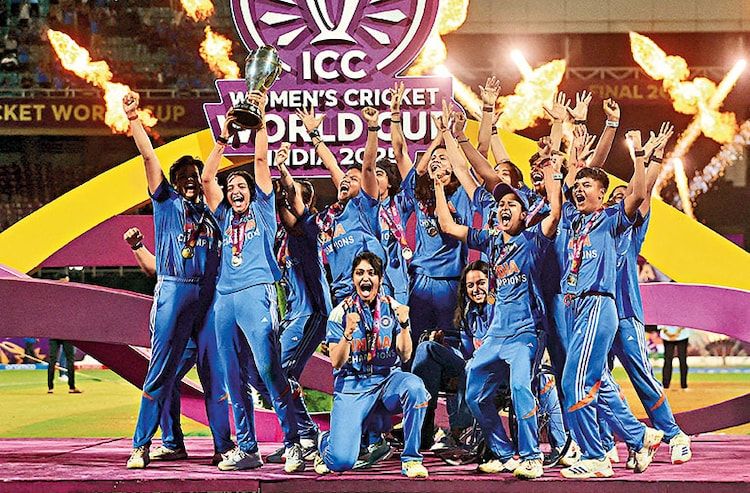
The journey which began in the gulleys and grounds of Moga in Punjab reached its pinnacle at the DY Patil Stadium in Navi Mumbai on Nov 2, 2025, when Kaur led the Women in Blue to its maiden ICC trophy, with India winning the Women’s Cricket World Cup, making us ODI champions. Kaur always knew it would take that one trophy to stir the revolution she had always envisioned for the women’s game. Four months later, she is still feeling the ripples of it. “Players’ attitude has changed, there’s self-belief and confidence now,” she says. “People are talking about women’s cricket and parents are thinking about encouraging their daughters to play cricket and think of it as a career.” That seismic shift from the sport being a gentleman’s game to a more democratic one, open to all, is of utmost significance to Harry Di, as she is fondly know in the dressing room.
It’s been a long, arduous road for women cricketers to relish this euphoria. Harmanpreet has been on it too, which is why she wanted her seniors, Jhulan Goswami and Anjum Chopra, to join in the celebrations and lift the trophy. “Our cricket is alive because of players like them. They played when things were not that great. Their love for the game meant they didn’t give up,” she notes. Kaur has played in many empty stadiums and seen many a fine talent quit cricket because families stopped supporting and insisted on “thinking about the family” (read: get married and have kids). It didn’t help that the pay wasn’t great either and matches—both domestic and international—fewer. Media spotlight? A rarity.




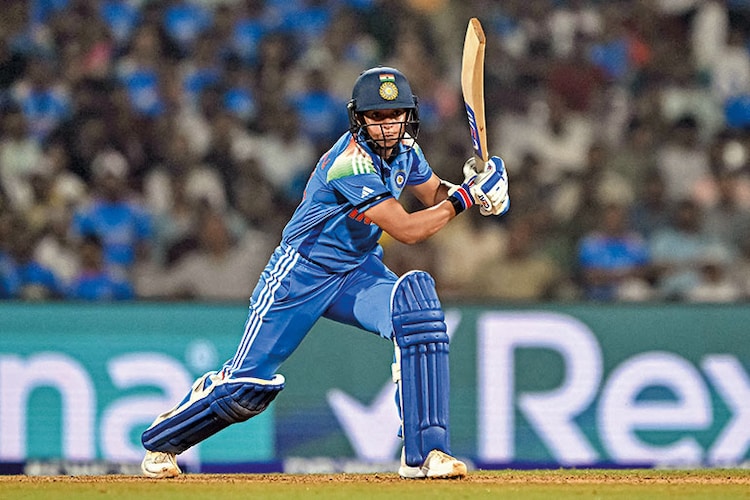
IN A LEAGUE OF HER OWN
It explains why Kaur didn’t know there was a women’s team let alone any female cricketers when she took to the field, accompanying her brother to matches their father would play with friends. They’d stand behind the wicket-keeper and wait for the ball to come to them. When it wouldn’t and their roles never extended beyond fielding, the kids decided to form their own team. She was the only girl on it but she was a natural. Other girls came but only when they were a player short and didn’t last long. “We were very competitive and aggressive,” she says. Kaur’s idol then? Virendra Sehwag. Like him she whipped the ball off boundary lines. “We used to play four to five over matches and there was no time to settle. You hit from ball one,” she recalls. Former cricketer Noopur, now her manager and friend, remembers her as the girl who struck sixes with ease. Nobody was surprised that after two years on the domestic circuit playing for Punjab, Kaur was wearing the coveted blue jersey.
Kaur was there when she saw things take a leap after the team reached the finals of the ODI World Cup in 2017. For starters, the Board of Cricket for Control in India introduced central contracts for women players. The beginning of Women’s Premier League further brought more eyeballs and talent into the game (Kaur has won the WPL twice with Mumbai Indians). She acknowledges the efforts at equality with women players treated to the same facilities— travel, stay and training—as the men. The changes are welcome, of course, but that it took this long isn’t lost on Kaur.
“As women we have to constantly prove ourselves in any field and keep proving that we can do our best,” she notes. For Kaur, the World Cup win is just the beginning of what she feels is an upward trajectory for not just women’s cricket but women in general. Kaur adds: “Girls who don’t even follow or watch the game saw the match and were inspired and elated. The victory is an incentive, it gives strength to all women. It instils the belief that we can achieve anything and bring the change. I hope we now see more women as leaders and do well in any field, anywhere.”
Thankfully, for a nation which worships the sport as it does its gods, Harmanpreet and her warriors don’t want to rest on that one laurel. On the radar is the upcoming T20 World Cup 2026. “I want to be part of a team that wins and sets an example and is remembered,” she says. And she is happy to have that new friend camera tag along giving more spotlight to the sport. In fact, she believes that she actually manifested it: “I still remember, a few years ago, we used to discuss how people would queue up to enter the stadium to watch and cheer us one day. Now when we see it, we look at each other and smile. We all collectively dreamt of this.” And she’s enabled millions of girls to dream bigger.
Favourite hotel
ITC Bengaluru. The hospitality is superb.
Most expensive buy yet
A Mercedes GLS. It was a dream and I purchased it in a day.
Most prized possession
The Player of the Match trophy for my innings against England in the 2017 World Cup semi-finals. I feel it brought a lot of attention and awareness to both me and Indian women’s cricket.
Has your attitude toward fashion changed with the increasing spotlight?
I have started shopping more now. I know people are watching and Kabhi bhi, koi bhi photo can go on the internet. Now, I am more aware of the fact that I have to look good.
Guilty pleasure
I am not a foodie. People assume that since I am a Punjabi, I would probably like rajma and kadhi but that’s not the case. Zinda rehne ke liye, khaa liya [I eat to stay alive]. I know that in order to train, I need to include proteins and carbs in my diet. Although, I do have the urge to eat chhole bhature, but I resist it.
Are you a clotheshorse?
I bought a lot of blazers and suits after the World Cup. If I like something, I just buy more of the same in more colours.
Idea of luxury
A comfortable life, where you are not thinking too much and you can buy whatever you like. I have gone through a time where I would have to save money to buy something. Now I can just tap and get it.
Who would you hire as a stylist in the dressing room?
Mere liye toh nahi [with a laugh].
Photographs by Hardik Chhabra
- Ends
Suhani Singh is a Deputy Editor at India Today magazine, where she writes on entertainment, sports and culture. Based in Mumbai, she has been a part of the India Today Group since 2013. She began her journalistic career covering dance and film beats for Time Out Mumbai magazine. She is also a member of the Film Critics Guild.
READ MORE