Vietnamese crab exporter
Advertisement

Crumbling Mumbai: 3 tragedies in 2 years | NewsMo

On March 14, foot over bridge near Mumbai's Chhatrapati Shivaji Maharaj Terminus railway station collapsed. At least six people were killed and more than 30 were severely injured. The foot overbridge connects CSMT railway station - Platform 1 North end with BT Lane near the Times of India building.

An FIR has been registered against the BMC officials and also the Railways under 304 A of the IPC.

Read More

VIDEOS FROM OTHER SECTIONS

LATEST VIDEOS

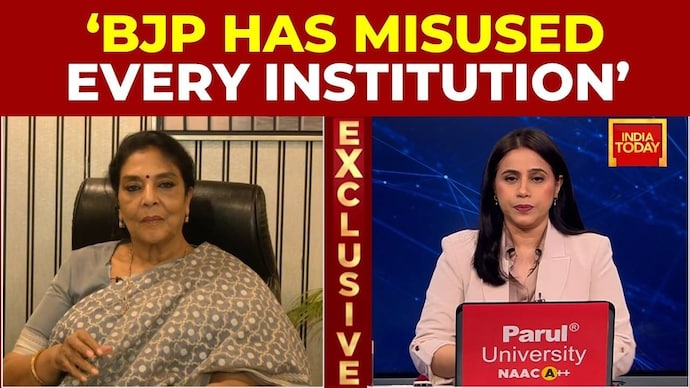
'They Have Misused Every Institution': Renuka Chowdhury Slams Centre

In an exclusive interview on India Today, Congress leader and Member of Parliament Renuka Chowdhury mounted a sharp offensive against the central government, accusing it of systematically weakening democratic institutions. Chowdhury rejected allegations by the Bharatiya Janata Party that the opposition is undermining constitutional bodies, asserting instead, "They have misused every institution that has been established." She stated that the opposition had knocked on the doors of the Election Commission, the judiciary, and the President before taking the matter to the public. Highlighting parliamentary disruptions, she claimed her zero-hour notices were repeatedly disregarded and pointed out allegations of electoral roll manipulation, noting cases where living citizens were wrongly disenfranchised. Chowdhury maintained that the Congress party remains prepared to discuss voter roll discrepancies on the floor of the House, demanding transparency from the government.
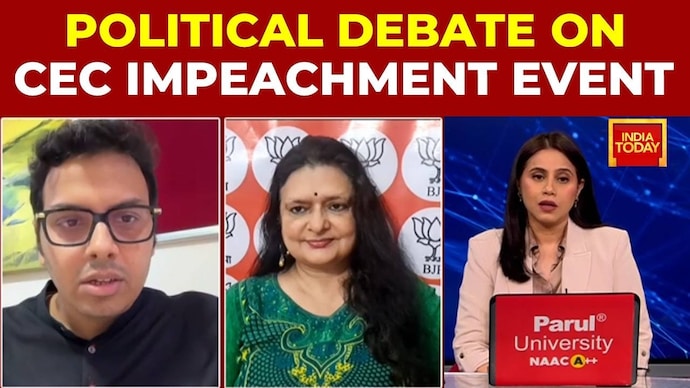
Mock Parliament Row: 'Street Veto Can Never Replace Democratic Ethos', Says BJP's Sanju Verma

A political debate unfolds over the opposition holding an unprecedented mock parliament at the house of the Leader of Opposition. Bharatiya Janata Party National Spokesperson Sanju Verma and political analyst Rajat Sethi scrutinise the opposition's strategy of shifting parliamentary battles to the streets. Verma asserts that the ruling government has continually agreed to hold discussions on key national issues, but argues that Rahul Gandhi has consistently gone missing in action rather than participating inside the House. Criticising the opposition's low attendance and frequent disruptions during Zero Hour, Verma remarks that 'street veto can never replace the democratic ethos of the country' and describes the symbolic mock proceedings as nothing more than a tamasha. Sethi also argues that avoiding constitutional institutions and regular legislative procedures while attempting street politics fails to address substantive public issues.

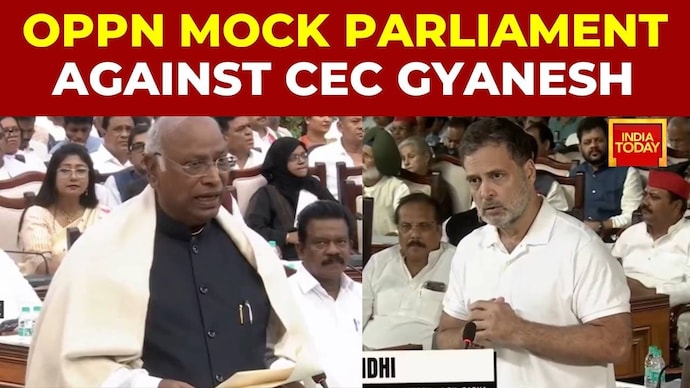
Opposition 'Impeaches' CEC Gyanesh Kumar; BJP Slams Mock Parliament As Theatrics

Opposition INDIA bloc leaders passed an impeachment motion against Chief Election Commissioner Gyanesh Kumar during a public mock proceeding held at Congress President Mallikarjun Kharge's residence. Leader of Opposition Rahul Gandhi led the offensive, asserting that the Chief Election Commissioner should face trial for treason and alleging voter deletion. Kharge presented charges accusing the election chief of electoral manipulation, unauthorised alterations of Form 6, and operating at the behest of the central government. Meanwhile, the Bharatiya Janata Party hit back strongly at the opposition's mock parliament, describing the exercise as a parliament of theatrics.

advertisement

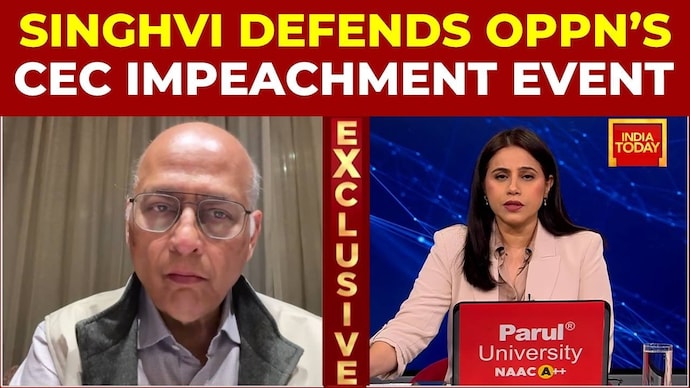
Abhishek Manu Singhvi: 'Affidavit Conceals More Than It Reveals'

Speaking in an interview, Congress MP and senior advocate Dr. Abhishek Manu Singhvi defended the opposition's mock parliament held to highlight alleged irregularities in the electoral system. Singhvi stated that the widespread participation across political parties and civil society showed growing public concern. Questioning the functioning of institutions, he argued that genuine grievances are not given adequate discussion time in Parliament. Critiquing the Election Commission of India's affidavit, Singhvi asserted that the document 'conceals more than it reveals' and contains implied admissions through evasive responses regarding procedural authorizations and resolutions. Addressing legal avenues, Singhvi noted that legal processes face structural limitations and delays, emphasizing that sustained public and political movements remain paramount alongside constitutional challenges.