Vietnamese crab exporter
Advertisement

Indian markets ignore global jitters: Is a bigger rally around the corner?

Indian stock markets have remained surprisingly steady despite global geopolitical tensions, and company earnings are now becoming the biggest factor influencing share prices, according to Abhishek Basumallick of Shree Rama Managers.

He said the market has largely avoided sharp reactions to international events over the past few months. Instead, investors are paying more attention to quarterly results and future business outlooks shared by company managements. As the earnings season gathers pace, sectors and individual stocks are likely to move based on financial performance rather than global headlines.

Basumallick is optimistic about the market's medium-term outlook. While many expect returns of around 10%, he believes Indian equities could deliver stronger gains over the next 18 months to two years. He added that mid- and small-cap stocks may outperform large-cap companies during this period.

For investors, he said it is always a good time to invest in equities, provided they have a long-term investment horizon of at least five years. He noted that the market has seen limited overall gains during the past one-and-a-half to two years, which could create room for better returns ahead.

Commenting on the draft CAFE-III fuel efficiency norms, Basumallick said the government's policy direction clearly supports lower fuel consumption and a gradual shift towards electric vehicles through stronger incentives and improved charging infrastructure.

(Disclaimer: The views, opinions, recommendations, and suggestions expressed by experts/brokerages in this article are their own and do not reflect the views of the India Today Group. It is advisable to consult a qualified broker or financial advisor before making any actual investment or trading choices.)

Read More

VIDEOS FROM OTHER SECTIONS

LATEST VIDEOS

US Tariff Threat On Russian Oil, India's Energy Security & Canada-EU Ties

The US House of Representatives has passed legislation allowing President Donald Trump to impose tariffs of up to 100% on countries purchasing Russian oil and gas, sending the bill to Trump's desk. The proposed measures could directly affect India, where Russian crude accounted for 30.3% of oil imports in fiscal 2026, valued at nearly $41 billion. In July, Russia supplied more crude to India than the UAE, Saudi Arabia, Venezuela, Brazil, Oman, and the United States combined. New Delhi has stated it is monitoring developments while maintaining its focus on energy security. Sourcing replacement crude from alternative markets could result in changes to shipping distances, freight charges, insurance costs, and procurement prices. The development introduces fresh complexities into bilateral trade discussions between India and the United States, raising questions about potential tariff categories and broader strategic alignments amidst shifting global partnerships.
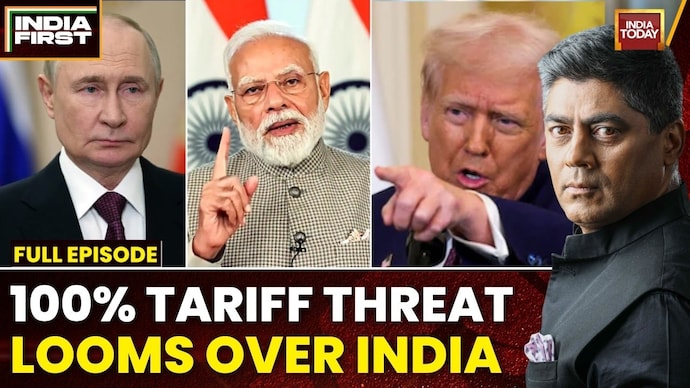
US House Passes Russia-Iran Sanctions Bill; 100% Tariff Threat on India Crude; New Delhi Reacts

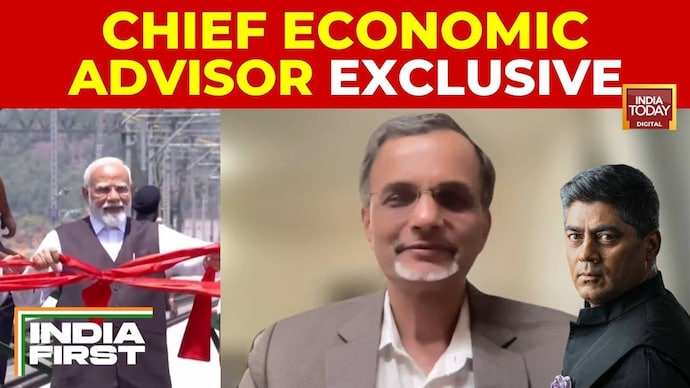
The United States House of Representatives has passed the Lindsey Graham Sanctioning Russia and Iran Act of 2026, sending legislation to President Donald Trump that enables tariffs of up to 100 percent on major buyers of Russian crude oil and natural gas, including India and China. In response, the Ministry of External Affairs affirmed India's commitment to securing energy supplies through diversified sources while communicating bilateral and market implications to US interlocutors. Amid geopolitical developments and Russian crude accounting for 51.1 percent of Indian oil imports in July 2026, Chief Economic Advisor Dr V Ananth Nageswaran and Union Minister Kiren Rijiju examined India's economic trajectory and governance roadmap toward Viksit Bharat by 2047. Discussion points included banking sector balance sheet reforms, capital expenditure expansion, the Production Linked Incentive scheme, trade agreements, and administrative strategies under Prime Minister Narendra Modi.

So Sorry: Happy Birthday PM

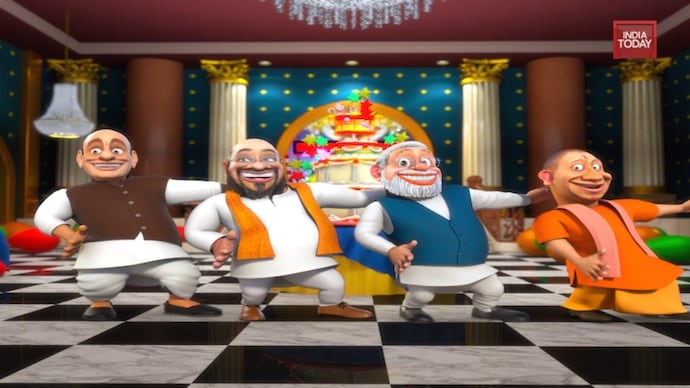
Prime Minister Narendra Modi turned 76 on Thursday, September 17, 2026. This is a hilarious take on the celebrations of PM Modi with his closest friends and colleagues.

advertisement

PM Modi Is 'Architect Of The Economic Policy': V. Anantha Nageswaran

Chief Economic Advisor to the Government of India, V. Anantha Nageswaran, discussed India's path toward Viksit Bharat by 2047, macroeconomic stability, and growth drivers. Highlighting the transformation over the past twelve years, he stated that Prime Minister Narendra Modi "is the architect of the economic policy" and credited structural reforms like the Goods and Services Tax, the Insolvency and Bankruptcy Code, and large-scale infrastructure expansion for repairing balance sheets and boosting potential growth. Addressing rural incomes and employment generation, Nageswaran emphasized that economic growth must directly impact citizens' lives, detailing fiscal initiatives, deregulation, free trade agreements, and credit expansion for micro, small, and medium enterprises. He also touched upon global headwinds, including geopolitical conflicts and manufacturing competition, noting that India's domestic capital formation and manufacturing share of gross value addition continue to rise steadily.