
Vietnamese crab exporter
Advertisement

Is West Asia now heading towards a longer and more dangerous phase of war?

The big focus of this episode of India First is on the West Asia tensions. The attacks in West Asia have intensified. The United States has bombed Iranian defence batteries and reinstated a shipping blockade. Meanwhile, Iran has responded by launching missiles, drones, and rockets in the direction of both Bahrain and Jordan. Iran has also targeted tankers travelling through the strait without Iranian clearance. So, the questions we are raising on the show are: has the memorandum of understanding between US and Iran collapsed? And is West Asia now heading towards a longer and more dangerous phase of war? Watch as panellists share their views on these and more on the show.
 

Read More

VIDEOS FROM OTHER SECTIONS

LATEST VIDEOS

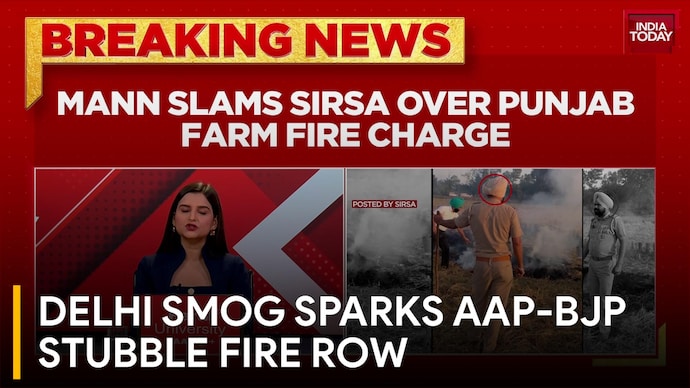
Delhi Pollution Sparks AAP-BJP War As Punjab CM Slams Farm Fire Claims

A political row has erupted between the Aam Aadmi Party and the Bharatiya Janata Party over Delhi's deteriorating air quality and stubble burning. Punjab Chief Minister Bhagwant Mann hit back at Delhi Environment Minister Manjinder Singh Sirsa, rejecting claims that farm fires in Punjab are causing Delhi's pollution crisis. Mann alleged that allegations are being made even before the harvest to defame Punjab and hide Delhi's failures. This follows Sirsa's claims alleging that Punjab Police personnel facilitated farm fires, which the Aam Aadmi Party refuted by asserting that police were actually extinguishing the blazes.
Elon Musk Posts Sarcastic Tweets On Space Lasers, Data Centres Amid Election

A studio panel analyses billionaire Elon Musk's recent social media posts following the election, discussing his public remarks and political funding. The discussion touches upon Musk's comments regarding data centres in space and a jibe mentioning election-interfering space lasers. Panelists examine the financial investments made by Musk during the election cycle, debating whether the posts signify an effort to distance himself from the outcome. The conversation also reviews his relationship with Donald Trump and the broader tendency of billionaire donors to divide their backing between candidates.

US Midterms: Cost of Living Crushes GOP as Iran War & Inflation Shift Congress

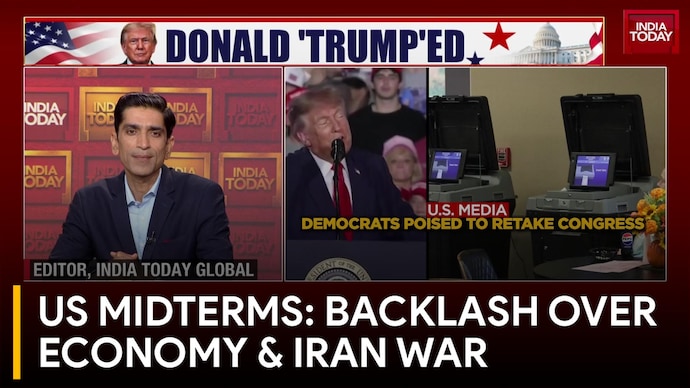
A review of the US midterm election results shows that household cost of living and economic dissatisfaction emerged as deciding factors for voters, with nearly nine in ten citing inflation and living expenses as critical concerns. Exit polls revealed that two-thirds of voters blamed Donald Trump for escalating prices, while his approval ratings fell significantly. Discussions highlighted how military action in Iran transformed into a major economic liability, driving up fuel costs and disrupting global trade and supply chains alongside controversial tariff policies. Analysts noted that despite strong stock market indices, household economic anxiety remained acute, leading to Republican defeats in key races, including Texas and North Carolina. With Democrats projected to reclaim congressional oversight across the Senate and the House of Representatives, Trump faces major legislative limits and oversight on foreign policy and appointments.

advertisement

US Midterms: Role of Women Voters, Trump's Foreign Policy and Domestic Stance Analysed

A panel of foreign policy and political experts analysed key dynamics surrounding the United States elections, focusing on voter patterns, gender representation, and former US President Donald Trump's political posturing. The discussion examined whether a distinct wave exists for women candidates, highlighting issues such as the cost of living and opposition to foreign conflicts that significantly influence women voters toward the Democrats. The panellists observed that while women and Indian-American leaders are making notable electoral gains on their own merit, broader representation continues to evolve gradually. The conversation also scrutinised Donald Trump's unpredictable political and foreign policy decisions, particularly regarding tensions with Iran and fluctuating stances toward domestic political negotiations. Experts noted inconsistent posturing, ranging from threats of military action to diplomatic overtures, arguing that such volatility contrasts with the public desire for domestic stability and settled governance across the United States.