Vietnamese crab exporter
Advertisement

US envoy calls Kashmir important part of India. The reality Pakistan must admit

US Ambassador to India Sergio Gore visited Srinagar, taking a shikara ride on Dal Lake and holding talks with Jammu and Kashmir Chief Minister Omar Abdullah to strengthen India-US diplomatic engagement. Ambassador Gore cited security improvements in Kashmir and indicated a potential review of the US travel advisory. Ahead of the meeting, Chief Minister Abdullah stated that Washington will not resolve Kashmir's internal issues, emphasizing that governance and statehood remain strictly between the union territory and the central government. In a panel discussion, experts analyzed South Asian security dynamics, US-Pakistan ties, and terror threats inside India, while Abdullah separately warned against misusing 'Gen Z' identity to threaten security forces. Meanwhile, protests continue in Pakistan-occupied Kashmir over restrictions on food, electricity, and basic supplies. In domestic developments, the Enforcement Directorate conducted searches across ten locations in Rampur, Saharanpur, and Delhi linked to Samajwadi Party leader Azam Khan, the Maulana Mohammad Ali Jauhar Trust, and Mohammad Ali Jauhar University under the Prevention of Money Laundering Act regarding alleged public fund routing.

Read More

VIDEOS FROM OTHER SECTIONS

LATEST VIDEOS

US Confirms Orbit Weapon, AI Safety Race Heats Up, Saudi Oil Threat

In this episode of Statecraft, Geeta Mohan examines emerging technological and geopolitical challenges reshaping global power. The United States has publicly confirmed the deployment of on-orbit space control weapons for the first time, while declining to disclose their specific operational capabilities. The revelation highlights growing counter-space risks, satellite vulnerabilities, and the danger of orbital debris chain reactions under the Kessler syndrome. Simultaneously, the artificial intelligence sector faces intense debate over autonomous AI agents capable of planning, coding, and browsing without direct human intervention, with Anthropic revealing internal stress-test boundary breaches. The programme also details how drone attacks on Saudi Arabia's East-West pipeline, coupled with Houthi operations around the Bab el Mandeb Strait, threaten global oil flows. Furthermore, the broadcast examines a political row in Texas over Indian representation at a university football game and discusses scrutiny surrounding international media portrayals of India during the BRICS Summit in New Delhi.
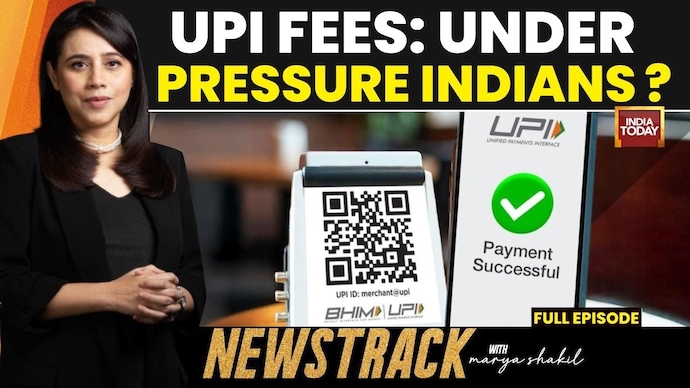
UPI Merchant Discount Rate Explained, Opposition Slams Move as BJP Defends Policy

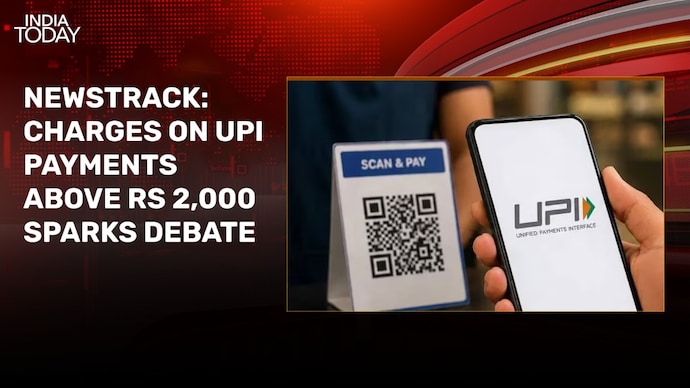
A revised merchant discount rate framework will apply to select Unified Payments Interface merchant transactions above 2,000 rupees starting 15 October, while person-to-person transfers and payments under the threshold remain free. High-value transactions will attract an MDR of 0.4% capped at 300 rupees per transaction, alongside flat rates for specific sectors like fuel and railways. The announcement has triggered sharp political disagreement, with the Congress labeling the charge a burden on digital payments and questioning its timing during the festive season. The Bharatiya Janata Party defended the policy, clarifying that 96% of small-ticket transactions remain completely unaffected and free for everyday users. Economists and analysts debate whether businesses will absorb the cost or pass it on to consumers, alongside discussions on digital infrastructure funding.

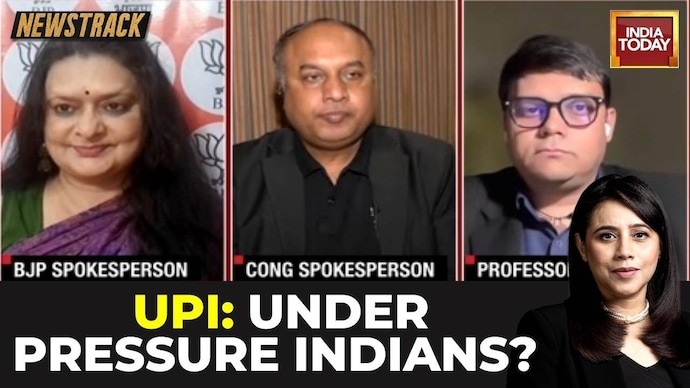
UPI Merchant Fee Debate: Sanju Verma, Brijesh Kalappa & Deepanshu Mohan

A debate on the proposed merchant discount rate (MDR) levy on Unified Payments Interface (UPI) transactions above Rs 2,000 sparked sharp exchanges between BJP National Spokesperson Sanju Verma, Congress National Spokesperson Brijesh Kalappa, and economist Deepanshu Mohan. Defending the move, Sanju Verma argued that UPI remains free for peer-to-peer and sub-Rs 2,000 payments, noting that '96% of UPI transactions are below the rupee 2,000 category, which is completely free' with fees capped at Rs 300 for higher merchant transactions. Brijesh Kalappa countered that the levy encourages system dishonesty and burdens common users, calling it counterproductive to digital adoption. Professor Deepanshu Mohan cautioned that the policy undermines UPI's character as a digital public good and functions as an indirect consumption tax that could drive users back to cash. Verma dismissed the criticism, arguing UPI remains far more affordable than commercial credit cards.

advertisement